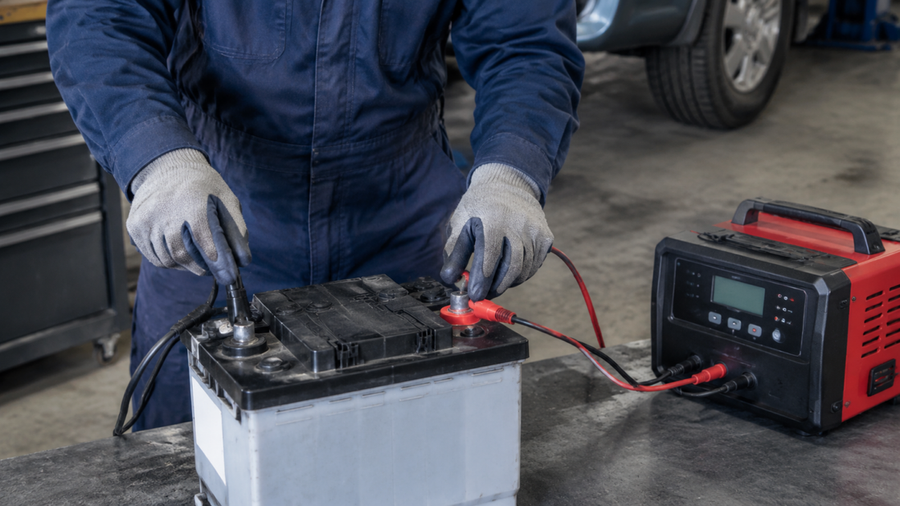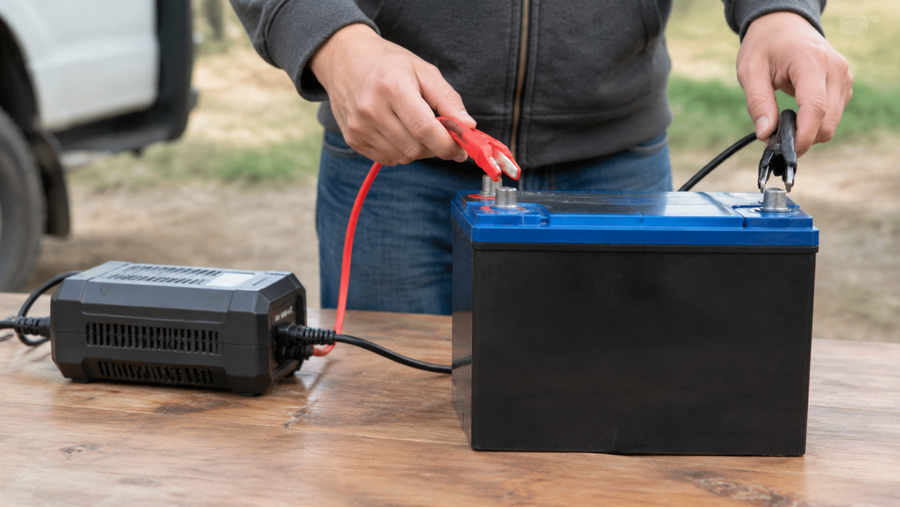

Yes. A lithium battery's battery management system, or BMS, does not normally eliminate the need for a fuse or circuit breaker. Install correctly rated DC overcurrent protection in the positive cable near the battery, following the battery and connected-equipment instructions. Choose it to protect the cable while carrying the circuit's normal current. If the cable rating, expected load, BMS limit, or available fault current is uncertain, have a qualified DC installer size the protection before energizing the system.
Why the BMS does not replace cable protection

A BMS watches conditions inside the battery. Depending on its design, it may disconnect the cells during overcharge, over-discharge, excessive current, a short circuit, or an unsafe temperature.
A fuse or breaker has a different job. It protects the cable and interrupts current when a fault occurs outside the battery, such as damaged insulation or a short farther along the positive conductor. It also provides an independent protective layer if the BMS cannot disconnect the fault as expected.
The practical rule is simple: treat the BMS as battery protection, not as permission to leave the external positive cable unfused.
Choose a fuse or a breaker
Either device can provide overcurrent protection when it is properly selected for the DC circuit.
- A fuse is simple and must be replaced after it opens. It is often the straightforward choice for main battery protection.
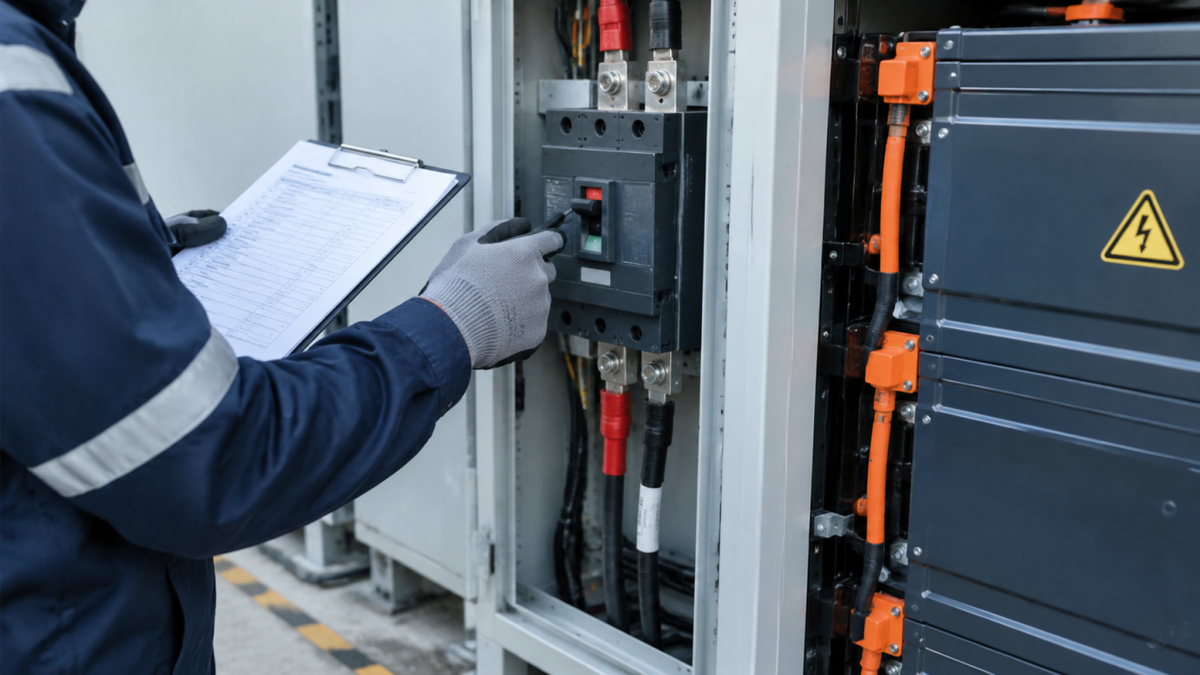
- A circuit breaker can be reset and may also provide a convenient disconnect, but it must be specifically rated for DC use. Its voltage rating, interrupt rating, and directional requirements must suit the installation.
Do not use an AC-only breaker in a battery circuit. Direct current can sustain an arc differently from alternating current, so a device that is suitable for household AC service may not safely interrupt a battery fault.
Convenience does not decide the issue by itself. Use a fuse or breaker whose manufacturer permits the battery voltage and whose interrupt rating is high enough for the fault current the battery bank can deliver.
Match protection to the cable and the fault
The number printed on the BMS is not an automatic fuse or breaker size. The final selection must account for all of these limits:
- The circuit's maximum normal current and any permitted startup surge.
- The cable's allowable current under its actual installation conditions.
- The maximum protective-device rating permitted by the connected equipment.
- The BMS continuous-current limit.
- The device's DC voltage and interrupt ratings.
The protective device must allow normal operation without leaving the cable exposed to damaging current. Place it close enough to the battery that as little positive cable as practical remains unprotected, subject to the applicable equipment instructions and installation rules.
Consider an illustrative 80-amp load. That load does not make a 100-amp fuse automatically correct. A 100-amp device may still be unsuitable if the installed cable must be protected below that value, the equipment requires another rating, or the device cannot safely interrupt the battery's possible fault current. Increasing the fuse simply to stop nuisance opening can leave the cable under-protected; the repair is to correct the cable, load, surge, or device selection instead.
Battery banks with parallel batteries add another branch to the decision. Each battery cable can feed a fault from its own battery, so protection may be needed for each branch as well as for the combined output. Follow the battery maker's parallel-connection instructions and the rules that apply to the vehicle, boat, or stationary system rather than copying a single-battery layout.
How the 100A BMS affects the decision
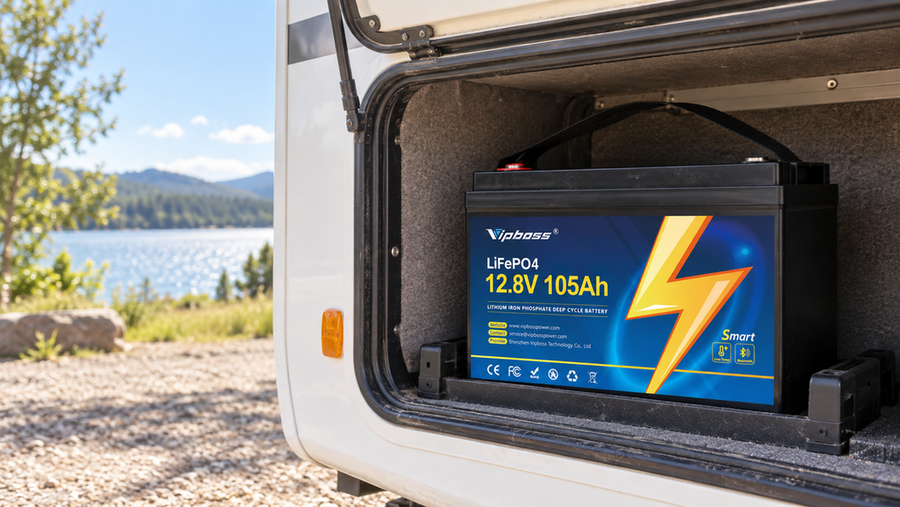
The VIPBOSS 12V 105Ah Bluetooth LiFePO4 battery is a relevant example because it includes a 100A smart BMS. That feature can protect the battery against listed internal fault conditions, but it does not determine the safe rating of every external cable or connected device.
This battery is suitable for a 12.8V Group 31 installation only when the expected current, wiring, terminals, equipment limits, and external DC protection are all compatible. Do not assume that its 100A BMS calls for a 100A fuse, or that the BMS makes a fuse unnecessary. Use the lowest applicable system limit to guide the final design, then confirm the exact fuse or breaker type and rating in the manuals for the battery and connected equipment.
Before switching the system on, verify that the protection is DC-rated, protects the installed cable, can interrupt the available fault current, and is positioned to minimize unprotected positive cable. If those facts are not documented, stop and have a qualified installer complete the selection.