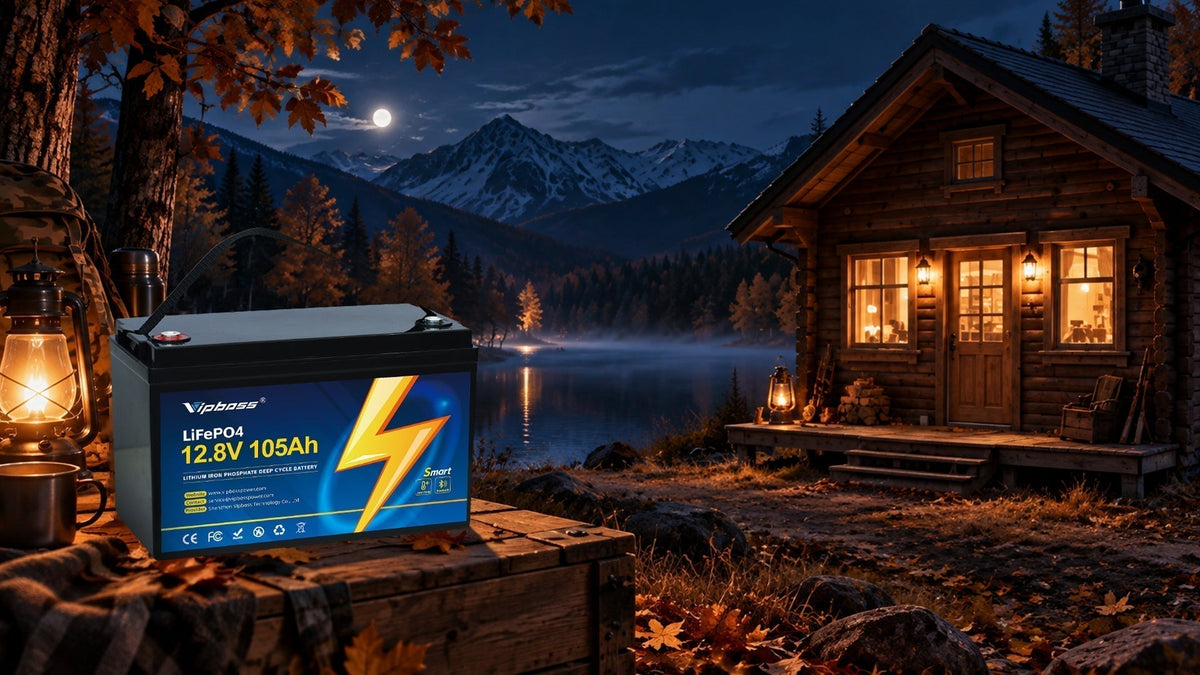

Plan your off grid battery around daily watt hours, trip length, cold weather reserve, and available charging time. Fall trips often need more stored energy because nights last longer and solar panels have fewer hours to replace daily use.
Which Cabin Loads Must Run Throughout the Trip?
Your cabin power list should focus on refrigeration, water, lighting, communication, and safety loads. Optional cooking tools and comfort appliances can use any remaining capacity after core needs are covered.
| Cabin Load | How It Uses Power | Planning Priority |
|---|---|---|
| Refrigerator | Cycles throughout the day and night | High |
| Game freezer | Runs longer after warm food is added | High |
| Water pump | Runs briefly with a high startup draw | High |
| LED lighting | Runs longer during fall evenings | Medium |
| Phones and radios | Need one or more daily charges | Medium |
| Safety equipment | May draw a small amount all day | High |
Daily watt hours equal appliance watts × total daily run time. A 60 watt refrigerator that runs for eight hours across one day uses about 480 watt hours. Use a plug in power meter when appliance labels show only maximum watts or when compressor run time remains unclear.
A load calculation worksheet can help organize appliance ratings and operating hours. Measure the real loads whenever possible because refrigerator cycling changes with indoor temperature, door openings, and the amount of food inside.

How Do Arrival Loads Differ From Overnight Loads?
Arrival use sets the highest short period demand, while overnight use creates a large share of total energy consumption. Your inverter must handle the arrival surge, and your battery bank must support the longer overnight draw.
Arrival Power
A cold cabin may need refrigeration, water, lighting, and charging soon after you arrive. Several motors running together can push demand above their normal watt ratings.
Use the larger loads in a planned order:
- Turn on the refrigerator and freezer.
- Run the water pump and fill the tank.
- Charge phones and radios.
- Connect tool chargers after major loads settle.
- Add optional kitchen equipment last.
Spacing out larger loads reduces the chance of an inverter overload without reducing the energy each appliance eventually uses.
Overnight Power
Refrigerators, freezers, furnace controls, security equipment, and lights can operate for several hours. Add their expected watt-hours to the daily total.
Also check which appliances may run at the same moment. A refrigerator compressor and water pump may create a much higher peak than either appliance creates alone.
How Much Battery Runtime Is Needed for the Length of the Stay?
Your off grid battery bank should cover the full period between dependable charging sessions plus one extra night of core loads. A three night trip with limited solar may need close to four nights of stored energy.
Use the following calculation:
Daily watt hours × trip days ÷ planned usable capacity ÷ inverter efficiency
Suppose your cabin uses 1,600 watt hours per day. A three day stay requires 4,800 watt hours before reserve and system losses. With 80 percent planned battery use and 90 percent inverter efficiency, the bank target reaches about 6,667 watt hours.
| Daily Cabin Use | Two Day Bank | Three Day Bank | Four Day Bank |
|---|---|---|---|
| 1,000Wh | 2,780Wh | 4,170Wh | 5,560Wh |
| 1,500Wh | 4,170Wh | 6,250Wh | 8,330Wh |
| 2,000Wh | 5,560Wh | 8,330Wh | 11,110Wh |
The table includes the same 80 percent usable capacity and 90 percent inverter efficiency. Furnace fan use, refrigerator cycling, and extra lighting can raise real demand.
Battery watt hours come from nominal voltage × amp hours. A 12.8V 210Ah battery stores 2,688Wh at its rated capacity. The Vipboss 12V 210Ah Bluetooth LiFePO4 battery provides that nominal energy in one battery. A larger load budget may require several compatible batteries or a higher voltage setup.
How Do Cold Nights and Shorter Days Change the Power Budget?
Cold weather increases the reserve requirement because cabin loads can rise while solar charging time falls. Plan from expected fall conditions at the cabin rather than summer production figures.
Longer nights can increase:
- Lighting hours
- Furnace fan operation
- Phone and radio charging
- Refrigerator run time in a warm cabin
- Time spent indoors using electrical equipment
Fall solar recovery can fall because of lower sun angles, tree shadows, cloud cover, and fewer daylight hours. Snow or ice may also cover part of the panel surface.
Check expected monthly production with PVWatts using the cabin location, panel size, tilt, and direction. Review winter solar performance factors when early snow or freezing rain is common in the area.
Charging temperature also matters for an off-grid lithium battery. The Vipboss 12V 105Ah LiFePO4 battery includes low-temperature charge protection. Keep the battery enclosure within the model’s listed operating range and allow enough time for a cold battery to warm before charging begins.
Can the Battery and Inverter Handle Pump and Refrigerator Startup Power?
Every part of the power system must support the short surge created by pumps and refrigerator compressors. Compare peak demand with the limits of the inverter, battery BMS, cables, fuse, and connections.
| System Part | Rating to Check |
|---|---|
| Inverter | Continuous watts and surge watts |
| Battery BMS | Continuous and peak discharge current |
| Battery cables | Current capacity at the installed length |
| Fuse or breaker | Rating for the cable and expected load |
| Refrigerator | Compressor startup watts |
| Water pump | Startup current and running current |
A 1,200 watt AC load through an inverter with 90 percent efficiency draws about 104 amps from a 12.8V battery. A motor may briefly pull several times its normal running current.
Use the appliance data sheet or a suitable meter to check startup draw. Select an inverter with enough surge time for the motor to reach normal speed. Keep DC cable runs short where practical because high current increases voltage drop and cable heat.
Which Charging Sources Can Support the Trip?
A fall hunting trip works best with one dependable charging source and one backup option. The right combination depends on cabin access, weather, travel time, and the battery charging limits.
| Charging Source | Best Role | Main Check |
|---|---|---|
| Solar panels | Daily energy recovery | Fall sun and tree shade |
| Portable generator | Recovery after poor weather | Charger output and fuel supply |
| Vehicle charging | Energy added during travel | Compatible DC charger |
| Grid charging | Full charge before departure | Battery voltage and chemistry |
Solar can replace routine daily use when the array receives enough fall sunlight. Generator charging can restore a large energy deficit after cloudy weather. Vehicle charging can add useful energy during long drives, provided a suitable DC charger controls current and voltage.
Match each charger to the battery chemistry, bank voltage, current limit, and temperature range. A charger designed for another battery type may use a charging profile that fails to match the lithium bank.
Run fuel-powered generators outdoors and far from doors, windows, vents, and sleeping areas. Read portable generator safety information before operating one near a cabin.

Build an Off-Grid Battery Reserve That Lasts Through the Hunting Trip
Add daily watt hours, trip length, inverter losses, startup demand, and one extra night of core use. Fully charge the bank before departure, then test the refrigerator, freezer, pump, inverter, and charging source under normal cabin conditions. Compare batteries for off grid power after confirming required watt hours, voltage, BMS current, and available charging methods.
FAQs About Hunting Cabin Battery Runtime and Cold-Weather Charging
Q1: Can Propane Cabin Appliances Still Use 12V Electricity?
Yes. Many propane refrigerators, furnaces, and water heaters use 12V electricity for control boards, thermostats, gas valves, ignition systems, and blower fans. The propane supplies heat, while electrical parts manage operation. Check the appliance label for its DC current draw and include that load in the cabin wiring plan.
Q2: Should a Game Freezer Have a Dedicated Battery Circuit?
Yes. A dedicated fused circuit gives the freezer its own cable protection and disconnect point. It also makes troubleshooting easier when another branch develops a fault. Match the wire and fuse to the freezer current and cable length. A temperature alarm can warn you if power stops or the internal temperature rises.
Q3: Can a Portable Energy Storage System Connect to a Cabin Subpanel?
Yes, when the unit supports building circuits and connects through approved transfer equipment, an inlet, grounding, and overcurrent protection. The transfer device keeps the portable source isolated from other power sources. A licensed electrician can select compatible equipment and assign only the circuits that fit the system’s continuous and surge output.
Q4: Should LiFePO4 Batteries Remain Installed in an Unheated Cabin Through Winter?
Yes, when the battery’s listed storage range covers local winter temperatures and the enclosure protects it from water, rodents, falling objects, and terminal contact. Secure the battery so frost movement or cabin vibration cannot shift it. Inspect the case, cables, and terminals before returning the system to service.
Q5: How Should a Cabin Battery Be Stored When the Property Is Empty for Months?
Use the storage charge level and inspection interval listed for the battery model. Turn off the main disconnect, cover exposed terminals, and record the battery voltage before leaving. Check the voltage after the recommended period. Use a compatible charger if the reading reaches the model’s recharge level.