
Lightweight lithium power systems turn emergency communications vehicles into fast, quiet, self-contained network hubs that can reach disaster zones sooner and stay on the air longer when the grid fails.
Lightweight lithium power turns an emergency comms vehicle from a lumbering generator cart into a fast, quiet, self-contained network hub that can reach hard-hit areas first. By cutting battery weight, boosting usable energy, and recharging quickly from the vehicle alternator and solar, you keep radios and data flowing when the grid fails.
Picture pulling up to a flooded town with towers down, only to discover the radio truck is stuck two miles back because it was too heavy for the washed-out road. Many crews have watched critical minutes disappear while a diesel generator warms up, cables are laid, and someone hunts for fuel cans in the dark. With the right lightweight battery system, that same vehicle can roll farther, power up instantly, and keep your team talking without the noise, fumes, and delays.
Why Traditional Power Holds Emergency Comms Back
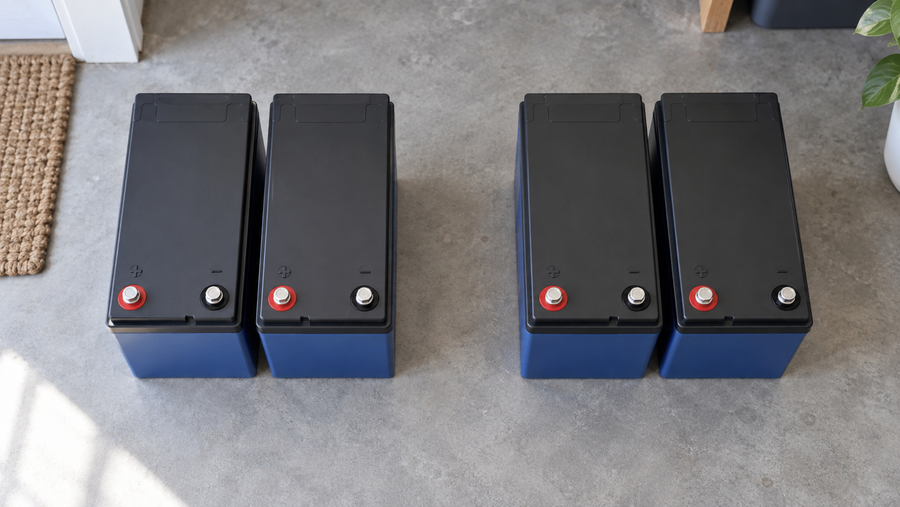
Most legacy comms trucks rely on large lead-acid battery banks and diesel generators to keep radios, repeaters, and network gear alive. A typical 100 amp-hour lead-acid battery weighs around 70 lb, while a comparable lithium pack can be closer to 30 lb. That means a four-battery bank can drop from roughly 280 lb to about 120 lb when you switch chemistries, yet deliver more usable energy in the same footprint, as off-road engineers have shown in weight-sensitive builds that cut whole systems from about 300 lb down to roughly 60 lb with more power available in reserve lithium batteries in off-road recovery. In disaster terrain, that extra weight translates directly into slower acceleration, longer braking distance, and a greater chance of getting bogged down before reaching a remote shelter or command post.
Lead-acid banks also deliver only a fraction of their nameplate capacity if you want them to last. In many off-grid and emergency setups, operators plan on using only about half the rated amp-hours from lead-acid, while lithium packs can routinely provide nearly their full capacity without accelerated damage, giving roughly two and a half times the usable energy from the same size battery top uses for rechargeable lithium batteries. That forces legacy comms vehicles to carry more batteries than they would otherwise need just to get through a long night of voice and data traffic.
Charging is another bottleneck. Lead-acid banks are slow to recharge and hate partial charging, especially from solar, which is exactly how many disaster vehicles operate. In contrast, lithium packs accept charge quickly and efficiently, with real-world off-road systems recharging in roughly two to three hours when sized correctly, rather than needing most of the day to creep back to full charge. When the next call-out hits before the truck has recharged, crews end up idling engines or dragging along portable generators just to avoid losing comms mid-incident.

What Lightweight Lithium Actually Changes
When we talk about lithium for emergency comms vehicles, the practical choice is lithium iron phosphate batteries, often sold as LiFePO4. This chemistry is widely used in emergency lighting and standby backup systems because it combines high energy density, long cycle life, and stable behavior under stress lithium batteries in emergency systems and has become a go-to option for solar-based emergency backup power due to its compatibility with fast, efficient charging emergency battery backup power. For a comms vehicle, that same technology allows you to carry more usable energy in less space and with less weight, while reducing maintenance to almost zero.
Modern lithium packs for vehicles typically integrate an electronic battery management system that monitors cell voltage and temperature, prevents overcharge and over-discharge, and protects against short circuits, dramatically improving reliability and lifespan compared with unprotected legacy batteries. In practice, the power system behaves more like a smart device than a simple box of lead, which is exactly what you want when crews are distracted by evacuees, weather, and traffic control rather than watching a voltmeter.
Less Weight, Faster Access
The most obvious win is weight. Automotive-grade lithium starter and accessory batteries can be up to about 70 percent lighter than equivalent lead-acid units, often trimming 25 to 40 lb per battery in typical vehicle applications. In off-road recovery builds, that translates into reductions from around 300 lb of lead-acid down to roughly 60 lb of lithium while actually increasing usable power. Apply that same logic to a comms vehicle and you free up well over 100 lb in battery mass alone, even before you account for reduced generator size and fuel.
On marginal roads or soft ground, that weight savings can be the difference between reaching a cut-off town and parking halfway up a hill because the rig sinks into mud at the low point. Lighter vehicles climb debris piles more safely, cross temporary bridges more easily, and put less strain on aging axles and brakes that already see hard service in emergency fleets.
More Usable Energy in the Same Space
Weight is only half the story; the other half is how much of the stored energy you can actually use. In many backup and off-grid scenarios, lead-acid batteries are limited to roughly 50 percent depth of discharge if you want reasonable life, while lithium packs in similar size can be drawn much deeper, offering more than double, and in some cases about two and a half times, the usable energy per battery. Rechargeable lithium banks used for critical backup power and UPS systems are designed to provide nearly instant, stable power during outages, keeping computers, communication links, and medical devices online even as the grid fails.
For an emergency comms vehicle, that translates into more on-scene hours with the same footprint. Imagine a rack that draws about 1,200 watts for radios, repeaters, networking gear, and a satellite modem. With a 10 kilowatt-hour lithium bank, you can realistically plan to use close to the full capacity, getting around eight hours of run time, whereas a similar-size lead-acid bank might support only about half that before you reach damaging depths of discharge. That extra window can cover an entire operational period without ever firing up a generator.
Faster Recharge Between Deployments
Lithium’s ability to accept charge quickly and efficiently is just as important as its deeper usable capacity. In many overland and off-grid installations, lithium banks routinely recharge fully in only a few hours when matched with appropriate chargers, thanks to low internal resistance and favorable charge curves. That same behavior, combined with the near-instant response of modern backup systems, makes lithium an ideal backbone for incident-critical communications that must come back online as soon as a generator or the alternator spins back up.
In practical terms, a comms van that spends part of the day driving between staging areas can top off the house lithium bank from its alternator and roof-mounted solar while moving, instead of idling for hours at base. When another call comes in mid-recharge, you still roll with a meaningful state of charge instead of a half-full lead-acid bank that resents being cycled before it ever reaches absorption voltage.

Quiet, Clean Power When Generators Cannot Run
Disaster scenes are rarely generator-friendly. Shelter parking lots and hospital perimeters are full of vulnerable people, medical devices, and exhausted staff who do not need diesel exhaust and engine noise added to the chaos. Solar-based emergency battery backup systems built around lithium banks already show how silent power can keep lights, communications, security systems, and even some HVAC running during outages without fuel, noise, or direct emissions emergency battery backup power. A comms vehicle equipped with a properly sized lithium bank and inverter can park close to the action, keep radios and data flowing, and stay essentially invisible in terms of sound and fumes.

When fuel distribution is disrupted, this matters even more. A battery-based power system does not care if gasoline deliveries are delayed, as long as it has access to the alternator, solar, or grid when available. That aligns directly with the way lithium backup systems reduce dependence on diesel during extended outages in homes and businesses.
Designing a Rapid-Deployment Lithium Power System
Core Architecture for a Comms Vehicle
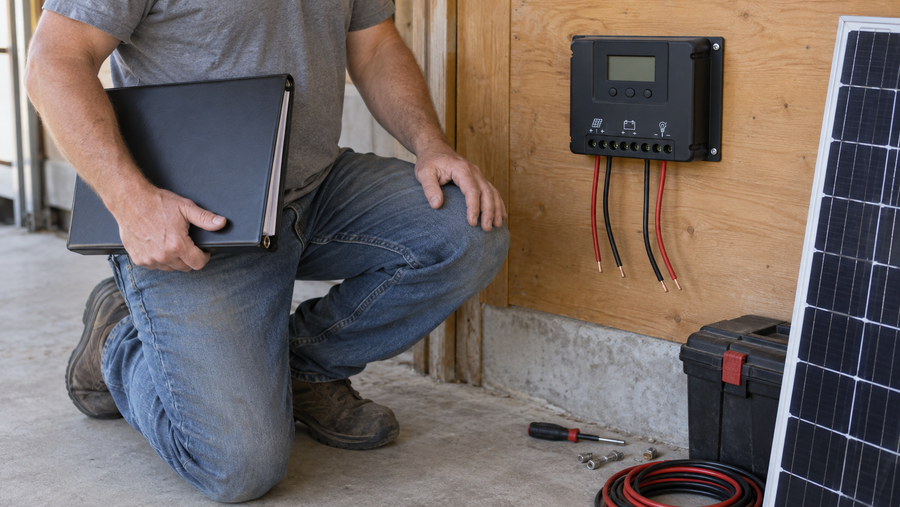
An effective layout for an emergency comms vehicle mirrors the dual-battery setups proven in off-road rigs: a dedicated starter battery for the engine, plus a separate lithium “house” bank for radios, data, and auxiliary loads. In many builds, the house bank charges from the alternator through an isolator or DC-to-DC charger, which keeps the banks electrically separate while both receive charge when the engine runs. Roof-mounted solar and shore or generator charging through a combined inverter/charger round out the system, so the vehicle can recharge from whatever energy source is available on scene.
Real-world fleet demonstration trucks have gone further, packing around 40 kilowatt-hours of lithium storage at 48 volts, plus high-capacity inverter/chargers and roof solar arrays, to run welders, compressors, and even provide level 2 charging to electric fire or EMS vehicles while still powering onboard tools and communications. That level of autonomy proves that the same building blocks easily handle the power draw of typical comms racks, satellite terminals, and IT gear with plenty of headroom.
Sizing for Your Mission
Sizing begins with brutal honesty about your loads and run time. First, catalog every device that must stay powered during an incident and estimate its watt draw, then multiply by the number of hours you need to ride through without engine or generator. A rack drawing 1,500 watts for six hours, for example, needs about 9 kilowatt-hours of delivered energy. With lithium, you can design the bank so that most of its rated capacity is usable; a roughly 10 kilowatt-hour pack, such as a 48-volt, 200 amp-hour configuration, fits that mission with margin for inefficiencies and future radio additions.
House lithium banks excel when paired with solar because they can accept high current without the slow absorption tail that punishes lead-acid when charged from panels. In practice, a few hundred watts of roof solar will not fully recharge a big bank on its own, but it will stretch your run time significantly and reduce generator hours, especially in sunny deployments.
Intelligent Protection and Vehicle-Specific Features
For an emergency comms vehicle, a smart battery management system is not optional. High-quality lithium packs integrate BMS hardware that guards against overcharge, over-discharge, short circuits, and thermal issues while balancing cells for long life. Emergency lighting manufacturers favor LiFePO4 systems with built-in electronic protections because they add another safety layer in real-world installations where maintenance may be sporadic lithium batteries in emergency systems. The same logic applies to a radio truck that may sit in the yard for weeks, then run flat-out for twelve hours during a wildfire.
Some advanced lithium starter batteries incorporate internal “reserve” capacity and wireless or push-button restart features, allowing the pack to protect itself from deep discharge and still hold enough energy to crank the engine. In an emergency comms vehicle that spends hours with scene lights, radios, and computers pulling power, that kind of built-in jump-start capability can prevent a stranded rig and an embarrassing call for a tow.
Safety, Standards, and Training
Lithium chemistry demands respect, but the right choices make it an asset, not a liability, for emergency operations. LiFePO4 stands out because its thermal and chemical stability are superior to many other lithium-ion types, which is why it is increasingly used in emergency lighting where batteries sit on float charge and must still behave predictably during rare but critical events lithium batteries in emergency systems. Emergency backup designers favor LiFePO4 because it is less prone to thermal runaway, delivers a stable voltage, and offers a wide operating temperature range when charged according to specifications emergency battery backup power.
Modern lithium packs also avoid liquid acid and heavy metals such as lead, and they do not emit hydrogen gas during charging, reducing corrosion and ventilation burdens compared with flooded batteries. For mission-critical installations like exit routes and emergency lights, manufacturers combine LiFePO4 cells with thermal monitoring and electronic protections to detect overheating early and shut systems down safely if needed lithium batteries in emergency systems. Bringing that discipline to vehicle power—locating packs away from impact zones, providing ventilation where required, and using certified enclosures—turns “lithium risk” into a well-managed engineering problem.
Emergency responders also need training that keeps pace with the technology.

Fire service organizations emphasize that lithium-ion batteries and energy storage systems introduce unique safety challenges and call for updated tactics, tools, and pre-incident planning as they spread across vehicles and fixed installations lithium-ion and energy storage systems. Fleet managers should make sure their crews know how the comms vehicle’s lithium bank is wired, where disconnects are, what indicators mean, and how to brief local firefighters if a pack is damaged in a crash.
If you carry spare battery modules or large packs in separate cargo compartments, treat them like any other hazardous material load. Federal rules for lithium battery transport devote several pages to packaging, cushioning, and hazard communication requirements, including strong outer packaging, short-circuit protection, and clear markings so first responders understand what is onboard lithium-ion batteries in transportation research. Mission-critical military batteries face similar expectations: they are designed to meet strict performance and durability standards, including MIL-SPEC requirements, precisely because radios, GPS receivers, and night-vision devices cannot afford power failures in harsh environments. Emergency comms vehicles should aspire to that same standard of robustness.
Lithium vs Lead-Acid in an Emergency Comms Vehicle
Aspect |
LiFePO4 lithium bank |
Flooded/AGM lead-acid bank |
Weight |
Roughly one-third the weight for equivalent capacity, often saving dozens of pounds per battery in vehicles. |
Heavy for the energy provided, adding hundreds of pounds in multi-battery banks. |
Usable capacity |
Can routinely use most of rated amp-hours, giving about two or more times the usable energy in the same size. |
Typically limited to about half the rated capacity to avoid damage and premature failure. |
Charge time |
Accepts high charge rates and works efficiently with alternators and solar, often recharging in just a few hours when properly designed. |
Slow to recharge fully, especially from solar, and sensitive to chronic undercharging. |
Cycle life |
Commonly delivers thousands of cycles with minimal degradation in backup and off-grid use. |
Far fewer deep cycles before noticeable capacity loss, especially under heavy or frequent cycling. |
Safety and maintenance |
Stable LiFePO4 chemistry, electronic protections, no liquid acid or hydrogen gas; largely maintenance-free. |
Contains liquid acid, can vent gas, and may require periodic checks or service, with more corrosion and spill risk if damaged. |
Cost and Upgrade Strategy
Lithium banks cost more per amp-hour up front than lead-acid, but their longer cycle life, deeper usable capacity, and low maintenance often translate into better lifetime value. Emergency backup systems built around LiFePO4 remain in service for many years with little performance loss, which spreads the initial investment over far more useful work than a set of lead-acid batteries that need replacement after relatively few deep cycles emergency battery backup power. Vehicle-focused lithium manufacturers similarly emphasize that despite higher purchase price, the combination of long life, weight savings, and built-in protections lowers total ownership cost, especially when you factor in avoided breakdowns and dead-battery events.
For a fleet of emergency comms vehicles, the real payoff comes from operational flexibility. Lighter rigs can reach more sites, quiet battery power can park closer to vulnerable populations, and reduced idling cuts fuel use and engine wear. A smart upgrade path is to start with the most critical loads—the radio and data rack—then extend lithium power to scene lighting, interior HVAC, and eventually on-scene EV charging as budgets and confidence grow. Commercial suppliers already market lithium systems specifically for police, fire, paramedic, and ambulance vehicles, reflecting growing adoption of this technology in demanding emergency-service roles emergency services lithium batteries.
FAQ
Is lithium safe enough to park a comms vehicle in neighborhoods during an incident?
When you use LiFePO4 packs with integrated battery management systems, mounted in proper enclosures and wired to code, the risk profile is very favorable for residential deployments. This chemistry is chosen for emergency lighting and standby backup because of its stable behavior and resistance to thermal runaway, and manufacturers add electronic protections against overcharge, over-discharge, and short circuits to further enhance safety lithium batteries in emergency systems. The key is professional design and installation, plus basic training so crews know how to monitor and shut down the system if something looks wrong.
How big should the lithium bank be for a comms van?
Start with your must-have loads and the longest plausible incident window without generator or engine assistance. Multiply your total watt draw by desired run time to get watt-hours, then divide by 1,000 to get kilowatt-hours. Because lithium can safely use most of its rated capacity, you can size the bank close to that number with a reasonable margin, rather than doubling it just to stay within a shallow discharge band as you would with lead-acid. For many mid-sized comms vehicles, that leads to banks in the high single-digit to low double-digit kilowatt-hour range.
What happens to lithium power systems in extreme heat or cold?
LiFePO4 batteries operate over a wide temperature range and maintain a stable voltage profile throughout most of their discharge, making them well suited for emergency backup in variable climates as long as charging is limited to the manufacturer’s specified temperature band emergency battery backup power. In practice, that means you may need modest insulation or heater elements in very cold environments and ventilation or active cooling in sustained high heat, along with BMS temperature monitoring that can temporarily pause charging if cells approach unsafe conditions.
Well-designed lithium systems turn an emergency comms vehicle into a fast, quiet, and resilient power platform instead of a rolling compromise. By shedding unnecessary weight, unlocking far more usable energy, and building in intelligent protection, you give your crews one less thing to worry about when every minute and every message matters.