
Temporary surveillance towers can stay online without grid power by combining solar, batteries, and smart backups that are correctly sized and monitored so cameras, lights, and analytics keep working when grid power is unavailable.
You lock the site at dusk, the generator shuts down to save fuel, and by 3:00 AM your cameras are dead while thieves help themselves to copper and equipment. On one underground utility project, simply adding two solar-powered security towers with remote monitoring stopped repeat vandalism and prevented five-figure losses and delays. This article shows how to choose and size off-grid power options for your towers, how to keep them online in bad weather, and how to plug that power plan into a wider security strategy that actually protects your job site.
Why Off-Grid Power Is Now Core Site Security
Industry research on construction site security puts equipment theft at roughly $1 billion per year, with most losses never recovered and the real cost amplified by schedule slips and higher insurance. Every missing excavator, stolen skid steer, or stripped wire bundle is not just a line item; it is lost days, liquidated damages, and crews standing idle.
Temporary and early-phase projects are especially exposed because they often start with minimal fencing, poor lighting, and no live utilities or hardwired alarms, which makes them a magnet for opportunistic thieves until proper infrastructure exists. Guidance on temporary construction site security stresses that early stages with no active power, Wi-Fi, or permanent buildings are precisely when mobile, autonomous surveillance is most critical.
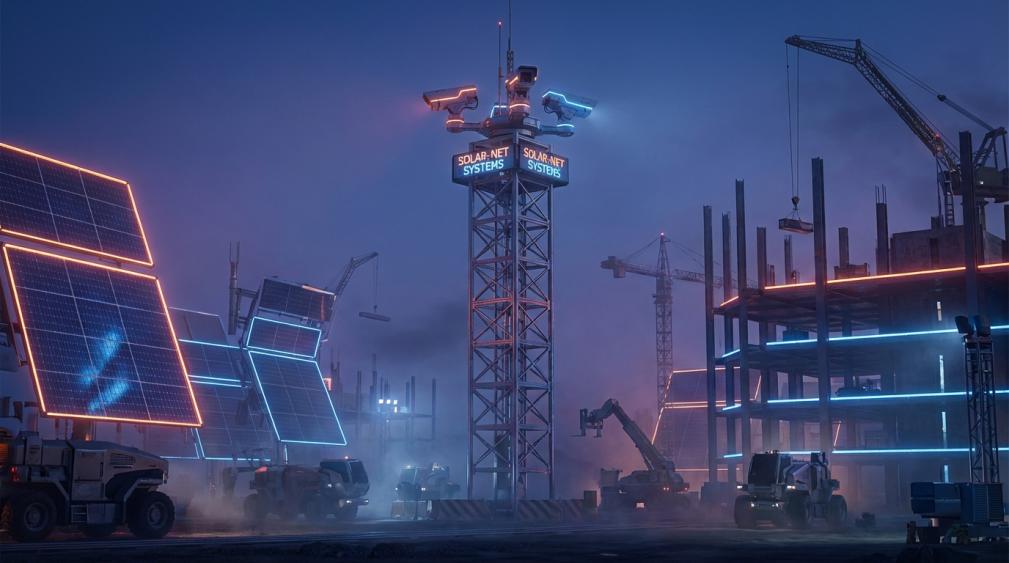
Mobile security towers and trailers combine a mast with high-resolution cameras, night vision, loudspeakers, and cellular or wireless links so they can oversee large, dark areas from a high vantage point. Descriptions of mobile security towers in parking lots highlight how cameras, flashing lights, and audio warnings together create a powerful deterrent and capture evidence when something does happen.
All of that capability lives or dies on power. If a tower loses power at 2:00 AM, it is not "reduced effectiveness"; it is a blind spot that offenders quickly learn to exploit. Treating off-grid power as a first-class design problem, not an afterthought, is what turns a camera mast into a dependable security asset.

Off-Grid Power Options for Temporary Towers
Powering towers without the grid is not one-size-fits-all. In practice, most deployments fall into four categories: solar plus battery, battery-only units, solar with generator or fuel-cell assist, and towers plugged into temporary site power with on-board backup.
Solar plus battery: the workhorse for remote jobs
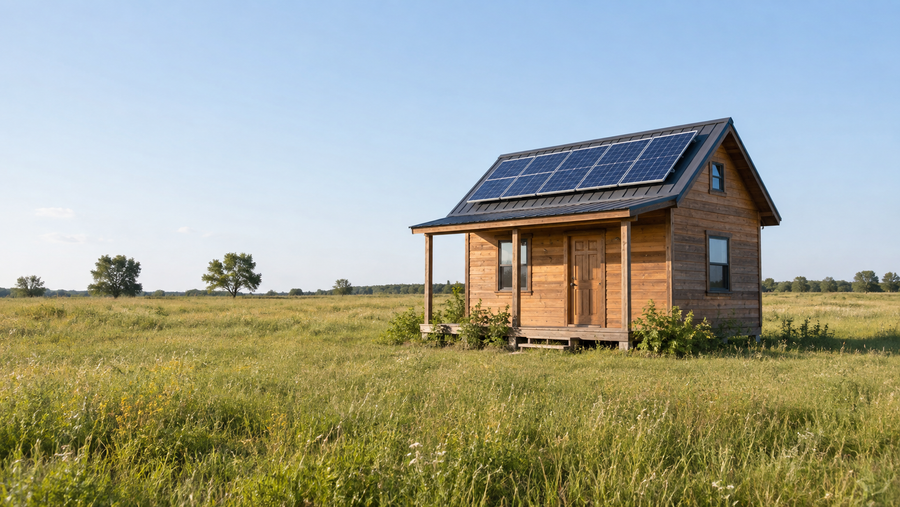
Modern CCTV towers for temporary locations are frequently designed as solar-powered units so they do not depend on fixed electrical infrastructure. Panels on the mast or trailer feed on-board batteries, while 4G or 5G connectivity and edge storage handle video and alarms without local wiring.
The advantages are straightforward. Once installed and sized properly, solar-plus-battery towers offer quiet, low-profile operation with no daily refueling and predictable operating costs. They fit remote bridges, utility corridors, vacant lots, and greenfield developments where trenching power would be prohibitively expensive or would slow the schedule.
The trade-off is that solar and storage must be engineered around your location's sunlight hours, winter conditions, and tower load. You design for the worst week of the year, not the best July afternoon. Undersize the battery bank and the first string of cloudy days will give you "security theater" instead of continuous protection.
Battery-only units: simple but schedule-dependent
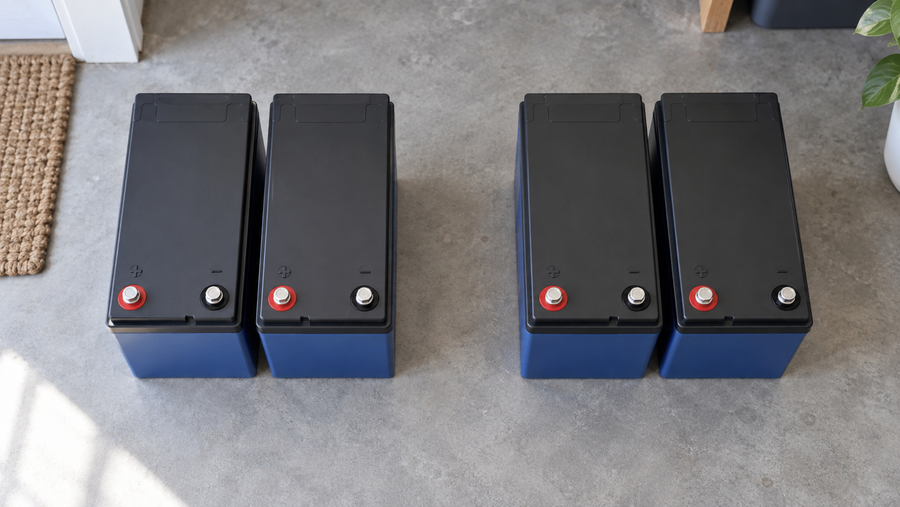
Some compact towers and camera pods run purely on battery packs that are charged from mains or a generator between deployments. They are essentially large, rugged, rechargeable UPS systems wrapped around a camera mast and modem.
Battery-only units shine on short-duration work, pop-up projects, or tight urban sites where there is no space for panels or concern that solar hardware could be vandalized. They are silent, discreet, and quick to move.
The flip side is discipline.

Runtime is finite, so you must treat recharging or swapping packs as a scheduled task, just like fueling a generator or performing a toolbox talk. If no one owns that task, the pack will eventually hit zero overnight and the tower becomes a very expensive pole.
Solar with generator or fuel-cell assist: extended autonomy
Hybrid towers use solar and batteries as the primary supply, then call on a small generator or fuel cell only when storage drops below a threshold. Research on mobile security solutions for large sites describes solar-powered, wireless systems engineered to run through multiple sunless days by combining efficient electronics with robust storage and backup.
This configuration suits harsh climates, heavy camera loads, or high-security sites where periods of very low solar input are predictable. Solar handles the bulk of the work; the generator or fuel cell tops the system up a few hours at a time so batteries are not driven to deep discharge.
The downside is more moving parts and fuel logistics. You gain weeks of autonomy and resilience at the price of some noise, exhaust, and scheduled maintenance, though far less than a generator running 24/7.
Tapping temporary site power: convenient but fragile
On some projects, towers plug into temporary power panels or the same generator that feeds trailers and tools. This can be convenient if a reliable feed is already there and sized for continuous operation.
The catch is that temporary power is often treated as "construction convenience," not a life-safety system. If someone shuts down the generator or panel at night to save fuel, and the tower does not have sufficient on-board battery to carry through, your security goes out with the lights. When you rely on temporary power, you still design the tower for autonomous overnight runtime and make sure the circuit feeding it is clearly labeled and managed as critical.
Sizing Off-Grid Power for a Surveillance Tower
A solid off-grid power plan starts with a simple energy budget. You list your loads, define your runtime, and then translate that into battery storage and charging requirements.
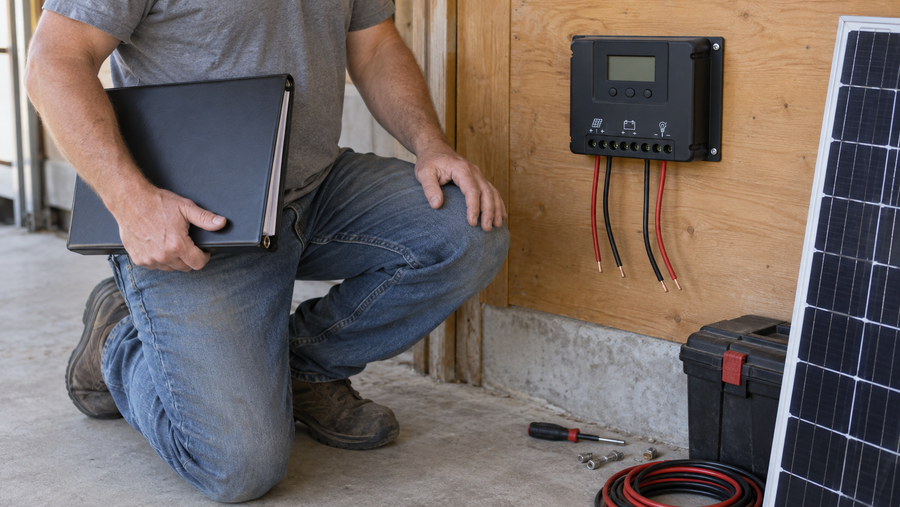
First, add up the power draw of everything on the tower: cameras, network gear, modems, local NVR, heaters or blowers if installed, and any integrated floodlights or deterrent strobes. Vendors often publish typical or maximum wattage; your goal is a realistic average over 24 hours, accounting for the fact that lights, PTZ patrols, or heaters may not be on all the time.
Next, convert that into energy. If your tower averages 200 watts, it consumes about 4.8 kilowatt-hours per day. If you want three days of autonomy with a safety margin so batteries are never fully depleted, you would plan on roughly 15 to 20 kilowatt-hours of usable storage. From there you choose panel capacity or generator runtime that can replace that energy daily under your worst-case solar conditions.

Real deployments back this up. A 19-acre project described in a construction security case study used a solar-powered wireless system engineered to operate for five days without sunlight while providing 360-degree coverage and remote monitoring, precisely because the tower load and climate were analyzed up front.
You can also widen your power margin through smarter monitoring. Best-practice guidance on surveillance strategies for construction sites emphasizes motion-triggered recording, AI-based analytics to ignore harmless movement, and focused observation of high-risk zones. Those same analytics reduce storage and bandwidth, but they also indirectly cut energy use because you are not running every light and camera at full tilt all night.
A good rule on active sites is to validate your paper design with data in the first week. Track state of charge, note the lowest battery level each morning, and adjust panel angles, generator top-up schedules, or lighting profiles until your system consistently wakes up with comfortable headroom.
Comparing Off-Grid Power Strategies
Power strategy |
Typical use case |
Key advantages |
Main limitations |
Solar plus battery |
Remote or long-term sites |
Low running cost, quiet, no daily fueling logistics |
Weather-dependent, needs correct sizing |
Battery-only |
Short jobs, constrained urban locations |
Fast deployment, discreet, no panels to manage |
Limited runtime, requires disciplined recharging |
Solar with generator or fuel cell |
Harsh climates, high-security installations |
Handles long sunless periods with extended autonomy |
More components, fuel and maintenance planning |
Temporary power with backup |
Sites with robust temp power already in place |
Simple connection, minimal extra hardware |
Vulnerable if power is shut off outside work |
This table is not about brands; it is about choosing the architecture that matches your risk, runtime expectations, and field reality.
Keeping Towers Online in Tough Conditions
Temporary sites are at their worst from a security standpoint in the first weeks, when fencing is partial, lighting is poor, and utility connections do not exist yet. Guidance on short-term construction site protection urges deploying mobile surveillance and portable lighting from day one specifically because you cannot rely on conventional power or communications.
Examples from large civil projects show what robust solar systems can handle. In the Durham, North Carolina deployment described in a global construction security overview, a solar-powered mobile solution with thermal and infrared cameras, LED lighting, and audio was designed to run roughly five days with no sun while covering a wide, complex site. That level of autonomy is not accidental; it comes from matching load, battery capacity, and the local weather pattern.

On the ground, tower placement affects both view and power. You want clear sightlines to entrances, high-value equipment, and hot spots, but you also want panels oriented for maximum sun exposure and away from tall cranes, trees, or new structures that will shade them as the project evolves. As layouts change, you reposition towers not only for camera coverage but also to preserve their solar harvest.
Finally, treat power health as another alarm channel. Many professional systems already support remote diagnostics and status monitoring, and AI-enhanced platforms for AI-powered surveillance on construction sites can push real-time alerts. Configure low-battery, loss-of-signal, and camera-failure notifications so someone is paged to act before the tower goes dark, not after an incident review.
Make Power Part of Your Security Strategy
Strong job site protection is built as a layered system that combines physical barriers, technology, and people. Guidance on construction site security best practices consistently emphasizes perimeter fencing, controlled entry points, secure storage, and strategic lighting, backed by 24/7 surveillance and managed access control.
Mobile towers slot into that stack as the visible, elevated sensors that tie everything together. Descriptions of mobile security towers and trailers highlight how their flashing lights, mast cameras, and speakers not only record incidents but also broadcast deterrence, especially when paired with good lighting and clear signage.
When live operators are watching, these towers become more than recording devices. Remote guarding services that combine cameras, AI, and trained staff, like those described in proactive construction site monitoring, can issue voice-down warnings, escalate to law enforcement, and enforce safety rules without stationing multiple guards on-site. A tower that stays powered all night turns those remote operators into a virtual, always-awake guard posted directly over your most vulnerable assets.
AI analytics amplify this further. Platforms focused on surveillance strategies for construction sites and AI-powered job site surveillance describe systems that auto-detect trespassing, unsafe behavior, or equipment misuse in real time. That means your power system is not just running cameras; it is enabling a live, data-driven security and safety program that keeps projects moving.
When planning a new project, fold tower power decisions into the same early discussions that cover staging areas, crane locations, and traffic plans. Decide where mobile towers will live in each phase, what power architecture they will use, and who owns runtime checks and maintenance. Each phase change is a natural point to ask, "Do our towers still see the right areas, and can they still run all night where they sit now?"
Quick Off-Grid Power FAQ
Can a solar-powered tower really run 24/7 through bad weather?
Well-designed systems do it routinely. The Durham case of a solar-powered, wireless security solution shows one site engineered to operate for roughly five days without sunlight while maintaining full coverage. Hybrid designs that pair solar and batteries with a backup generator or fuel cell extend this even further, provided loads are accurately known and panels and storage are sized to local conditions.
When is it worth paying for hybrid solar plus backup power?
Hybrid power is worth considering when your tower load is heavy, your winters are long and overcast, or the site is too critical to accept any meaningful risk of downtime. Guidance on temporary construction site security underlines that some projects simply cannot absorb the impact of theft-driven delays or shutdowns. In those cases, the additional cost of a small, efficient backup source is cheap insurance compared with the price of one major incident.
Can mobile towers replace overnight guard shifts?
In many environments, mobile towers with remote monitoring can replace some or all overnight guard posts by delivering continuous, wide-area coverage and real-time interventions. Providers of remote guarding for construction sites position cameras, AI, and live operators as a more cost-effective way to protect multiple access points and storage yards than staffing several physical guards. For very high-risk projects you may still retain a small on-site team at key gates while letting off-grid towers and remote operators cover the broader perimeter and interior.
Power is the quiet backbone of every temporary surveillance tower. Get the off-grid design right once, test it hard in the first week, and then move and refine it with the project, and you turn each mast into a dependable night-shift supervisor that never calls in sick, never falls asleep, and never leaves your most valuable assets unguarded.