
For most frequently cycled applications, a properly sized LiFePO4 battery is the better all-around choice: it is usually much lighter, provides a larger usable share of its rated energy, lasts through more charge cycles, and needs far less routine maintenance. Flooded lead-acid still makes sense when the lowest upfront price matters most, the battery is used only occasionally, the existing charging system is suitable, and regular maintenance is acceptable.

Put both batteries on the same usable-Wh basis
The table is a planning comparison, not a pair of quoted products. It uses a 12 V, 100 Ah flooded pack and a 12.8 V, 100 Ah LiFePO4 pack, with assumed usable fractions of 50% and 80%. Check the actual datasheets, test conditions, temperature and discharge rate before buying.
| Same deep-cycle job | Flooded lead-acid example | LiFePO4 example |
|---|---|---|
| Nominal energy | 1,200 Wh | 1,280 Wh |
| Assumed usable share | 50% | 80% |
| Planned usable energy | 600 Wh | 1,024 Wh |
| Packs to exceed 1,000 Wh planned usable | 2 | 1 |
| Weight, footprint, purchase price | Enter actual two-pack total from datasheet/quote | Enter actual one-pack figure from datasheet/quote |
| Service-life comparison | Use cycles at the same depth, temperature and end-of-life threshold; then add maintenance cost | Use the same basis; include charger and installation changes |
The table explains why equal nameplate Ah is not equal usable energy. It does not establish that every LiFePO4 option is cheaper or lighter in a specific installation. Record the quoted models and the source/date of each mass, price, cycle and warranty figure before calculating a payback period.
Weight and usable capacity: compare complete packs
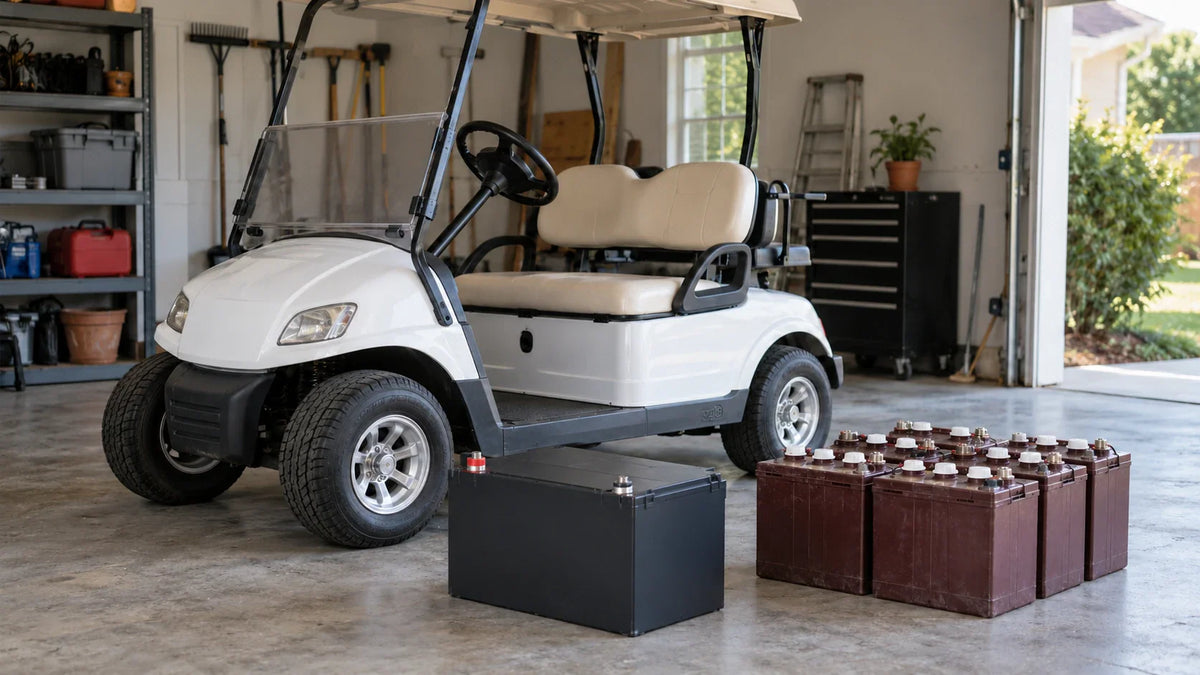
LiFePO4 has a major weight advantage in mobile applications. The practical benefit is not just easier installation: removing hundreds of pounds can affect payload, acceleration and energy consumption. A golf cart was designed around a particular weight distribution, however, so a lighter pack still needs the correct tray, restraint and vehicle approval.
Capacity needs more care. Amp-hours are only comparable when voltage and discharge conditions are comparable. Use watt-hours for total stored energy:
nameplate energy (Wh) = nominal voltage × amp-hours

Then apply the battery maker's recommended state-of-charge window to estimate usable energy. For flooded lead-acid batteries, deeper discharge generally shortens cycle life, so usable energy should be based on the manufacturer's recommended depth of discharge rather than the full nameplate rating. LiFePO4 products generally permit a wider usable state-of-charge window, although their BMS may limit high current or disconnect the pack near empty. Consult the exact battery manual for model-specific cycle-life factors and operating limitations.
Lifespan: LiFePO4 usually wins in frequent cycling

For a cart that is charged and discharged often, LiFePO4 normally offers substantially more cycles than conventional flooded lead-acid. The featured Vipboss pack is described as rated for more than 4,000 cycles and a stated 10-year lifespan. These are product-specific claims rather than universal results for every LiFePO4 battery.
These are product ratings, not a promise that every lithium battery will reach the same number. Cycle life depends on depth of discharge, charge and discharge current, temperature, storage and the capacity threshold used to define end of life. Flooded lead-acid is affected by the same variables and is especially sensitive to repeated deep discharge, undercharging and high temperature.
The relationship between depth of discharge, operating conditions and lead-acid cycle life is also documented in the U.S. Department of Energy's Lead-Acid Batteries Technology Strategy Assessment.
The practical takeaway is simple:
- Frequent use and long ownership make LiFePO4's higher cycle life more valuable.
- Occasional use gives fewer opportunities to recover a higher purchase price.
- Compare warranties separately from cycle ratings; a warranty term is not the same as expected service life.
Maintenance: lead-acid needs more hands-on care
Flooded lead-acid batteries need regular electrolyte checks, distilled or deionized water when required, clean and tight terminals, complete charging, and—in circumstances specified by the manufacturer—equalization. Set the inspection interval according to the battery manual, usage pattern and climate.
LiFePO4 eliminates watering and equalization, which is a meaningful advantage for fleets, seasonal owners and anyone unlikely to follow a maintenance schedule. It is still better described as low maintenance, not literally maintenance-free: terminals and restraints need inspection, the correct charger must be used, BMS warnings matter, and storage instructions still apply.
If low routine effort is a priority, LiFePO4 is the clear winner. If the owner is comfortable with regular battery care and wants the lowest initial purchase price, flooded lead-acid remains workable.
Charging, compatibility and cold weather
A lithium conversion is not automatically a drop-in replacement just because the nominal voltage matches. Before buying, check:
- system voltage and the battery's continuous and peak-current ratings;
- motor-controller demand and regenerative-braking behavior;
- charger profile, maximum voltage and charge current;
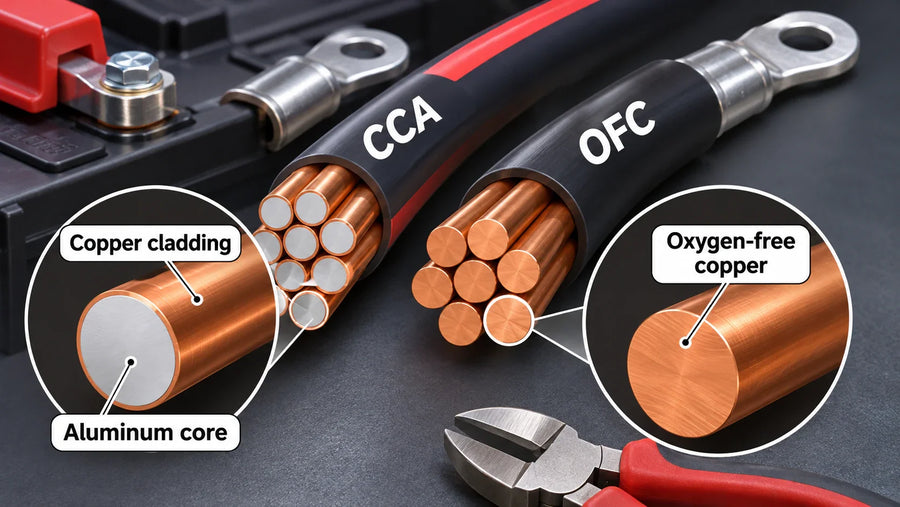
- cable, connector, terminal and fuse ratings;
- tray dimensions, restraint and vehicle weight distribution;
- state-of-charge gauge compatibility; and
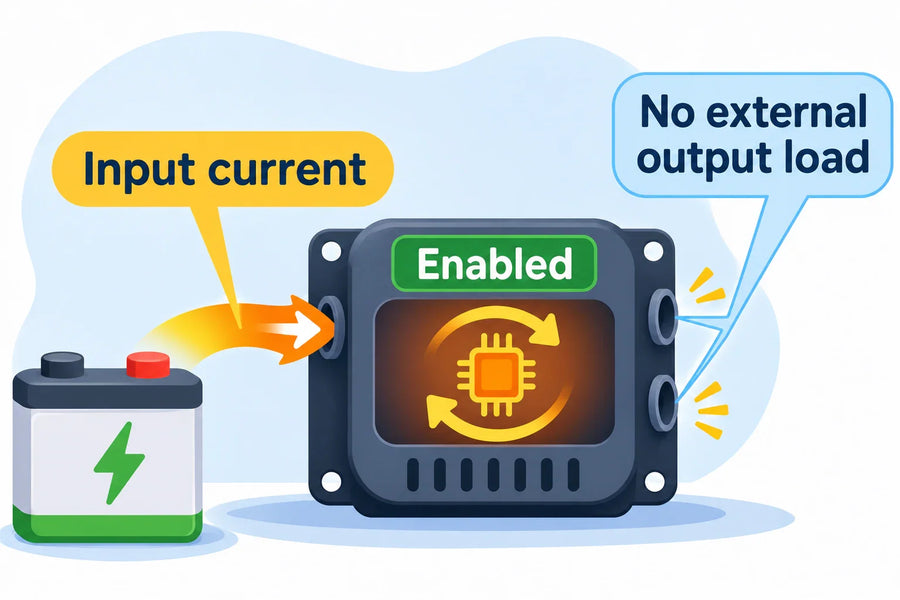
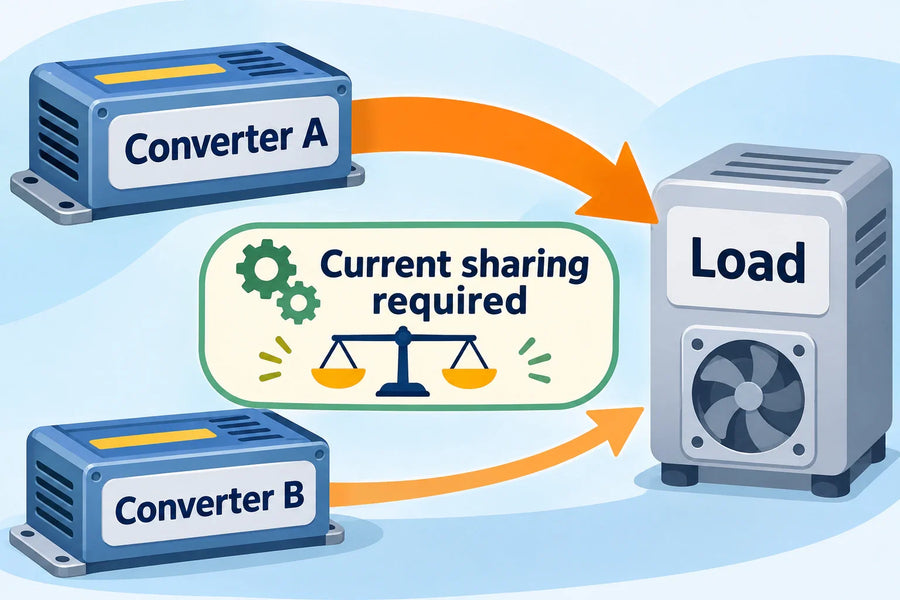
- accessory or DC-to-DC converter requirements.
Do not assume an existing lead-acid charger is suitable. Flooded-battery profiles may use voltages or charging stages that make a lithium battery's BMS disconnect or damage the pack. Use the lithium-compatible charger supplied with the Vipboss conversion kit, or another charger profile explicitly approved for the exact battery.
For a 48V golf-cart upgrade, the Vipboss 48V 105Ah lithium conversion kit is one purpose-built option to evaluate against this checklist. Confirm controller demand, charger settings, cable and fuse ratings, tray fit, state-of-charge display and temperature limits for the specific cart before installation.
Cold-weather limits also differ by model. Standard LiFePO4 packs commonly restrict charging around or below freezing even when they can still discharge at lower temperatures. Self-heating models extend the charging range. Flooded lead-acid can be charged below freezing with the correct temperature-compensated settings, but its available capacity also falls in the cold. For example, the Vipboss pack lists charging from 0°C to 55°C with a low-temperature cutoff below 0°C; that limit should be treated as a compatibility requirement, not a minor specification.
Cost: upfront price versus ownership cost
Flooded lead-acid normally costs less to buy. That advantage is strongest when the cart is used infrequently, ownership will be short, existing equipment can remain in place, and the owner performs maintenance.
LiFePO4 normally costs more upfront, and a conversion may also require a charger, brackets, cables, protection and a compatible state-of-charge gauge. Its longer cycle life, greater usable capacity and lower maintenance burden can offset that premium in frequent-use or long-ownership scenarios, but payback is not automatic.
Use an installed-cost calculation:
total ownership cost = battery pack + charger and conversion hardware + installation + maintenance + electricity + replacements − residual value
Use current quotes and the same ownership period for both choices. Cost per cycle is only meaningful when the cycle ratings use comparable depth-of-discharge, temperature and end-of-life assumptions.
Which battery should you choose?
Choose LiFePO4 when:
- reducing battery-bank weight matters;
- the cart is used and recharged frequently;
- more usable energy from a compact pack is valuable;
- minimal routine maintenance is a priority;
- you expect to keep the cart long enough to benefit from longer cycle life; and
- the charger, controller, wiring, tray, gauge and temperature limits can be made compatible.
Choose flooded lead-acid when:
- the lowest initial purchase price is the main constraint;
- the cart is used lightly or kept for a shorter period;
- the existing battery and charging system is already suitable;
- the added weight is acceptable; and
- the owner will reliably handle watering, terminal care and charging.
For most high-use golf carts, LiFePO4 is the stronger long-term option. For occasional use on a tight upfront budget, flooded lead-acid can still be the rational choice. Make the final decision with complete-pack weight, usable watt-hours, verified cycle conditions, installed cost and conversion compatibility—not chemistry labels alone.