
Yes, welding cable can be used for a battery connection when the particular cable’s documented ratings and construction meet the connection’s requirements. The label “welding cable” alone is not enough: assess the cable’s application and insulation ratings, the circuit’s current and voltage-drop needs, and the cable-end connections before deciding.
Check the particular cable
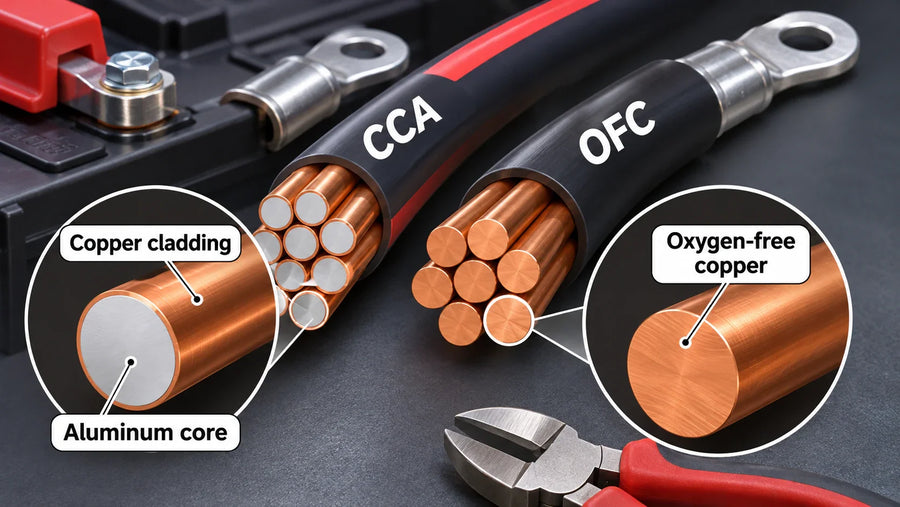
Start with the cable’s markings and manufacturer application documentation. Identify its conductor size and any documented voltage, temperature, and environmental ratings. Match those ratings to the actual connection: consider the voltage, expected temperature, exposure to moisture or other environmental conditions, and mechanical demands. The cable’s application markings and ratings matter because ratings for one cable category cannot simply be transferred to another.
Welding-use requirements address the cable’s suitability for welding operations, not every other application. For example, OSHA’s requirements for welding cables include flexibility, insulation, and capacity for the welding operation’s current and duty cycle. Meeting welding-use requirements does not by itself establish that the cable meets the conditions of a battery connection.
Assess current and voltage drop separately
Determine the circuit’s actual current and the cable’s installation conditions, then assess ampacity, or the current the conductor can carry under those conditions, using applicable cable documentation and installation requirements. Insulation temperature rating, ambient temperature, heat dissipation, and nearby current-carrying conductors can affect the assessment; a conductor size alone does not settle it. Ampacity depends on installation conditions, not just a nominal wire size.
Then assess voltage drop along the specific cable run under the relevant operating condition. This is separate from ampacity: a cable may meet the current-capacity check while the voltage lost along the run still leaves too little voltage for the connected equipment or circuit. Compare the assessed drop with that equipment’s or circuit’s voltage requirements during that condition. If the voltage at the equipment remains within those requirements, the voltage-drop check is satisfied; if it falls outside them, this cable run does not meet that requirement. Without the applicable requirement or an assessment for the actual run and operating condition, suitability remains undetermined. The ampacity assessment does not account for voltage drop, so passing one check does not settle the other.
Check the terminations
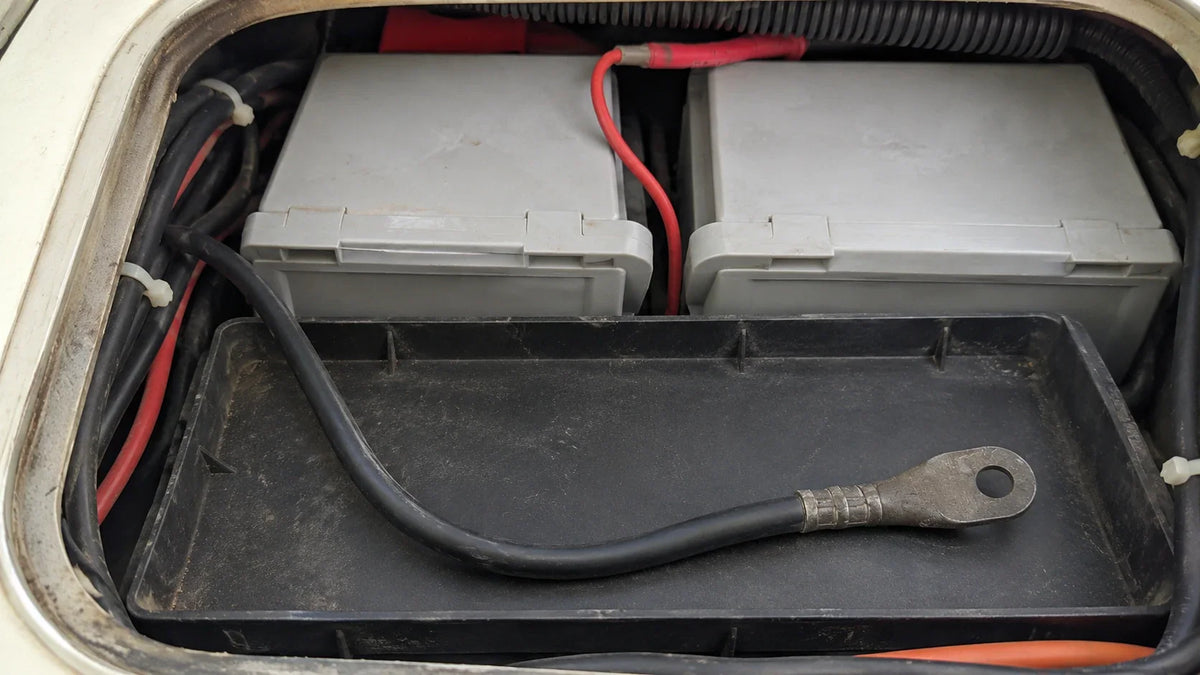
The lug or connector must suit both the cable conductor and the equipment terminal. Check their documented ratings and the applicable installation requirements, including the specified method for making the connection. Do not assume that a lug or installation method suitable for welding cable is automatically suitable for the battery terminal.

Make the decision from the documentation
Use the cable only if its applicable construction and ratings meet the connection’s environmental and electrical requirements, its ampacity meets the installation’s current requirements, its voltage drop keeps the equipment or circuit within its applicable voltage requirements during the relevant operating condition, and its terminations meet their documented requirements. If a required rating, voltage requirement, or assessment is unavailable, the cable’s suitability for that connection remains undetermined; the welding-cable label cannot fill in the gap.
FAQs
Does meeting welding-cable requirements establish that a cable is suitable for a battery connection?
No. Welding-use requirements address the cable’s suitability for welding operations, so the particular cable’s documented ratings and construction must still be assessed for the battery connection.
Can a cable pass the ampacity check but fail the voltage-drop check?
Yes. Ampacity and voltage drop are separate checks; compare the voltage at the connected equipment with its or the circuit’s requirements during the relevant operating condition.
What should the cable’s lug or connector match?
It must suit both the cable conductor and the equipment terminal. Check their documented ratings and use the installation method specified by the applicable requirements.