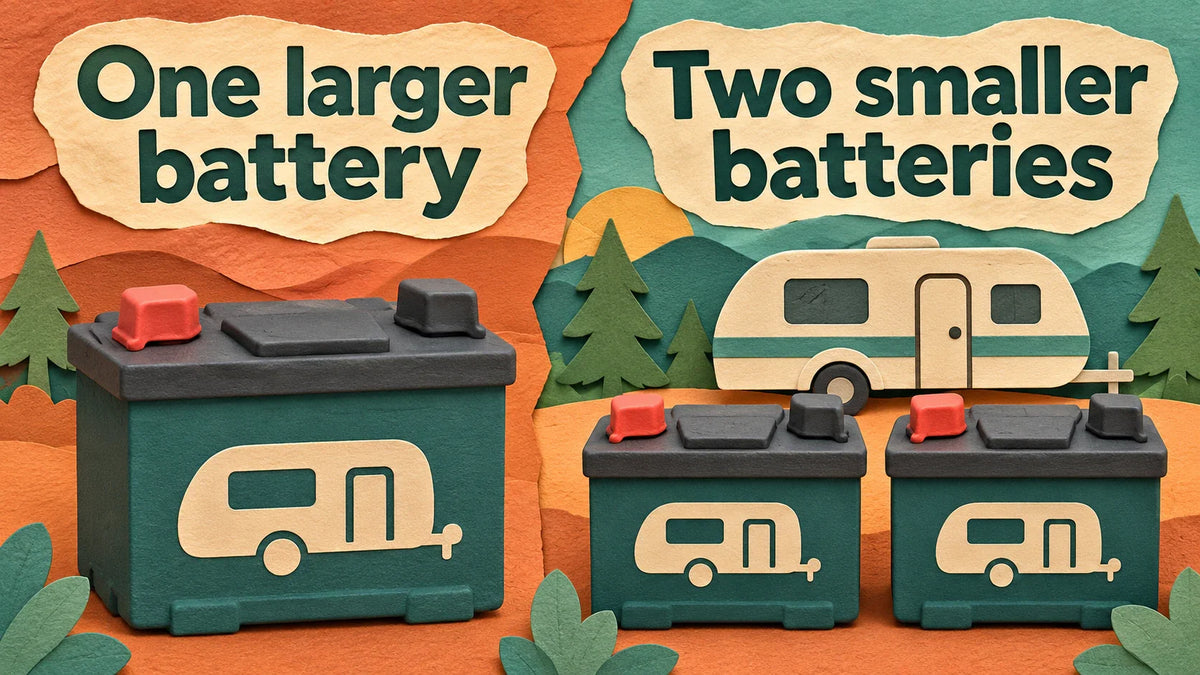

Choose the arrangement that meets your travel trailer's energy needs and simultaneous-load demands, fits its battery space, and is supported by the batteries' instructions. One large unit consolidates placement; two smaller units can offer more placement options, but their ratings do not automatically combine unless the specific batteries support that configuration.
Compare energy with your expected use
Start with the same quantity for both options: energy, usually shown in watt-hours (Wh). If a battery lists amp-hours (Ah) and nominal voltage, estimate nominal energy by multiplying them: Ah × volts = Wh. For two batteries, add their stated energy only when comparing the bank's stated total capacity; that arithmetic does not establish that the batteries can be connected or operated together.
Estimate your trailer's energy use over the period you want the bank to cover. Add the energy used by appliances and other loads during that period, using their ratings and expected run times where available. Compare that estimate with each candidate bank's documented usable energy. A close match does not guarantee a fixed runtime: actual capacity can vary with discharge rate, and use patterns and operating conditions affect how long the bank lasts.
For example, the Vipboss 12V Bluetooth LiFePO4 battery range lists a 105Ah model at 1,344Wh and a 210Ah model at 2,688Wh. Two 105Ah units add up to 2,688Wh in stated energy, but they can be treated as an operating bank only if their proposed configuration is supported.
Check output for loads that overlap
Energy is how much work a bank can supply over time; output is how much power it can deliver at a given moment. List the trailer loads that may run at once and add their documented demand for that overlap. Compare that total with the applicable continuous output rating for the candidate battery or bank.
Do not assume two batteries' output ratings add just because their energy figures can be added. The specific batteries must support the proposed parallel arrangement, and their instructions and ratings determine the permitted configuration and output. The supplied Vipboss range lists a 100A BMS for its 105Ah model and 200A BMS ratings for its 210Ah and 320Ah models.
Compare fit and connection layout

Measure the available compartment and access path, then compare them with the actual dimensions of each candidate battery. One large unit may use a single consolidated position. Two smaller units need room for both batteries and their connections, even when each battery is easier to place separately.
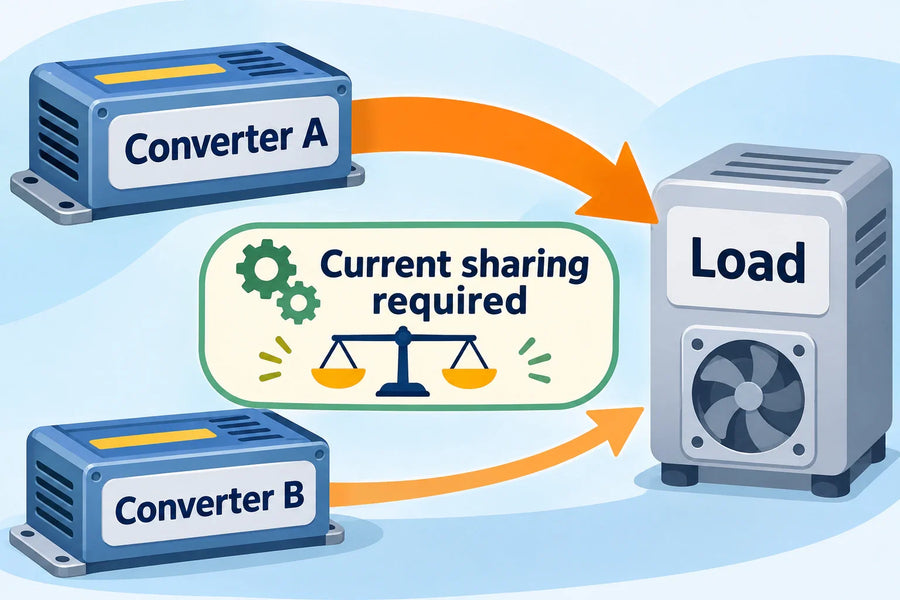
If the batteries are to operate in parallel, confirm that their documentation supports that arrangement. Unequal resistance in parallel connection paths can make batteries share current unevenly, so the battery maker's specified layout matters. For more on that comparison, read why parallel LiFePO4 batteries may share current unevenly.
Make the choice
Rule out any option that falls short of the bank's documented usable energy, cannot support the trailer's overlapping loads under its documented configuration, or does not fit the available space. Among the options that meet those needs, choose one large battery when its ratings are sufficient and consolidated placement works. Consider two smaller batteries when their supported combined configuration meets demand and separate placement suits the trailer better.
Battery count alone does not determine the better choice. Compare energy for expected use, documented output for simultaneous loads, supported configuration, and actual fit.
FAQs
What space should I allow for two smaller batteries instead of one large battery?
Measure the battery compartment and access path against the actual dimensions of the candidate batteries. Two batteries need space for both units and their connections, while one larger battery consolidates placement.
Does having enough battery energy mean the bank can run all my trailer loads at once?
No. Energy describes stored capacity, while output describes how much power a battery or bank can deliver at a given moment. Compare loads that may overlap with the applicable documented continuous output rating. Do not assume two batteries' output ratings combine unless their documentation supports the proposed configuration.