
You do not automatically need to remove a 48V lithium golf cart battery for winter. Leave it installed when the battery's storage instructions and the cart's prescribed storage state can both be followed in the planned location; relocate it if the installed setup cannot meet those requirements. The voltage alone does not decide the question.
Compare the battery, cart, and storage location

Check the battery instructions for long-term storage charge, storage mode, temperature limits, monitoring, and charging behavior. Then check the cart instructions for how to reduce electrical loads during storage. Finally, compare those requirements with the actual winter location and the length of storage. These instructions can differ between battery families and cart models, so a setting recommended for one system is not automatically right for another.
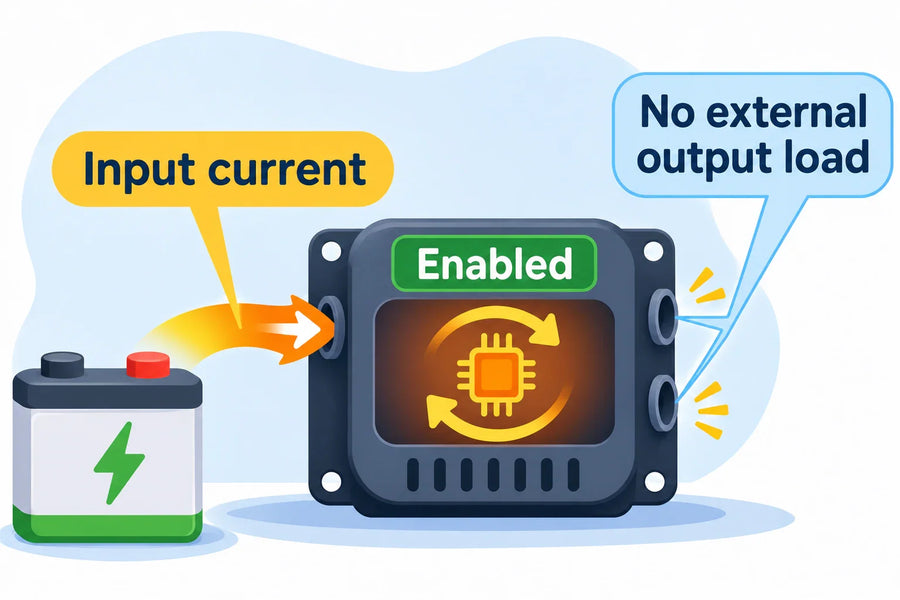
Some lithium golf-cart guidance permits leaving the battery in the cart when it is placed in storage mode and the cart is set to TOW, which can reduce extra power drain. Treat this as a scoped example, not a universal setting: use those modes only if the instructions for your battery and cart prescribe them. If the cart cannot be placed in its required storage state, or the installed location cannot meet the battery's environmental requirements, removal or relocation may be the better choice.
Follow the battery's storage requirements
Set the storage charge from the battery instructions. Do not assume every 48V lithium battery uses the same charge level for winter. For example, one battery-family guide says not to begin prolonged storage below 30% state of charge, recommends fully charging before long-term storage, and calls for checking charge every 4–6 months. Those are that family's recommendations, not general thresholds for all 48V batteries.
The same guide describes storage for up to 12 months only when its battery is fully charged, in storage mode, and kept in climate-controlled conditions. That duration should not be applied to a different battery or storage environment. Use the actual battery's instructions to determine its charge, monitoring interval, and permitted storage duration.
Distinguish storage temperature from charging temperature. A battery's permitted storage conditions do not by themselves establish when it may be charged. Follow the battery's separate temperature limits and charging instructions; do not infer a generic winter temperature threshold from its 48V rating.
Decide whether relocation changes the conditions
Leave the battery installed if its instructions allow installed storage, the cart can be set to the prescribed low-drain or storage state, and the location meets the battery's requirements. Remove or relocate it when one of those conditions cannot be met in the cart. Relocation is useful when the new location better satisfies the applicable requirements; removal is not a requirement simply because winter is approaching.