
To diagnose uneven charging or discharging in a parallel LiFePO4 bank, compare each battery under equivalent conditions rather than relying on bank voltage alone. Note each battery's voltage, temperature, connection path, and BMS status; then check the connections. If the difference follows a branch, investigate that path; if it stays with the same battery, that battery or its BMS is the stronger suspect. Follow the battery and system instructions when isolating or testing components.
The most useful rule is: branch-following problems suggest wiring; battery-following problems suggest the battery, its starting state, or its BMS.
What uneven behavior means in a parallel bank
Parallel batteries share nominal voltage, but each retains its own cells, internal resistance, state of charge, and battery management system (BMS). The BMS protects against operation beyond that battery's voltage, current, and temperature limits. Resistance in each connection path can affect how batteries behave when connected in parallel.
These differences can lead to unequal current or to batteries reaching their limits at different times. Cable length, contact quality, fuse resistance, temperature, age, and battery condition can contribute. A resting voltage difference is a clue, not a complete diagnosis: LiFePO4 voltage stays relatively flat through much of its usable range, and similar readings do not necessarily mean batteries have the same state of charge.
| Pattern | Stronger initial suspect |
|---|---|
| The same physical branch always carries more or less current | Cable, lug, fuse, busbar, or connection resistance in that branch |
| The behavior moves when the battery is moved to another approved branch | The battery's state, condition, temperature, or BMS |
| One battery reaches charge protection first | Different starting charge, temperature, battery condition, or charge-path resistance |
| One battery reaches discharge protection first | Different starting charge, usable capacity, temperature, or current sharing |
| Readings differ only briefly after connection | Initial state difference; observe whether the bank settles before concluding there is a fault |
Why charging becomes uneven
A battery that starts at a different state of charge, has a different connection resistance, or operates at a different temperature may accept current differently. Each battery's BMS may also respond when that battery reaches a voltage, current, or temperature limit, so compare individual battery readings and BMS status rather than inferring the whole bank's behavior from one battery.
Check these differences in order:
- Starting state. Compare each battery after the bank has rested. A different starting state can contribute to different charging behavior.
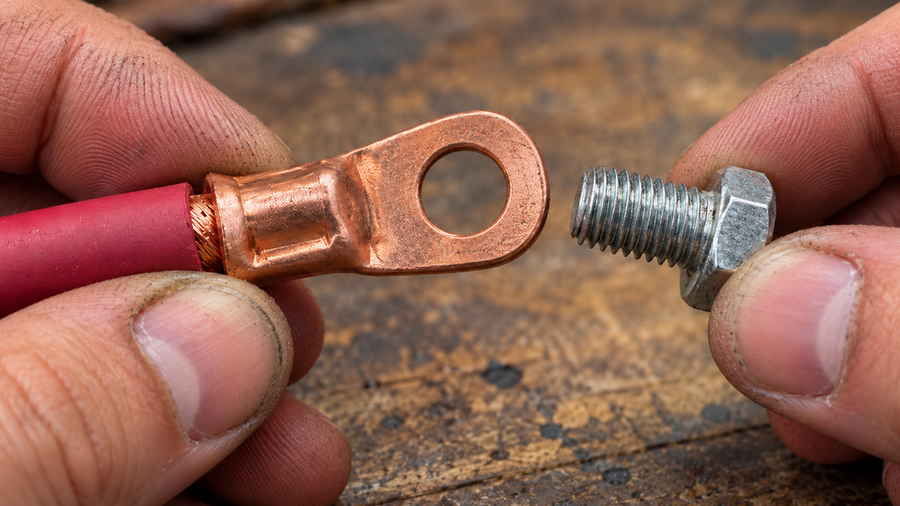
- Connection resistance. With charging off, inspect terminals, fuses, disconnects, busbars, and cables for loose or corroded connections, damaged hardware, or different branch paths.
- Temperature. Compare battery temperatures and BMS status; different operating temperatures may affect charge behavior.
- BMS status. Check each battery's monitoring system, if available, for a protection event or limit status.
- Battery condition. If the same battery remains an outlier after connection and temperature differences are considered, consult its manual for the next diagnostic step.
Note whether the difference appears mainly near the top of charge or persists through the cycle. That timing helps narrow which differences to investigate, but it does not identify a cause on its own.
Why discharging becomes uneven
During discharge, differences in starting charge, connection resistance, temperature, battery condition, or BMS behavior can make batteries deliver different current or reach their limits at different times. Compare each battery's readings and status under the same load; do not assume that one battery's protection event determines the behavior of the entire bank.
If one branch carries noticeably more current, inspect its cable and connection path. If one battery's voltage falls faster while its branch current is similar, compare its starting charge, temperature, age, and BMS status. Whether the symptom follows a connection branch or stays with the same battery helps distinguish a path issue from a battery-related one.
How to separate a wiring problem from a battery problem

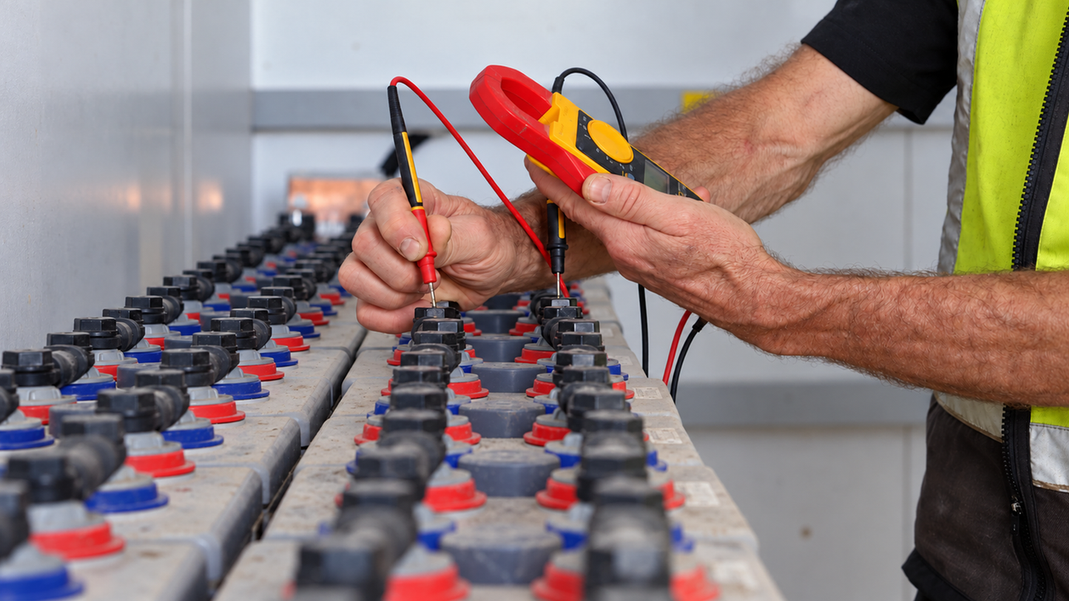
Make comparisons under the same charger or load, and record each battery's voltage, temperature, and BMS status at the same time. Do not compare a battery under charge with one that has been resting.
For example, if Battery A carries more discharge current than Battery B, a qualified comparison of the branches may help identify the cause. If the difference follows the branch, the connection path is the stronger suspect; if it stays with Battery A, the battery or its BMS is the stronger suspect. Change connections only if the manufacturer's instructions and a safe isolation procedure allow it.
When comparing charging behavior, note which battery reaches a BMS limit first, then determine whether the difference tracks the connection path or the battery.
Correct the bank in the right order
Do not start by replacing the battery that shows the lowest app reading. Work from the external path inward:
- Stop charging and loading the bank using the approved shutdown procedure.
- Verify that all batteries are the approved model, voltage, capacity, age range, and configuration.
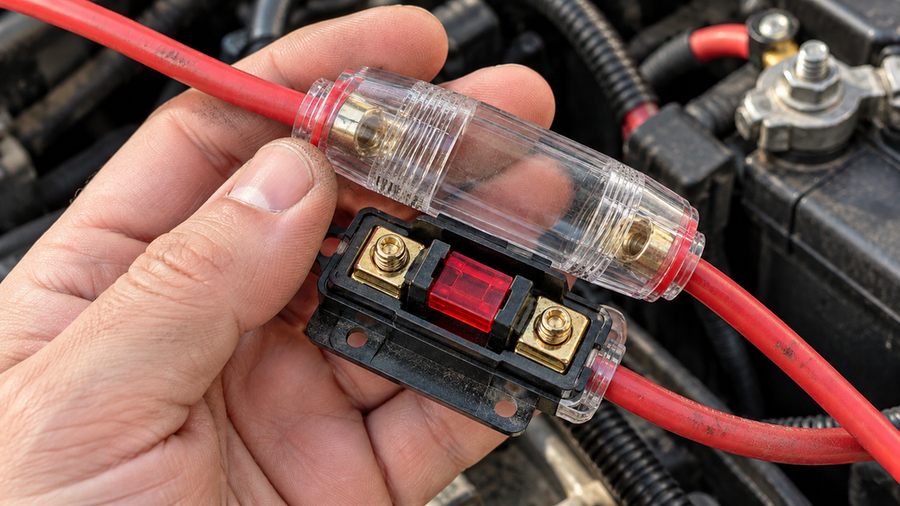
- Inspect and compare branch cables, lugs, fuses, disconnects, busbars, and terminal condition.
- Confirm that the bank uses the manufacturer's balanced connection method and specified cable arrangement.
- Bring batteries to the required connection state using the manufacturer's procedure; do not directly parallel batteries with an unapproved voltage difference.
- Retest all branches under the same charger or load and record readings at the same time.
- Escalate a battery-specific result to the manufacturer instead of opening or bypassing its BMS.
When using the Vipboss 12V 105Ah Bluetooth LiFePO4 battery, Bluetooth monitoring can make this comparison easier because each battery's reported status can be recorded at the same test points. Its support for configurations up to 4S4P establishes a product-specific connection boundary, but it does not guarantee equal current sharing in a poorly wired bank.
Use only compatible, matched batteries in the approved configuration. If one unit is being added to an older bank, confirm the manufacturer's requirements for age, state of charge, and expansion before connecting it; “same voltage” is not enough to establish a suitable match.