
No, you should never keep using a swollen lithium battery; this article explains the risks, warning signs, safe handling, and prevention strategies for off‑grid systems.
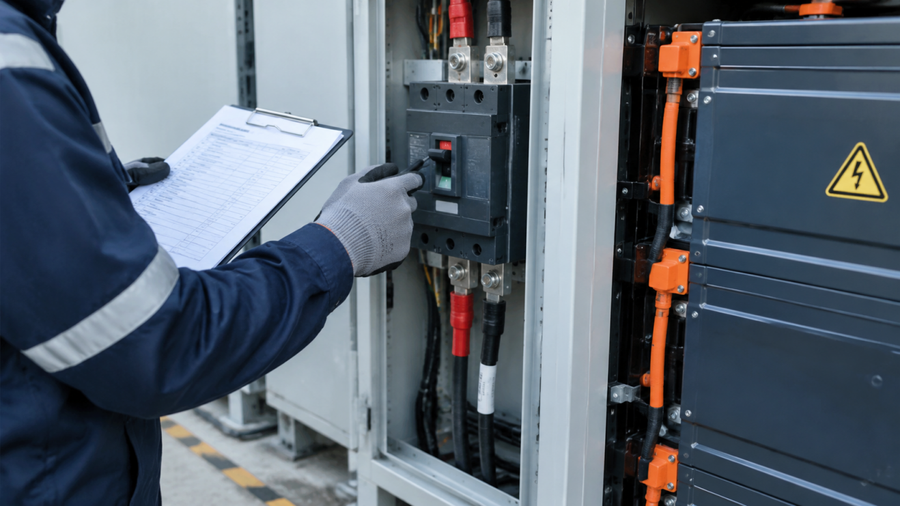
You open the battery cabinet and see one module starting to puff, the front no longer quite flush, yet the lights are still on and everything appears normal. It is tempting to postpone action until the next service window, but in real systems those barely bulging packs are often the same ones that warp hardware and turn minor abuse into major failure. Here is how to read what that deformity is telling you, decide whether the system is safe to run, and plan a clean upgrade that protects your home, your gear, and your off‑grid uptime.
What Swelling Really Means Inside a Lithium Battery
Battery swelling is the visible bulging of a cell or enclosure caused by gas building up inside the battery, and is widely recognized as a sign of internal failure and a potential fire or rupture hazard in lithium packs used in everything from phones to laptops and test equipment. Guidance on battery swelling in portable devices explains that this expansion comes from breakdown of the internal electrolyte and electrodes, not from anything cosmetic that can be pressed back into shape, and it should be treated as a serious warning, not a normal aging quirk. Battery swelling guidance makes the point that a swollen pack is failed hardware.
The same chemistry that runs your off‑grid bank or rack behaves no differently. Safety briefings on lithium batteries emphasize that electrical abuse such as overcharging or deep over‑discharge can destabilize internal materials, generate gas, and push a cell toward internal short circuits and heat. Recommendations from university safety programs are explicit that going far below the recommended discharge limit can damage separators, generate gas, and set up the conditions for thermal runaway if the cell is stressed again during charging. Battery safety guidance makes over‑discharge a named risk factor.
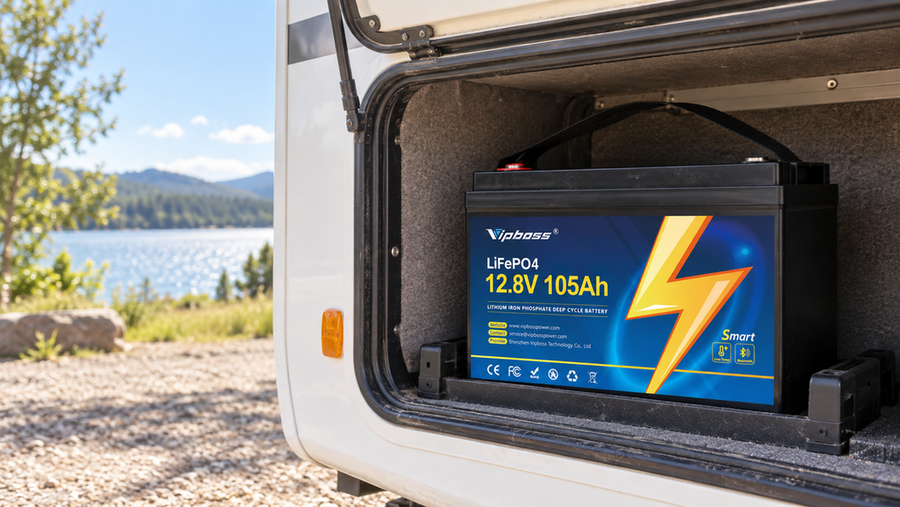
In home and small commercial energy storage, lithium iron phosphate packs are marketed for long life, but swelling is still called out as a red flag for serious internal damage. Practical advice for LiFePO₄ systems lists over‑discharging, high temperature, physical abuse, and improper low‑state‑of‑charge storage as major triggers for swelling, and stresses that any visible bloating or new gaps in the enclosure mean the system should be shut down and inspected by a qualified technician, not used as‑is. The same guidance recommends running LiFePO₄ around moderate depths of discharge and avoiding repeated runs down to a very low state of charge specifically to avoid this kind of damage. Battery swelling explanations for LiFePO₄ systems tie swelling directly to these stress patterns.

Can You Still Use a Swollen Battery After Over‑Discharge?
Across manufacturer guidance, repair specialists, and safety officers, the answer is consistent: once a lithium battery is swollen, it should not be used again. University fire safety documentation on swollen lithium packs states plainly that you should stop using the device, replace the battery immediately, and isolate the damaged pack in a suitable container away from combustibles until it can be disposed of properly. Swollen lithium battery advice treats any such pack as end‑of‑life.
Industrial battery handling guides go further and class swollen or leaking lithium batteries as hazardous materials that must never be reused or recharged once damage is visible. A detailed handling guide explains that a swollen pack, by definition, has internal damage and elevated risk of fire, explosion, and toxic gas release, and therefore must not be put back into service or mechanically flattened to “fix” the shape. Safety handling guidance for swollen or leaking lithium batteries labels such packs as permanently unfit for use.
Repair experts working hands‑on with swollen phone and laptop batteries deliver the same verdict: devices with swollen lithium cells should not be used, and any attempt to keep using or recharging the pack only raises the chance of a sudden failure, venting, or fire. Their recommendations are to power down, isolate, and replace, and they explicitly warn against pressing, bending, or puncturing a swollen cell. Practical repair guidance on what to do with a swollen battery treats the pack as dangerous until removed and recycled.
Over‑discharge makes the situation worse. When a bank has been repeatedly drawn down far below the recommended cutoff or left for long periods at very low voltage, guidance from both laboratory safety programs and off‑grid battery vendors warns that internal layers degrade and gas formation becomes more likely on the next charge. Combining deep over‑discharge with visible swelling is not a gray area where “gentle cycling” will recover capacity; it is a clear signal that the cell stack has failed and must be replaced.
How Over‑Discharge Deforms Your Battery Bank
In small devices, swelling shows up as phone screens lifting, laptop bases that no longer sit flat, trackpads that stop clicking, or wearable backs that pop out under pressure. Those same physical clues scale up into off‑grid gear: modules that rock on their mounting surface instead of sitting square, front covers that bow outward, or new gaps appearing along cabinet seams. Detailed descriptions of swollen lithium packs in portable devices highlight this kind of case deformation, lifted panels, and wobbling on flat surfaces as primary warning signs. Battery swelling descriptions emphasize “no longer sits flat” as a key red flag.
With over‑discharged cells, the deformity often starts subtly. A pack regularly pulled far below its rated depth of discharge and left there sees its internal materials break down and release gas, which inflates the pouch or can. At first you may only notice a slight bulge along the largest face of a module or a door that needs a little extra push to latch. As cycles continue, that gas pressure can spread the cell stack, bow the case more noticeably, and begin to press on nearby hardware, wiring, or even adjacent modules.
As things worsen, other senses join the visual cues. Multiple safety and repair sources describe strong chemical odors, unusual warmth during light use, or visible residue or leakage near the battery compartment as signs that swelling has progressed into active off‑gassing or breach of the cell envelope. Guidance on defective lithium packs warns that smoke, strong odors, or visible leakage mean the risk of ignition is increased and that the battery should not be handled directly. Practical instructions for swollen lithium‑ion batteries stress that such symptoms call for isolation on a fireproof surface and monitoring from a safe distance.
For an off‑grid installer or owner, the key point is that any shape change in the battery that you can see or feel with the cabinet open is a diagnostic signal. It is evidence that the pack has been pushed outside its safe operating envelope, often by combinations of over‑discharge, overcharging, and heat. That is not the time to “wait and watch”; it is the time to shut down, document, and plan a controlled replacement.
Here is a practical way to translate what you see into action:
Physical sign |
Likely situation |
Recommended action |
Module or pack no longer sits flat |
Internal gas buildup from damage or over‑discharge |
Take out of service and schedule replacement |
New gap or bowing in cabinet or cover |
Swelling pressing against enclosure |
Power down, open cabinet, and isolate the pack |
Warm spot or chemical smell near one module |
Off‑gassing or internal short in that pack |
Evacuate area if there is smoke, then isolate and cool |
Visible leak, crust, or torn outer wrapper |
Breached cell and electrolyte exposure |
Treat as hazardous, contain, and dispose safely |
These signs do not tell you how much life is left; they tell you how urgently you need to remove that battery from service.

Immediate Steps When You Spot Swelling
Once you suspect swelling, the first move is to stop feeding energy into the problem. Device and safety guidance agree that you should power down the equipment, disconnect charging sources, and keep the swelling battery away from flammable materials in a well‑ventilated area. Advice for consumer devices and lab environments is consistent: do not keep running a system on a swollen lithium pack, and do not leave it plugged in “just to top it off.” Battery swelling guidance and swollen battery fire‑safety advice both put immediate shutdown at the top of the response.
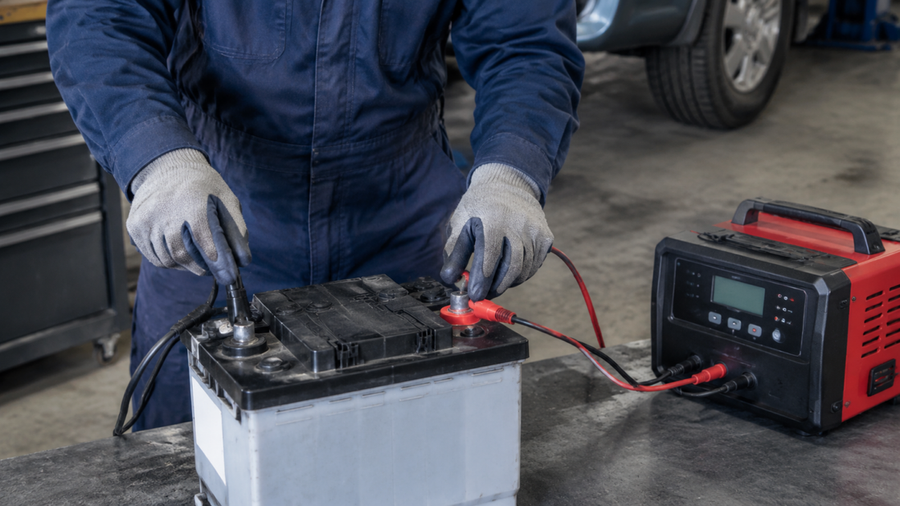
When handling the pack, assume that any extra pressure, bending, or piercing could be the last straw that triggers an internal short. Safety handling guides for swollen and leaking lithium batteries recommend wearing gloves and eye protection, avoiding direct contact with any leaked material, and never puncturing or trying to flatten the cell back into place. They advise placing the damaged pack in a nonflammable, non‑conductive container such as a metal box or sturdy plastic tub with dry sand, stored in a cool, ventilated area away from heat sources and other batteries. This kind of containment is central to safety handling guidance for swollen lithium batteries.
For short‑term storage before disposal, experienced handlers recommend taping over exposed terminals to prevent accidental short circuits and keeping the container somewhere cool and dry, rather than in enclosed warm spaces or refrigerators. Advice from battery technicians emphasizes that a bulging pack left unused and undisturbed is generally safer in the very short term than one that someone tries to use up or deliberately discharge, since any deliberate load adds heat and stress. Repair‑focused guidance on swollen lithium batteries reinforces the idea of leaving a suspect pack uncharged and isolated until professionals can take it.
For final disposal, the key is to get the battery into the right waste stream. Recycling organizations classify swollen, leaking, burned, or recalled lithium batteries as damaged, defective, or recalled units that require special packaging and transport under Department of Transportation rules. They explicitly forbid placing such batteries in ordinary drop‑off boxes and instead route them through dedicated kits and services designed to meet those transport requirements. Guidance on damaged, defective, and recalled batteries explains that these packs need specialized handling because they are more likely to spark and cause fires at collection and shipping facilities. For homeowners and small operators, local hazardous‑waste programs or specialized recyclers listed by national services are the right endpoints; curbside trash and normal recycling bins are not.
Preventing Swelling and Over‑Discharge in Off‑Grid Retrofits
The most cost‑effective way to handle swollen batteries is not to create them in the first place. For lithium energy storage, that starts with how deeply and how often you discharge your bank. LiFePO₄ guidance for home systems recommends avoiding frequent deep discharges and targeting moderate depths of discharge, around half the pack’s capacity, for best life and lowest swelling risk, along with long‑term storage around 40 to 60 percent charge when a system will sit idle. Practical recommendations on battery swelling in LiFePO₄ systems connect those habits with both safety and longevity.
Charging and storage habits matter just as much. Battery‑care articles for lithium devices routinely point out that leaving packs at 100 percent for long periods, or constantly running them down to empty, accelerates wear and encourages the internal reactions that produce gas and swelling, while keeping them in a middle range of charge reduces stress. Broader lithium safety guidance recommends avoiding overcharging, unplugging once full, and not parking devices on chargers indefinitely, since doing so raises temperature and chemical stress. Battery swelling causes and prevention measures focus on these everyday habits.
Temperature is the other major lever you control. Safety documentation for lithium batteries used in research settings advises storing them around 59°F in cool, dry places and warns against long‑term storage at the low and high extremes of their operating range, which can run roughly from negative single digits up to about 140°F depending on chemistry. Battery safety guidance stresses that high temperatures in particular accelerate internal reactions, promote gas formation, and can lead to swelling and thermal runaway. For home systems, guidance for LiFePO₄ banks recommends keeping the environment around 59 to 86°F with good ventilation and avoiding hot vehicles, enclosed closets near water heaters, or direct sun on enclosures. LiFePO₄ swelling prevention advice calls out that temperature window.
Hardware choices can also either protect or punish your battery bank. Safety programs and device makers alike recommend using only chargers and power electronics designed for the specific chemistry and configuration of your pack, since low‑quality or mismatched hardware can allow overcharging, excessive current, or uneven cell behavior that drive swelling. General lithium battery swelling discussions highlight cheap chargers and poor regulation as recurring themes in failure cases. Battery swelling causes and prevention link incompatible chargers with higher swelling risk.
At the system level, professional device labs and high‑utilization environments tackle swelling by actively managing charging behavior with programmable hubs and charge controllers that limit maximum charge level, control temperature, and avoid keeping devices at full charge for long stretches. This same mindset applies to off‑grid and retrofit work: design your bank and charging sources so that you are not routinely dragging the pack down into emergency reserves or baking it at the top of its voltage range all day. Advanced infrastructure for controlling device charging to mitigate swelling offers a model for how to treat your off‑grid system: use smart controls, not brute force.
If you are replacing a swollen portable power bank or smaller pack that feeds your off‑grid gear, it can make sense to upgrade to a model that integrates more robust temperature and charge monitoring. For example, some modern high‑capacity power banks use silicon–carbon cells, fire‑resistant enclosures, and dedicated safety chips that continuously monitor temperature and voltage, performing large numbers of checks per day to prevent overheating and overcharging. A guide on swollen power bank safety frames this as an investment in both performance and the reduction of swelling risk.
Quick FAQ
Is a small bulge really that bad?
Yes. All major guidance on swollen lithium batteries treats any visible swelling as a failure condition, regardless of whether the bulge is slight or extreme. The gas that causes a barely noticeable puff comes from the same internal breakdown that leads to more dramatic swelling and potential fire, so the only safe assumption is that the pack is already damaged and must be removed from service and recycled.
Can I safely discharge or “use up” a swollen battery to make it safe?
Deliberately loading a swollen battery to discharge it further is not recommended. Safety and repair advice emphasize that charging or actively discharging a damaged lithium pack adds heat and stress, which can trigger venting or ignition, while leaving it uncharged and unused slightly reduces the risk. Practical handling instructions for swollen lithium batteries focus on isolating the pack on a fireproof surface and letting it sit until professionals can dispose of it.
Do I have to replace the whole system if one module swells?
In most off‑grid or retrofit systems, a single swollen module or block can often be replaced without scrapping the entire installation, but it is vital to treat that swollen unit as a symptom, not the whole story. Swelling after over‑discharge usually points to design or configuration issues such as undersized capacity, overly aggressive depth‑of‑discharge limits, inadequate temperature control, or poor charging equipment. Replacing the damaged pack while keeping the same abusive conditions in place only resets the countdown to the next failure.
A deformed battery is your system’s way of shouting that the current setup has reached its limits. Retire that swollen pack, fix the underlying causes in your charging, depth‑of‑discharge, and thermal design, and you turn a hidden fire risk into a power upgrade you can trust when the grid is gone and the storm clouds roll in.