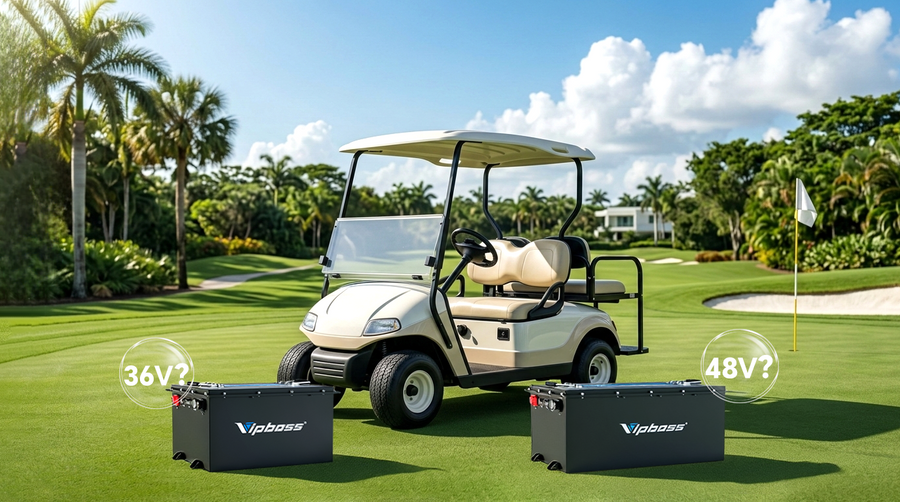
Upgrading a golf cart to a lithium battery can feel simple until you run into chemistry labels. LFP, NMC, “48V,” and “lithium-ion battery” are often mixed together in listings, yet the details behind them change charge voltage, heat behavior, and how the pack ages in a garage. A good match gives smooth torque and dependable range. A poor match can show up as charger faults, early cutoffs, or a pack that never seems to reach a true full charge.
What LFP and NMC Mean in a Lithium-Ion Battery
LFP refers to lithium iron phosphate, often written as a LiFePO4 lithium battery. NMC refers to nickel manganese cobalt oxide. Both are lithium-ion battery chemistries, but their “normal” voltages are different.
A quick voltage baseline:
- LFP cells are commonly treated as 3.2V nominal with 3.65V max charge.
- Many nickel-based lithium-ion cells are often treated around 3.6V nominal with 4.20V max charge.
That gap matters because cart packs stack cells in series. A typical “48V” LFP cart pack is often 16 cells in series (16S), which is 51.2V nominal (16 × 3.2V) and up to about 58.4V at 3.65V per cell. Shopping by sticker voltage alone can lead to a charger mismatch.
LFP vs. NMC Comparison for Carts: Safety, Range, and Cost
Most owners care about three outcomes: safe daily charging, consistent range, and a replacement timeline that makes sense. Here is the trade-off that usually decides it.
| Decision Factor | LFP (LiFePO4) | NMC |
|---|---|---|
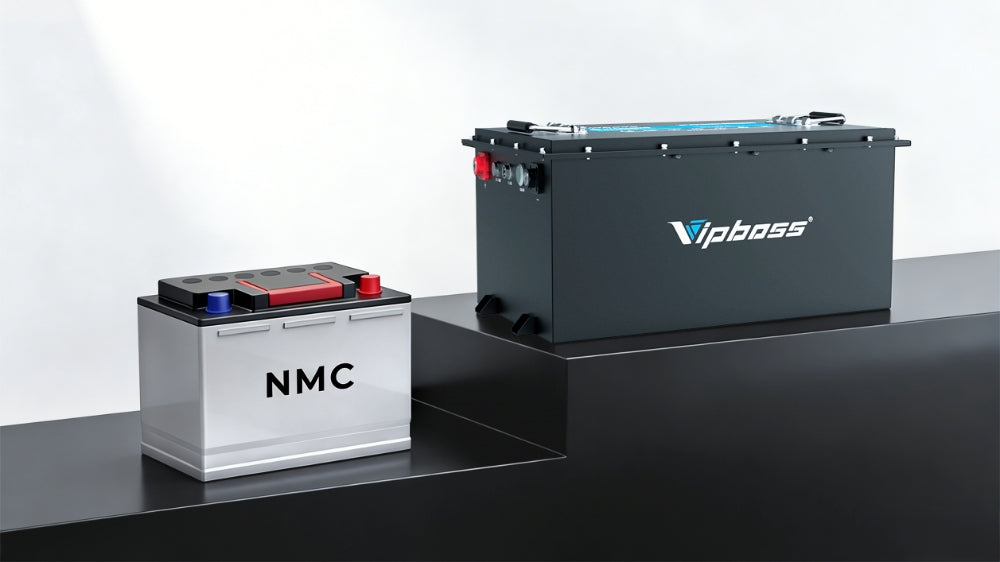
| Energy per size and weight | Usually lower energy density | Often higher energy density in many applications |
| Heat and abuse behavior | Often shows higher thermal runaway onset in comparative studies | Often shows lower onset in comparable cell tests |
| Long-term durability | Common choice where stability and longevity are valued | Durability can be more sensitive to high-voltage stress |
| Materials exposure | No cobalt | Uses nickel and cobalt |
A simple way to apply the table:
LFP often fits best for everyday neighborhood driving, frequent topping off, and carts stored in a garage where safety margin and long service life matter most.
NMC often fits best when the tray area is tight or weight reduction is a priority, and the build benefits from higher energy density.

Which Chemistry Feels Safer in Real Cart Use
Chemistry is only one piece of safety. Pack design and charger behavior do most of the work, then chemistry shapes the failure envelope.
Thermal Runaway Signals and What the Data Suggests
Thermal runaway is a self-heating failure that can follow severe abuse or an internal short. In published comparisons, onset temperatures can vary widely by chemistry and cell format, and LFP is often reported with a higher onset temperature than NMC in comparable cell-level testing.
The practical takeaway is limited but useful: LFP often offers more thermal margin, yet bad wiring, overcharging, or physical damage can still push any lithium battery pack into a dangerous state.
Pack-Level Safety Checks That Matter
When shopping for a lithium golf cart battery, prioritize documentation over buzzwords.
- UL 2271 is commonly used for batteries in light electric vehicle applications, with golf carts included in that category.
- UN 38.3 is a transport testing requirement for lithium batteries, and test summaries help verify that the transport tests were completed.
On the install side, look for a proper main fuse, secure cable routing, and clean terminations. Those basics reduce heat at connections, which is a common real-world failure trigger in high-current cart systems.
Which Lasts Longer in Daily Use: LiFePO4 Lithium Battery or NMC
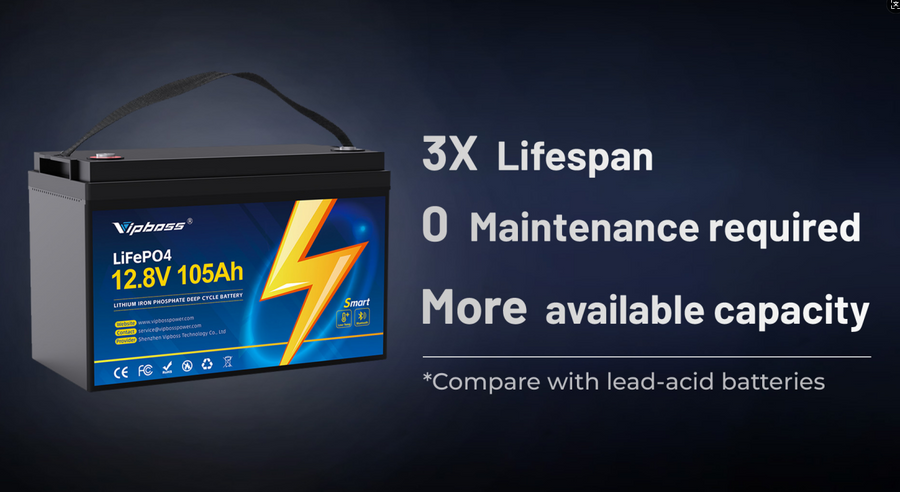
Longevity shows up as fewer weak days and fewer “mystery” capacity drops. LFP is widely chosen in applications that value stability and long service life, and comparative literature often frames it as lower energy density with strong safety and durability characteristics across many use cases.
Habits That Protect Cart Batteries
Avoid leaving a pack at the top of charge for long stretches when you do not need the full range. High voltage accelerates aging across lithium-ion families.
Temperature during charging also matters. Charging below freezing can raise lithium plating risk, so cold-garage owners should prioritize a pack or system design that blocks charging at freezing temperatures unless it is explicitly designed for that condition.
If your cart lives in a cold garage, low-temperature charge protection is not a nice-to-have. It prevents expensive damage.
Does NMC Deliver More Range in the Same Battery Box
NMC often enables higher energy density in mainstream designs, which can translate into extra watt-hours in a given box. That advantage is most valuable when the tray is tight, or when the cart must run longer between charges.
Range complaints after swapping to a new lithium battery often come from integration: an undersized BMS peak rating, a charger that does not match the series count, or a controller that demands high bursts on hills.

What to Check Before Buying a Lithium Golf Cart Battery: Voltage, Charger, and BMS
Most conversion headaches come from mismatched specs. Three checks prevent the majority of them.
Confirm the Real Voltage Architecture
Use cell math, not marketing labels. For LFP, the widely used reference point is 3.2V nominal and 3.65V max charge. Multiply by the series count, then compare that voltage window to your cart controller and charger requirements.
If the seller cannot explain the pack’s series count, treat that as a dealbreaker.
Match the Charger to the Chemistry
Lead-acid charging profiles can undercharge an LFP pack or behave unpredictably near absorption because the BMS may disconnect or throttle. For LFP, 4 cells in series (a 12V-class pack) commonly targets about 14.6V at 3.65V per cell, and the same logic scales to higher series counts.
Before purchase, get these charger specifics in writing:
- maximum output voltage
- charge current
- chemistry mode (LiFePO4 vs lithium-ion)
- temperature behavior and shutdown logic
Verify BMS Current Against Your Driving
Ask for continuous discharge current, peak discharge current, and peak duration. Loaded starts and hill climbs are where weak peak ratings show up first. A cart can feel fine on flat ground and still hit protection on a steep path.
When a 12V Lithium Battery Makes Sense for Accessories
A 12V lithium battery fits two common setups. Gas carts use 12V for starting and accessories. Electric carts often add 12V loads for lights, audio, USB power, or GPS. Some builds use a DC-DC converter from the traction pack; others keep a small dedicated 12V battery to isolate accessories.
Accessory isolation also helps in carts that sit for long periods. Small parasitic loads are easier to manage on a separate 12V system than on the main traction pack.
Conclusion: Choosing the Best Lithium Technology for Your Cart
LFP and NMC can both work in carts, but they reward different priorities. LFP tends to fit everyday ownership because its voltage profile aligns well with frequent charging, and comparative testing often reports higher thermal runaway onset temperatures for LFP at the cell level. NMC can be a strong option when compact packaging and energy density matter most.
Before purchase, lock in the series count, charger voltage, and BMS current rating. Once those match your cart and your driving, the lithium battery upgrade behaves like a predictable drivetrain improvement.
FAQs
Q1. Can I mix LFP and NMC batteries in the same cart pack to save money
No. Mixing chemistries in one series string creates different voltage curves, internal resistance, and state-of-charge behavior, which confuses balancing and can force cells outside safe limits. Mixed packs often drift, trigger protection, and age unevenly.
Q2. What’s the difference between cell balancing and “battery equalization” on a charger
Cell balancing is a low-current BMS function that trims small cell-to-cell voltage differences. Lead-acid “equalization” is an intentional overcharge step. Using equalization on lithium packs can overvoltage cells and trip protections or cause long-term degradation.
Q3. How should I store a cart lithium battery during a long off-season
For long storage, avoid leaving the pack fully charged. Aim for a moderate state of charge, disconnect parasitic loads, and store in a cool, dry place. Check voltage periodically and recharge gently if it drops too far.
Q4. Do I need to upgrade my cart solenoid, cables, or fuse when switching to lithium
Often, yes. Lithium packs can deliver higher instantaneous current than tired lead-acid banks. Undersized cables or corroded lugs can overheat. A correctly rated main fuse, clean terminations, and appropriate cable gauge reduce voltage drop and improve reliability.
Q5. How can I tell if my cart’s controller is limiting performance after a lithium upgrade
Look for a consistent top-speed cap, reduced acceleration regardless of battery state, or fault codes under load. If the controller has programmable current limits or low-voltage cutoffs tuned for lead-acid sag, recalibration may restore performance safely.