
LiFePO4 packs do not casually burst into flames; under normal off-grid use you are hundreds of degrees below their true thermal runaway threshold, and with decent design and installation the odds of ever reaching that point are extremely low.
Thermal Runaway, Plainly Explained
Thermal runaway in lithium-ion batteries is a self-sustaining, exothermic chain reaction where internal heat fuels even more heat until the cell destroys itself.
It is usually triggered by abuse: overcharging, short circuits, heavy mechanical damage, or severe external heating. Once started, separator material can melt, electrodes can touch, gases vent, and nearby cells may be pushed toward the same failure sequence.
For homeowners and off-grid professionals, the key insight is simple: thermal runaway is not a random event; it is the endpoint of a long chain of preventable mistakes and stresses.

LiFePO4's Real Thermal Runaway Threshold
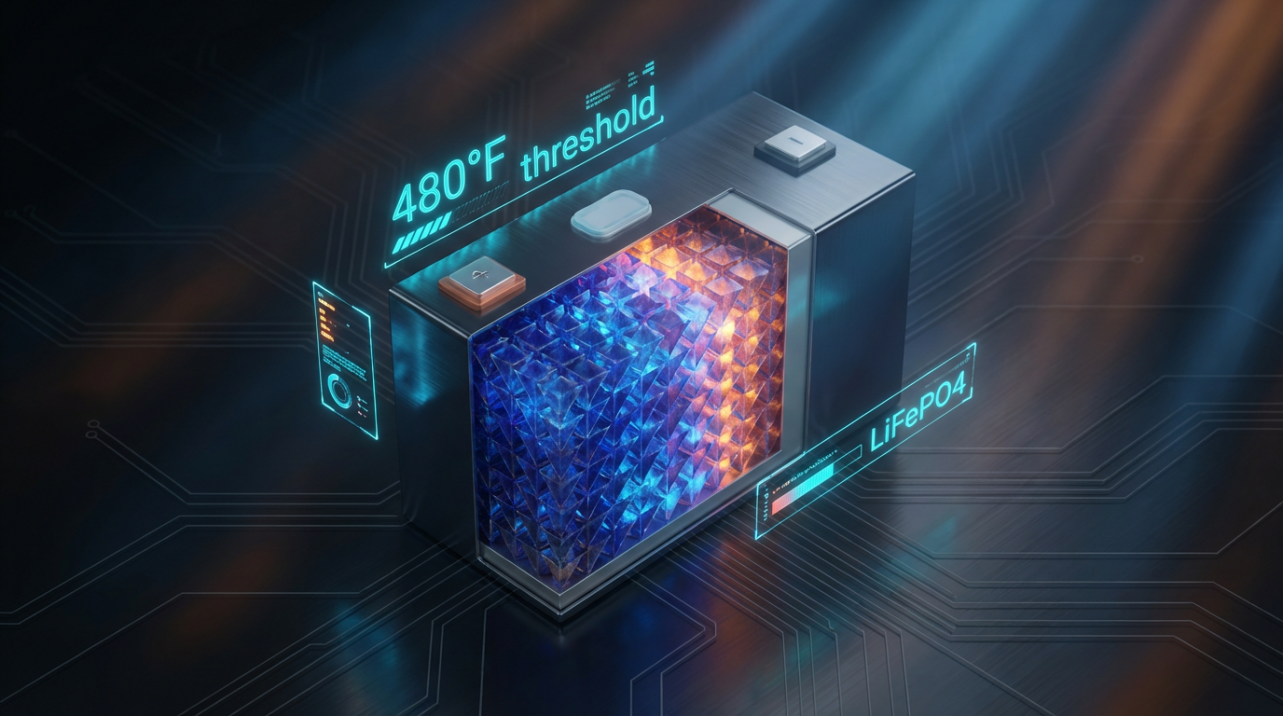
Most cobalt-based lithium-ion cells (like NMC) can enter thermal runaway around 320–410°F under abuse, while LiFePO4 generally needs much more punishment before it lets go. Independent testing shows LiFePO4 cells do not enter thermal runaway until internal temperatures climb to roughly 480°F or higher.
Other studies and manufacturer data cluster LiFePO4 thermal runaway onset in the 450–520°F band, with peak runaway temperatures still lower than those of many NMC cells. In plain language, the chemistry itself gives you a wider thermal safety buffer.

In well-designed systems, BMS and inverter protections are typically set to warn around 120–140°F and hard-shut well below 300°F. That means a healthy LiFePO4 bank is operating more than 150°F—and often 300°F—below the point where the chemistry becomes truly unstable.
LiFePO4 can still be driven into thermal runaway by severe abuse, especially crushing, puncture, or a surrounding fire, so "safer" never means "unburnable." For a deeper dive into LiFePO4 fire safety myths versus reality, including how these batteries compare to the dramatic e-bike incidents in the news, the picture is reassuringly different.
Why Off-Grid Designers Love LiFePO4
LiFePO4's iron-phosphate cathode has a very stable crystal structure that releases far less oxygen at high temperature than cobalt-rich chemistries, so once you stop the stress, its self-heating tends to die down instead of snowballing. That is a major reason reputable manufacturers emphasize that LiFePO4 batteries are safer for stationary storage.
Field experience backs this up: in home battery rooms and off-grid cabins that have been retrofitted, LiFePO4 banks tolerate occasional high loads or hot days without the hair-trigger behavior seen in some older lithium chemistries.
For off-grid and backup power, that translates into higher tolerance to temperature spikes before catastrophic failure, a lower chance of cell-to-cell fire propagation if one module is abused, more forgiving behavior when charge settings are not tuned perfectly, and an easier path to code compliance and homeowner peace of mind.
Real-World Risk: What Actually Fails First
When LiFePO4 systems go wrong, the spark is usually not the chemistry; it is the system around it. Common triggers match what large-scale storage operators see in renewable energy facilities: electrical abuse, mechanical damage, and poor thermal management.
In residential and off-grid installations, the practical weak spots are chronic overcharge or over-discharge from bad settings or cheap BMS hardware, undersized or loose cables that overheat long before the cells do, packs crammed into hot, unventilated closets or sun-baked sheds, and physical damage during shipping, mounting, or vehicle installation.
LiFePO4's high runaway threshold means the cells will usually outlast your wiring mistakes, but if hot conductors ignite nearby materials, you still get a serious fire even if the cells never technically run away.
Designing Your Safety Margin
Your job as a power upgrader is not to bet on chemistry; it is to build layer upon layer of margin so the system never gets near 300°F, let alone 480°F.
Many LiFePO4 safety studies recommend graded temperature alarms, with gentle cutbacks starting near 120–140°F and aggressive shutdown at higher limits. In practice, it is wise to design residential systems so that everyday operation stays under about 100°F, even on peak summer days.
For a retrofit or new build, focus on fast wins such as programming conservative charge limits (for example, not chasing 100% every day) and respecting the manufacturer's current limits, mounting packs in cool, shaded, ventilated locations rather than in attic "ovens" or tiny sealed boxes, oversizing cabling and breakers and using proper overcurrent protection so the wiring never becomes the fuse, and using a BMS with cell-level temperature monitoring and remote shutdown, then actually testing that it trips under simulated fault conditions. Proper cell balancing and BMS protection work together to prevent individual cells from drifting into dangerous voltage ranges. Avoiding engine bay mounting for LiFePO4 house batteries is equally important, since under-hood temperatures regularly exceed safe operating ranges.
If you do this, LiFePO4's "higher than you think" thermal runaway threshold becomes your last line of defense, not your first.