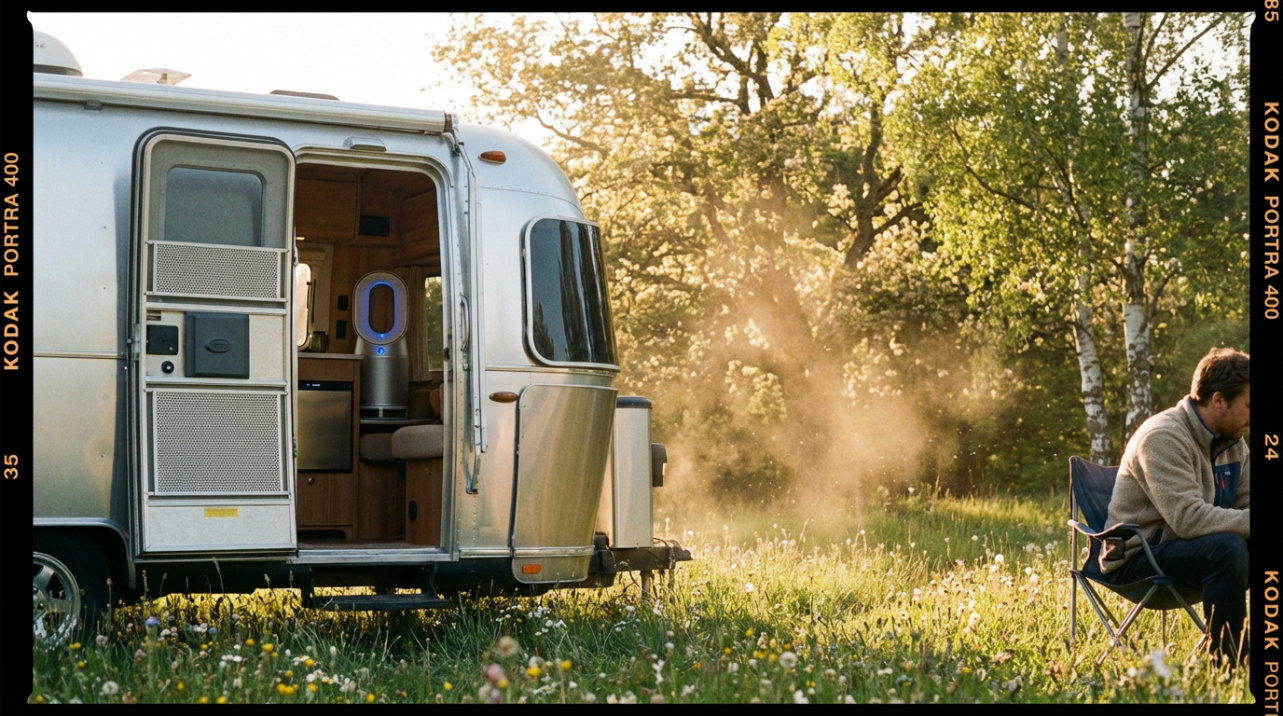

Running an air purifier through the entire pollen season can turn a sneeze-inducing RV into a livable, sleep-friendly space, but it quietly pulls power from your battery bank every hour it runs. The goal is clean air with smart energy planning, so you are not choosing between breathing comfortably and protecting your lithium state of charge.
Your eyes are burning, your nose is running, and you are trapped in a 200 sq ft box that has become a rolling pollen trap just as the trees and grasses peak. By the time you shut every window, turn on the air purifier, and flip your RV into “allergy bunker” mode, you may notice your batteries dropping faster than you like. The good news is that with the right purifier, placement, and power strategy, you can keep symptoms under control and still make it through a long season off-grid without babying your batteries.
Why Pollen Season Hits Hard Inside an RV
Seasonal pollen is a classic trigger for a runny nose, itchy eyes, congestion, and even asthma flares, and those symptoms are amplified when you spend most of your time in a small, sealed space. Clinical groups consistently point to indoor allergen control as a core part of managing respiratory symptoms because people spend the majority of their time inside, where particles can build up. Modern allergy guidance on air filters for living with allergies treats filtration as a day-to-day environmental control tool rather than a luxury.
An RV makes this problem more intense. Compared with a house, the cabin volume is tiny, so every open door, cracked window, or pet shake dumps a noticeable amount of pollen, dust, and mold fragments inside. Analyses of indoor air quality in RVs show that cooking, breathing, and bathroom use quickly load the air with fine particles and gases when ventilation is limited, and that allergens like dust and pollen easily enter through open doors and windows while camping. Once the windows close to block pollen, you trap whatever is already inside.

For allergy-prone campers, the outdoor environment matters too. ENT specialists who teach people how to manage their allergies while camping emphasize that tree, grass, and weed pollens in different regions and seasons are the main drivers of symptoms. RVers can, in theory, chase better air by moving, but in practice many stay put for work or family, so the focus shifts to making the air inside the rig more tolerable.
How Pollen Keeps Sneaking In
Even with windows shut, pollen gets help from your habits. Shoes carry it in on tread patterns and carpet fibers. Pets bring it in on fur and paws. Jackets and camp chairs pick it up from picnic tables and grass. RV-focused air-quality guides recommend leaving shoes at the door, grooming pets more often, and, where possible, removing carpets because they trap dust, dirt, and allergens that later get kicked back into the air, especially in confined spaces where airflow is limited. Advice on improving the air quality in your RV also stresses frequent cleaning and filter maintenance because RV air can quickly become stale and irritating.
This constant trickle of pollen and dust means a “set it and forget it” approach rarely works. Instead, you need active filtration and a maintenance routine that matches how you actually use the rig.
Air Purifiers as Your RV’s Allergy Brake Pedal
Medical and engineering perspectives now align on one core point: high-efficiency room air cleaners, especially those with proven fine-particle filtration, are an effective way to reduce airborne allergens like pollen, dust mite fragments, and pet dander. Allergy organizations describe air filters for living with allergies as an adjunct to medications and trigger avoidance, not a replacement, but they are one of the few tools that directly change what you breathe indoors.
In an RV, a well-chosen purifier does more than catch pollen. Reviews of air purifiers for recreational vehicles highlight a mix of pollutants in motorhomes and campervans: volatile organic compounds off-gassing from wall panels and flooring, cooking fumes, fine road dust, and allergens. High-quality units use a fan to pull air through fine particle filters and often activated carbon, capturing both tiny particles and some gases before recirculating cleaner air. Independent testing of air purifiers for RVs shows that even compact models can clear small vehicle cabins of fine particles within an hour or so when correctly sized.
What Actually Changes in the Air
From an allergy standpoint, the important work happens in the particle filter. HEPA-class or similarly rated filters can trap the small airborne particles that carry pollen and dust mite allergens, and engineering tests show these filters catching extremely fine particles far smaller than you can see with the naked eye. Guidance on managing allergens emphasizes using air purifiers with HEPA filters in spaces where you spend the most time because that is where trapping airborne pollen, dust, and pet dander makes the biggest difference.
In RVs, that usually means running the purifier in the sleeping area at night and in the main living area when you are working or relaxing.

Over a long pollen season, the practical benefit is fewer nights with stuffed-up sinuses, less morning brain fog, and fewer knock-on sinus infections. On the road, that translates to safer, more alert driving and more energy for actual travel days instead of recovery days.
What Purifiers Cannot Do
There are critical limits. Air purifiers cannot remove carbon monoxide or carbon dioxide from the air, and they are no substitute for a loud, functional CO alarm near fuel-burning appliances or in the sleeping area. They also cannot fix structural moisture issues; mold prevention still depends on keeping leaks under control and humidity in check, which RV air-quality guides and allergy organizations alike flag as essential for symptom control and long-term health.
Clinical allergy guidance stresses that air cleaners are one piece of a larger plan that still includes medications like antihistamines and nasal sprays, site and season choice, and emergency planning for those with asthma or risk of severe reactions. Camp and travel safety resources on managing camper allergies and allergies beyond foods in camp settings both underline the importance of having whatever works at home available on the road.
The Power Challenge: 24/7 Filtration on Limited Battery
Running a purifier full-time is easy when you are on hookups. Off-grid, every watt matters. The key is understanding your purifier’s draw, your daily run time, and how that fits into your lithium system and solar or generator input.
Independent RV purifier testing has measured a portable, vehicle-focused unit drawing about 3.4 watts in typical use and around 10.8 watts at maximum, while still clearing a car cabin of fine particles in under 40 minutes and a small room in under two hours. Those results, reported in evaluations of air purifiers for RVs, are a useful benchmark because they show that for small volumes, a low-wattage device can still provide meaningful particle control.
Estimating Your Daily Energy Use
The basic math is simple, but most RVers never do it. Power draw in watts multiplied by hours of operation gives watt-hours per day. If you run a 10-watt purifier continuously, that is roughly 240 watt-hours in 24 hours. Drop the fan to a 5-watt mode overnight and your daily cost might fall closer to 150 watt-hours, which is often more realistic in a small rig using a compact unit.
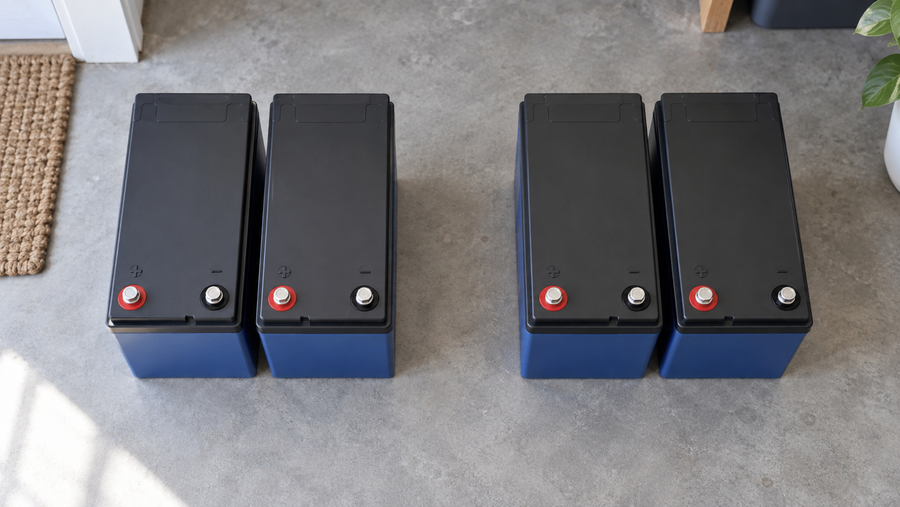
If your battery bank holds, for example, 2,400 watt-hours of usable energy, that 240 watt-hour load is about 10 percent of your daily budget. Over a week of heavy pollen, just the purifier can use the equivalent of a full battery cycle if you do not offset it with solar or alternator charging. For travelers layering in laptops, a 12-volt fridge, fans, and a router, the purifier becomes one more continuous load competing for the same amp-hour pie.
Why Bigger Is Not Always Better in a Small Rig
Home-class purifiers are tempting because they promise high airflow, but they are often designed for rooms far larger than a typical RV interior and can draw much more power than compact 12-volt or low-wattage units. Since RV cabins are small, evaluations of air purifiers for RVs note that you can often use lower-CADR units and still get fast cleanup, which is exactly what you want when you are trying to stretch battery life.
At the same time, air-quality specialists focusing on air purifiers for motorhomes and RVs stress that units should still offer true fine-particle and VOC filtration and be sized correctly for the interior volume. The ideal pollen-season purifier in a power-conscious RV is usually a compact, efficient unit that covers your actual cabin size, not a living-room monster that drains batteries.
Example Energy Scenarios
To see how this plays out over a season, imagine two modes with a roughly 10-watt-class purifier. Running it 24/7 at full power during peak tree pollen weeks means around 240 watt-hours per day, piling up to about 1,680 watt-hours over a seven-day stretch. If you instead run it on high for three hours in the evening and three hours in the morning during heavy use, then switch to a low 5-watt setting for the remaining 18 hours, you might cut that daily cost nearly in half while still keeping the cabin reasonably clean.
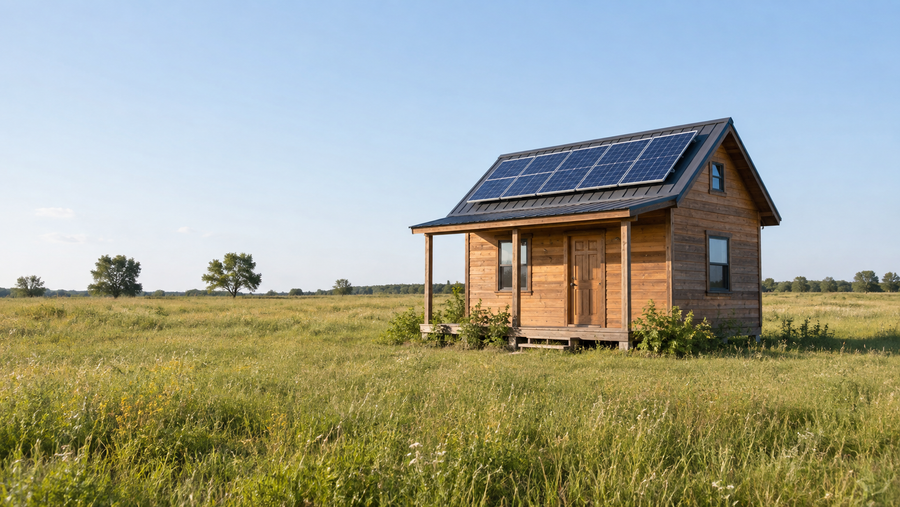
Over a three-month pollen stretch, that difference between “always max” and “smartly scheduled” can easily translate into multiple days of extra boondocking without needing to fire a generator, especially if your solar array is already sized to cover essentials.
Strategy: Clean Air Without Killing Your Battery
The long-term win comes from combining the right purifier with smart placement, scheduling, and broader allergy control, so you get maximum symptom relief per watt-hour.
Choose the Right Purifier for Pollen Season
For allergies, you want proven fine-particle filtration and, ideally, separate media to handle odors and VOCs from cooking and off-gassing. RV-specific reviews of air purifiers for recreational vehicles and technical overviews of air purifiers for motorhomes and RVs consistently recommend units with independently tested fine-particle filters (often HEPA-certified) and substantial activated carbon for gases and smells, while warning against vague “HEPA-type” or ozone-producing devices.
Independent lab tests of best-performing RV air purifiers show that compact purifiers rated for modest room sizes can clean small volumes like RV cabins quickly, provided they have enough airflow and filter surface area. When comparing models, prioritize filtration quality, noise level you can tolerate overnight, and documented power draw at the fan speeds you will actually use.
Place, Ventilate, and Schedule for Maximum Relief
Allergy and HVAC organizations repeatedly emphasize that air purifiers do the most good where you spend the most time, especially sleeping spaces. Advice on managing allergens and improving the air quality in your RV points toward placing filtration in high-use zones, keeping windows and doors closed on high-pollen days, and pairing filtration with regular filter changes and cleaning.
In practice, that can look like running a purifier on high with doors closed for an hour after you park and track in dust, then dropping to a quiet low speed overnight in the bedroom. On days with low pollen and good weather, open windows to flush out CO₂ and moisture, then run the purifier after you close up again rather than wasting power trying to filter constantly while the wind is blowing new pollen inside.
Combine Filtration With Smart Allergy Habits
For most people, the biggest comfort jump comes from pairing filtration with medication and behavior changes tailored to their triggers. Medical guidance on how to manage allergies while camping and strategies for managing camper allergies both stress starting appropriate antihistamines before the season or trip, keeping inhalers and epinephrine accessible for those who need them, and planning your campsite and activities around pollen levels.
Lifestyle and RV-specific advice on improving the air quality in your RV and broader indoor allergen guidance from spring-cleaning allergy resources add practical details: keep humidity in a moderate range to deter mold and dust mites, wash bedding in hot water, groom pets regularly, and remove carpets where feasible. Every bit of allergen you keep out of the air is one less particle your purifier has to capture, which can let you run a smaller, more efficient unit for fewer hours.

Long-Term Off-Grid Pollen-Season Game Plan
Over a single weekend, you can brute-force allergies by plugging in and blasting a big purifier. Over a season, you need a plan that balances geography, equipment, and power.
Long-term RV allergy guides describe three levers: move to lower-allergen regions when you can, adjust your behavior in a given location, and optimize your indoor environment. Coastal and higher-elevation spots often have lower pollen loads, while humid river basins and sunny southern regions see heavier counts. When moving is not an option, focus on choosing sites upwind of forests and fields, staying inside on hot, dry, windy days, and scheduling big hikes and chores for cooler, wet days when pollen is weighed down.
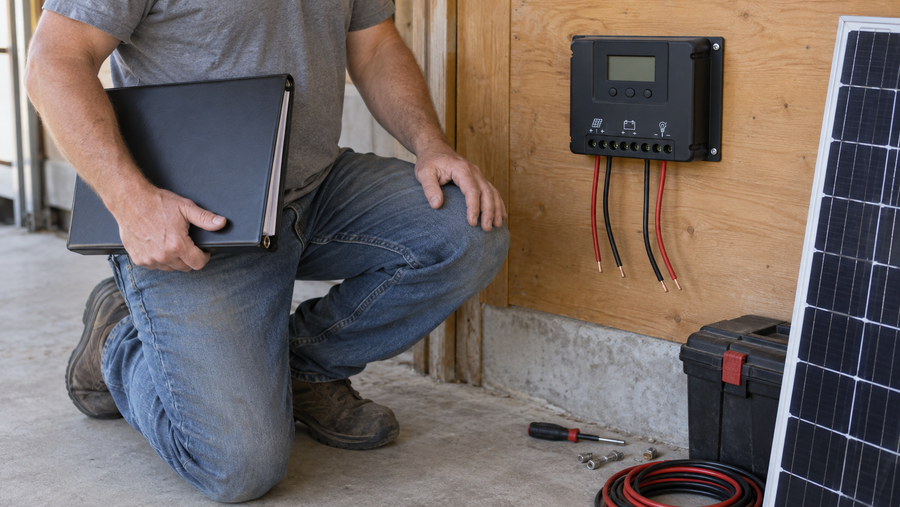
From a power perspective, track how your purifier load behaves over time. If you notice that your batteries sag on strings of bad-air days, treat that as a design signal: it may be time to increase solar capacity, add alternator charging, or upgrade to a more efficient, RV-optimized purifier instead of a home unit. If your medical situation demands near-constant filtration, the most energy-efficient move may be to plan more stays with hookups during peak pollen windows while relying on your off-grid system in shoulder seasons when pollen is lower.
FAQ: Power and Purifiers in Allergy Season
Should you run an RV air purifier all night when boondocking during pollen season?
If symptoms are severe, yes, but use the lowest fan speed that still keeps you comfortable and try to pre-clean the air by running higher speeds while solar is producing. A compact, efficient purifier that has been shown to clean vehicle cabins quickly, as in independent tests of RV air purifiers, will usually let you get away with less nighttime power draw than a large home unit.
Is a DIY fan-plus-filter box enough for allergies in an RV?
Even allergy-focused engineering sources note that taping a furnace filter to a fan can meaningfully reduce airborne particles compared with doing nothing, but such setups rarely match the fine-particle performance, sealed housings, and activated carbon options recommended in air purifiers for motorhomes and RVs. In a power-conscious RV, a purpose-built, efficient purifier sized to your cabin usually gives better long-term control for similar or lower energy use.
The goal is simple: breathe easier without watching your battery monitor in a panic. With an efficient purifier, smart scheduling, and a few allergy-aware habits, you can turn your RV into a low-pollen refuge that stays comfortable and powered up through the entire season.