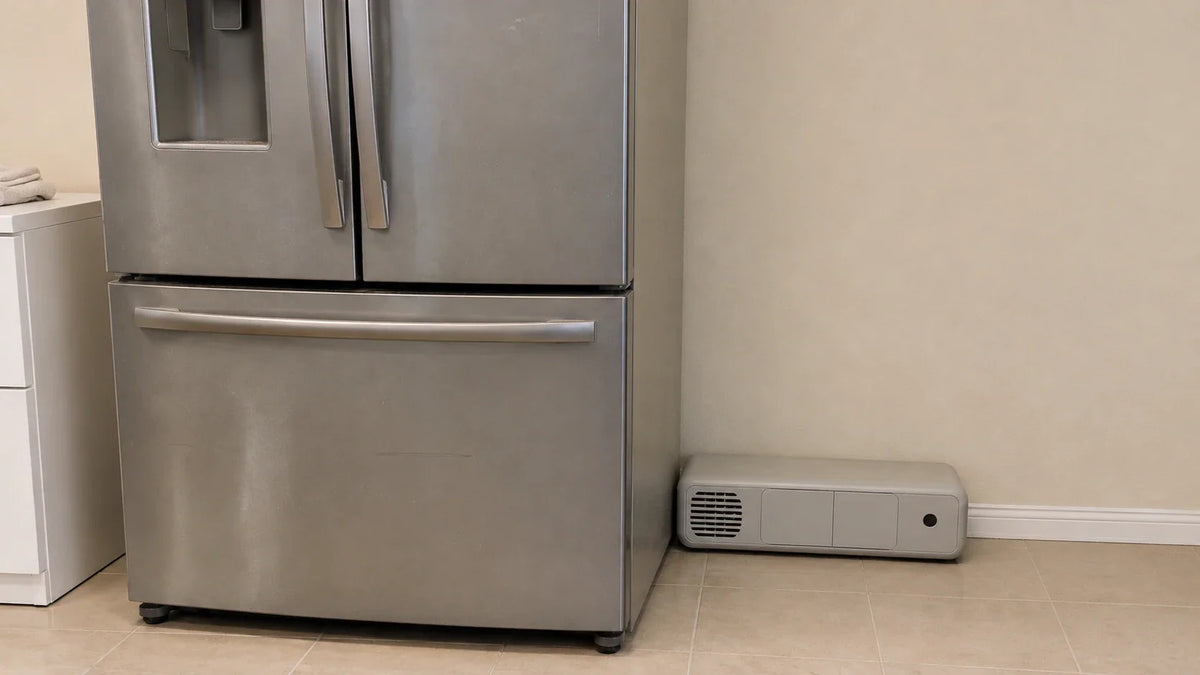

A refrigerator can switch to battery power automatically only when its power path provides a documented changeover for the mode it uses. For an AC refrigerator, this can be a transfer system that switches its AC outlet between mains and battery-backed inverter output. A refrigerator with direct DC input or its own automatic energy-selection controls may use a different path. Identify the installed refrigerator's power modes before choosing backup equipment; an AC transfer arrangement is not a universal refrigerator wiring method.
Identify the refrigerator's power mode
Check the refrigerator's manual and the input it will use during normal operation and an outage. An AC-only refrigerator needs an AC supply on both sides of the transfer; the battery must feed an inverter or another documented battery-backed AC system. A refrigerator designed to run directly from DC may instead draw from a DC battery system, with any automatic changeover governed by that system's instructions. Some absorption refrigerators can use AC, DC, or gas and have model-specific automatic mode selection. Do not assume their automatic mode selects battery power, or that an external AC transfer device controls their DC or gas operation.
The AC transfer method below applies when the refrigerator is powered through an AC outlet. For a different mode, follow the refrigerator's documented input and switching behavior and check the applicable battery-system limits.
Choose a system with automatic transfer

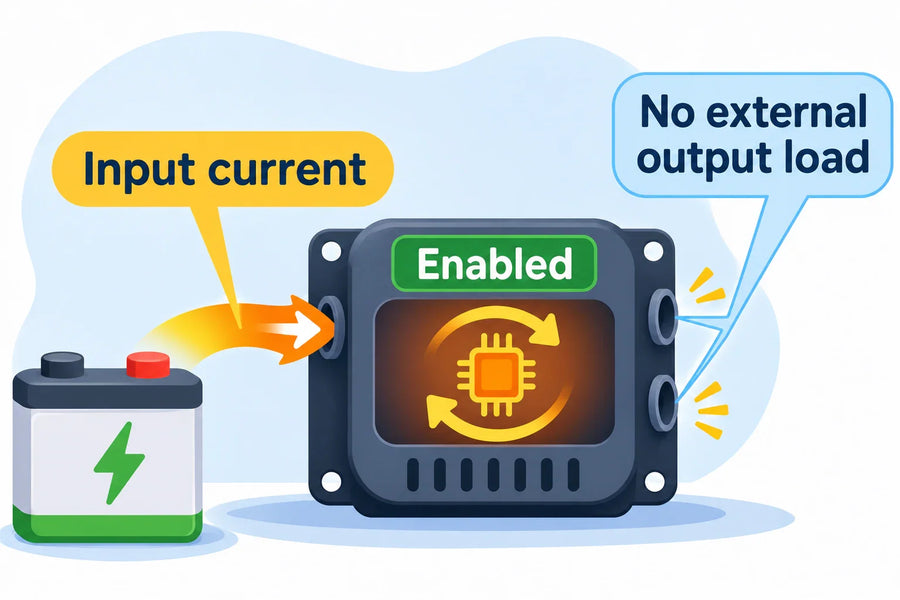
For an AC refrigerator, the normal path should accept mains input and pass AC to the refrigerator; equipment that includes a charger may also charge the battery while mains is available. When the system detects a loss of acceptable mains, its transfer function switches the backed-up output to inverter power from the battery. When acceptable mains returns, the system should switch the output back and resume charging if its design provides that function.
Automatic transfer may come from a separate transfer device paired with an inverter, or from an inverter/charger with a built-in transfer function. A standalone inverter alone does not perform that source switch. Identify which equipment senses mains loss and return, which output feeds the refrigerator, and whether the battery charges during normal mains operation. The selected equipment's documentation should state transfer prerequisites and output behavior during each transition. Do not assume every transfer is interruption-free; the refrigerator and backup equipment must tolerate the documented transition.
Match the refrigerator load and expected runtime
Use the refrigerator's nameplate and manufacturer information to find its running demand and startup demand. Running demand describes operation after the compressor is running; startup demand can be higher while it starts. Compare both with the backup system's continuous and surge output ratings. The system must support the startup demand as well as ongoing operation, and other loads on the same output reduce the capacity available to the refrigerator.
For the AC transfer path, convert the refrigerator's average AC demand to battery-side demand before estimating runtime. Divide its average AC watts by the inverter's applicable efficiency, then add other battery-side loads and any separate inverter idle draw that is not already included. Divide usable battery watt-hours by that total battery-side demand in watts to estimate hours. For example, a 100 W average AC load at an assumed 90% inverter efficiency draws about 111 W from the battery; 600 Wh of usable battery energy would cover about 5.4 hours before other loads or separately counted idle draw. The efficiency and loads are illustrative, not universal refrigerator figures. Actual runtime also changes with cycling and the system's low-battery cutoff, so compare the estimate with the outage period you need to cover.
When comparing an external battery for that AC path, the Vipboss 12V 210Ah LiFePO4 battery lists nominal energy and output ratings. Compare those ratings and the battery's usable energy with the selected inverter, refrigerator load, and charging equipment; the nominal energy figure alone does not establish runtime or system compatibility.
Establish the low-battery outcome

Battery backup does not necessarily continue until mains returns. Depending on the equipment, low charge may trigger an alarm, stop inverter output, or lead to another documented response. Find the selected system's low-battery indication, cutoff, and restart conditions, then determine what that means for refrigerator power during a long outage. If output stops at cutoff, the refrigerator will no longer receive battery-backed AC; the documented restart conditions determine when that output can return.
Verify transfer and restoration
Commission the system using its instructions and a method that does not expose you to live electrical parts. Have fixed-wiring work and hazardous electrical testing handled by a qualified electrician where required. Do not deliberately force the battery into an unsafe discharge to test the cutoff; use documented status indications or an approved test method for that endpoint.
- Confirm normal operation. With acceptable mains present, verify that the backed-up output powers the refrigerator and that the system shows mains input accepted. If the system is meant to charge the battery in this state, verify its charging indication.
- Test loss of mains. Use the equipment's documented test method to interrupt its mains input. Confirm that the system indicates transfer to battery or inverter output and that the refrigerator continues operating. Note any interruption and compare it with the equipment's stated behavior.
- Check the low-battery response. Confirm the documented alarm or cutoff through supported status indications or an approved test. Record whether inverter output stops and what conditions allow it to restart; do not infer continued refrigerator power after cutoff.
- Restore mains. Restore input using the documented procedure. Verify that the system accepts mains again, the backed-up output powers the refrigerator, and charging resumes if provided. These observations confirm the transitions for the installed equipment; they do not establish behavior under every possible outage or load.
If any transition or indication differs from the equipment documentation, do not rely on unattended backup until the system is assessed and the cause is resolved. The critical result is a verified path in both directions, plus a known low-battery endpoint, rather than simply having an inverter and battery connected.
FAQs
Does a standalone inverter automatically switch a refrigerator from mains power to battery power?
No. A standalone inverter supplies AC from a battery, but automatic switching requires a transfer function, provided by a separate transfer device or built into suitable inverter/charger equipment.
How can I estimate how long a refrigerator will run on battery backup?
For an AC refrigerator, divide average AC watts by the inverter's applicable efficiency to estimate battery-side demand, then add other battery-side loads and any separate idle draw. Divide usable battery watt-hours by that total demand in watts. Actual runtime also depends on refrigerator cycling and the system's low-battery cutoff; a directly powered DC refrigerator needs its own DC-side demand instead.
What happens to refrigerator power when the backup battery runs low?
The system’s response depends on its documented low-battery behavior, which may include an indication or cutoff. If inverter output stops, the refrigerator no longer receives battery-backed AC until output can restart under the system’s conditions.
How do I verify that refrigerator backup switches back to mains power after an outage?
Following the equipment’s instructions, restore mains input and verify that the system accepts it, the backed-up output powers the refrigerator, and charging resumes if the system provides that function.