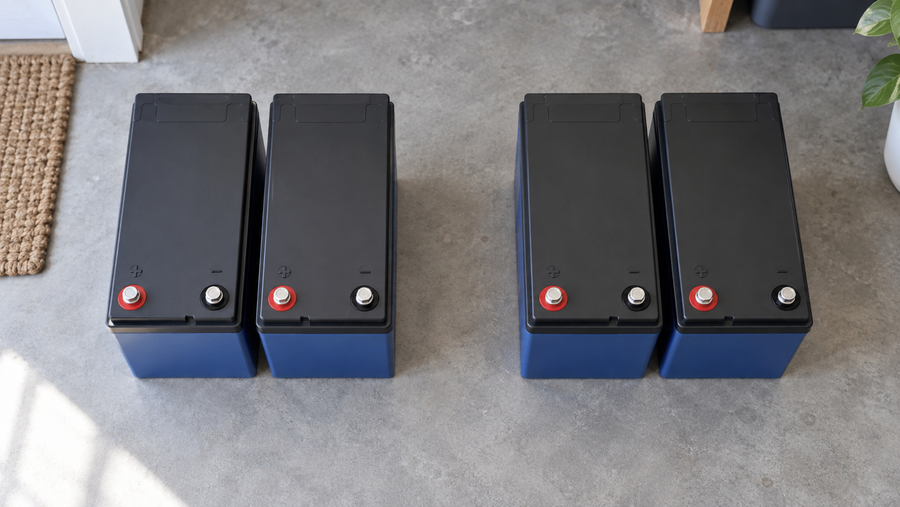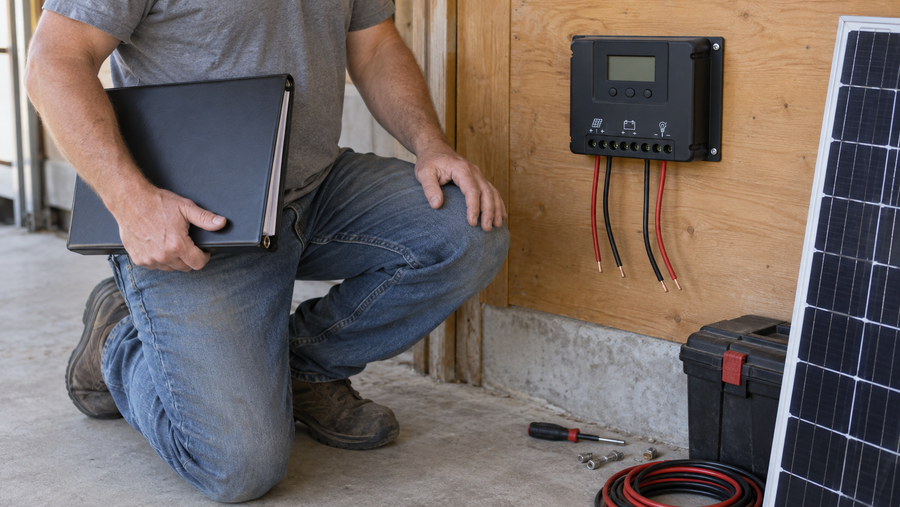

Upgrading your skiff’s house and trolling batteries from lead-acid to LiFePO4 can trim stern weight, reduce draft a bit, and sharpen shallow-water performance—if you remove enough weight and rig the system correctly.
You ease toward a glassy flat, watching tails flick in inches of water, only to feel the stern dig in and the prop start chewing mud a boat length short of where you need to be. Many skiff owners in that situation stare at a heavy battery bank and wonder if losing all that weight could finally float the hull a little higher. A lithium retrofit can absolutely help you run and pole shallower while also upgrading your power system; the rest of this guide explains how much difference you can realistically expect and how to set up the boat so you actually feel it on the water.
What Really Reduces Draft on a Skiff?
Draft is simply how deep your hull sits in the water at rest and under way. Every pound you put in the boat pushes it lower; every pound you take out lets it ride higher. Batteries matter because they are dense weight, usually concentrated in the stern, exactly where a shallow-water skiff is already fighting to keep its transom from squatting.
LiFePO4 marine batteries are substantially lighter than equivalent lead-acid banks, often only about one-third to one-half the weight for the same usable capacity, which is why manufacturers emphasize that lighter lithium banks help small boats float higher and reach shallower areas. RELiON’s marine data describes LiFePO4 packs that replace much heavier AGM batteries while clearly reducing draft on small craft. If your current trolling and house bank comes in around 180 lb, cutting even 60–70% of that can easily remove over 100 lb from the stern, which is a meaningful change on a technical skiff.
Several marine suppliers echo the same pattern: LiFePO4 batteries are often up to about 50–70% lighter than comparable lead-acid units, and that weight reduction improves fuel efficiency, acceleration, and stability while freeing space. ACE Battery’s overview and LiFePO4-Battery’s marine guidance both point out that this lighter, more compact energy storage directly benefits smaller boats where every pound of gear and hardware affects how shallow you can safely idle or pole.
The key takeaway: reducing several dozen to over a hundred pounds of battery weight, especially from the stern, will not magically turn a deep-V bay boat into a technical poling skiff, but on a skiff that is already close to its sweet spot, that change can be the difference between grinding and gliding across a skinny bar.

Why LiFePO4 Is a Strong Match for Shallow-Water Fishing
Lighter bank with more usable energy
Traditional marine lead-acid batteries usually only allow about half their rated capacity to be used regularly; discharge them much deeper and lifespan falls off quickly. LiFePO4 banks typically provide around 80–90% usable capacity per cycle, meaning you can downsize amp-hours, still fish all day, and cut more weight in the process. That relationship between higher usable depth of discharge and smaller, lighter banks is spelled out in both ACE Battery’s marine analysis and RELiON’s LiFePO4 guidance for boaters.
For a practical example, imagine your skiff runs a three-battery lead-acid trolling bank that you rarely drain below half. A LiFePO4 setup with similar usable energy may only require two batteries of smaller case size, cutting case count and total mass. That usually means fewer boxes, shorter cable runs, and more options to move weight forward or toward the centerline to trim the hull for shallow work.
Steady power for trolling motors and electronics
Lead-acid batteries sag in voltage as the day wears on, so trolling motors lose thrust and electronics can start to brown out just when the tide finally gets right. LiFePO4 chemistry delivers a much flatter voltage curve through most of the discharge cycle, which keeps trolling motors pulling consistently and sonar, GPS, and live imaging running cleanly across a full day on the water. That stable output for trolling motors and fish finders is a recurring theme in Golden Cell’s marine LiFePO4 review and in Power-Sonic’s marine lithium notes, which highlight smoother motor operation and more reliable electronics.
Picture working a long shoreline with spot-lock holding you in the wind.

With lead-acid, the motor may feel crisp at sunrise, then sluggish by mid-afternoon as voltage drops. With a well-sized LiFePO4 bank, thrust at the same setting late in the day feels much closer to what you had leaving the ramp, which effectively stretches each amp-hour and lets your skiff behave more like the lighter, more responsive hull you paid for.
Long life, fast charging, and low maintenance
From a lifespan standpoint, the gap is just as important as the weight difference. Lead-acid banks on boats often deliver only a few hundred to around a thousand useful cycles. Multiple technical overviews, including those from ACE Battery and Voltium Energy, describe LiFePO4 marine batteries delivering several thousand cycles and lasting up to about ten times longer than traditional lead-acid in many use cases. A properly sized LiFePO4 bank can realistically outlast the skiff’s first paint job and sometimes the hull itself.
Charging is also much quicker. Where many lead-acid setups need most of a night to come back from a deep day of trolling, LiFePO4 banks often accept charge rapidly enough to refill in just a few hours when paired with compatible chargers, a point emphasized in both ACE Battery’s performance summary and Power-Sonic’s marine lithium discussion. Combined with essentially zero routine maintenance and low self-discharge, that means more spur-of-the-moment dawn patrols and fewer evenings babysitting trickle chargers or topping off cells.
For seasonal skiff owners, low self-discharge and simple storage prep are another advantage.

Guidance on long-term LiFePO4 storage explains that these packs can sit for months with minimal capacity loss if they are charged properly, disconnected from loads, and stored cool and dry, which fits how many anglers use small skiffs in shoulder seasons.
Where a Lithium Swap Won’t Magically Fix Draft
Even a big battery weight reduction will not overcome basic hull and rigging realities. Hull design, outboard size, poling platform, fuel tank, and passenger load often contribute more to draft than the battery bank alone, especially on wider, heavier hulls.
If your skiff already runs a very small electrical system—say a single starting battery and a modest trolling battery—the relative savings from lithium will be smaller. In that situation, the gains may show more in acceleration, hole shot, and range than in static draft. By contrast, skiffs running heavy three- or four-battery lead-acid banks see the biggest change when they cut total battery weight roughly in half or better, which several LiFePO4 marine overviews identify as typical for properly sized conversions on small boats.
Weight distribution also matters. Replacing batteries in the stern with LiFePO4 but then piling coolers, extra fuel, and two anglers right back there can blunt the draft improvement. Owners who take full advantage of the retrofit often use the smaller footprint of LiFePO4 packs, described in resources like LiFePO4-Battery’s marine overview, to move the bank slightly forward or lower in the hull, improving trim as well as total displacement.
There are also tradeoffs to respect. LiFePO4 batteries cost more upfront than conventional lead-acid and, although they shine as deep-cycle packs, they are not perfect for every job. A review of LiFePO4’s drawbacks notes that this chemistry can have lower energy density than some other lithium-ion options, higher initial cost, and practical limits on discharge rates and temperature range, especially in extreme heat or cold. Those limitations are laid out in Solar Charging Battery’s discussion of LiFePO4 disadvantages, and they matter if your skiff lives in harsh climates or you expect starting-battery behavior from a trolling bank.
System Considerations: Getting the Retrofit Right
Converting a skiff is not just a matter of dropping in a new battery chemistry and calling it done. LiFePO4 packs include a Battery Management System (BMS) that protects the cells by shutting the battery off under certain fault or low-voltage conditions, and that digital control changes how the whole 12-volt system behaves. Practical Sailor’s technical review stresses that a BMS can disconnect loads completely if it senses trouble and that LiFePO4’s very low internal resistance can drive high charge currents, which may overheat alternators or wiring if charging is not re-engineered.
For most skiffs, the cleanest pattern is to keep a conventional lead-acid or AGM starting battery for the outboard and convert only the trolling and house banks to LiFePO4. That approach matches the recommendation in the same Practical Sailor analysis, which favors retaining lead-acid for engine starting while using LiFePO4 for deep-cycle house loads. A dedicated LiFePO4-compatible charger, appropriate fusing near the battery terminals, and careful attention to cable sizing and terminations are non-negotiable if you want both safety and full performance.
Charging and storage practices should follow manufacturer guidelines closely. Technical notes on LiFePO4 storage and self-discharge recommend disconnecting all loads, storing the battery above roughly half charge, and topping it up periodically during long off-seasons. That discipline not only preserves lifespan but also ensures the skiff is genuinely ready to run skinny at first light rather than revealing a weak bank at the ramp.

Pros and Tradeoffs for a Skiff LiFePO4 Upgrade
Benefit |
What it means on the water |
Reduced weight and draft |
Lighter stern, slightly higher float, quicker planing, and easier access to marginally shallower areas. |
More usable capacity per cycle |
Smaller, lighter bank delivers the same or longer trolling runtime than your old lead-acid setup. |
Stable voltage under load |
Trolling motor thrust and electronics performance stay consistent through a full day of casting. |
Faster charging |
Shorter turnaround between trips; easier to run back-to-back dawn and evening sessions. |
Long cycle life |
One bank can replace multiple sets of lead-acid batteries over the skiff’s life, improving value. |
Minimal maintenance |
No watering or constant charger babysitting; just proper charging and periodic checks. |
Tradeoff |
Implication for your skiff |
Higher upfront cost |
More cash tied up in the electrical system; payoff comes through lifespan and performance, not sticker price. |
Charging system complexity |
May require new chargers, careful alternator integration, and proper BMS-aware wiring. |
Not ideal as a sole start battery |
Best used for trolling and house loads while keeping a traditional start battery for the outboard. |
Temperature and abuse limits |
Needs sane temperature management and correct charge limits to deliver its promised lifespan. |
How to Decide If LiFePO4 Will Actually Get You Shallower
Start by making an honest inventory of the weight you can realistically remove. Look up the published weights of your existing batteries and total them; then compare that figure to the weight of LiFePO4 replacements sized for similar usable capacity. The manufacturers’ own comparisons, such as those in RELiON’s marine case studies, show that cutting roughly half or more of your current battery mass is realistic in many small-boat applications.
Next, think about runtime and draw. If your current bank is oversized because you were compensating for lead-acid’s shallow usable depth of discharge, a LiFePO4 system may let you reduce overall amp-hours and still fish longer. That change directly reduces weight and draft. If instead your existing system already struggles to get through the day, use the higher usable capacity of LiFePO4 to size the new bank for your real load rather than simply copying the old spec sheet.
Pay attention to where the new bank will sit. A more compact LiFePO4 pack gives you freedom to move batteries slightly forward, closer to the hull’s center of buoyancy, or lower in the hull to help stability. Combined with thoughtful placement of coolers, fuel, and tackle, that re-trim can amplify the draft reduction you bought with the chemistry change.
Finally, be realistic in your expectations. Lithium makers talk about reduced draft, faster planing, and better handling, as highlighted in LiFePO4-focused marine articles, but they stop short of promising dramatic changes in published draft numbers. On the water, most owners who remove a heavy lead-acid bank and dial in their trim notice that the boat floats a bit higher at rest, loads onto the trailer more easily, and poles or idles through a few more skinny spots on a low tide than before. That is exactly the kind of incremental but meaningful gain you should look for.
FAQ
Will swapping just my trolling motor batteries change how shallow I can fish?
If your trolling bank is two or three large lead-acid batteries, replacing just those with LiFePO4 can remove a major chunk of stern weight and give a noticeable draft improvement, especially at the transom. Because LiFePO4 packs offer more usable capacity per pound than lead-acid, as described in weight and capacity comparisons from RELiON’s marine section, downsizing the trolling bank is usually where skiff owners see the biggest shallow-water benefit.
Do I need to convert my starting battery to LiFePO4 too?
For most skiffs, it is better to keep a conventional lead-acid start battery for the outboard and convert only deep-cycle loads to LiFePO4. Technical reviews such as Practical Sailor’s look at small-boat lithium systems recommend retaining lead-acid for engine starting because of the very high peak currents involved, while using LiFePO4 banks where long, steady discharge is needed.
Is LiFePO4 safe on an open skiff?
LiFePO4 chemistry is among the most stable lithium options available and is widely regarded as safer than many other lithium-ion formulations and traditional flooded lead-acid in marine use. Marine-focused summaries from Voltium Energy and ACE Battery both highlight its strong thermal stability, low risk of fire or leakage, and long service life, provided the pack includes a proper BMS and is installed with correct fusing and wiring.
A well-planned LiFePO4 retrofit is one of the highest-leverage power upgrades you can make on a shallow-water skiff: it shaves dead weight, sharpens handling, stretches your trolling time, and can unlock a little extra skinny water access when the tide is low and the fish are far from the ramp. Treat the electrical system with the same care you give to hull shape and prop choice, and your upgraded skiff will run lighter, quieter, and more confidently into the spots that used to be just out of reach.