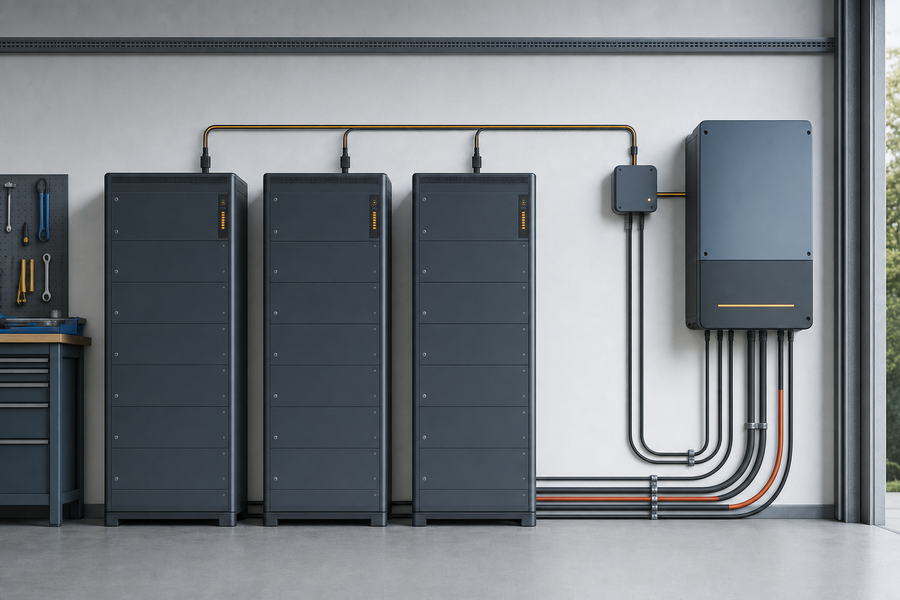

Short, well-controlled 10–15 minute top‑up charges do not inherently damage lithium batteries; when kept within the right voltage, temperature, and charge‑level window, they usually extend service life rather than shorten it.
Picture a golf cart fleet, warehouse picker vehicle, or off‑grid cabin system that plugs in for every coffee break, while everyone quietly worries they are "using up the battery's life" with each quick top‑up. When charging settings keep voltage, temperature, and charge level in a healthy band, lithium banks routinely deliver thousands of cycles even with constant partial recharges. By the end of this guide, you will know exactly when a 15‑minute opportunity charge is safe, when it becomes harmful, and how to tune your hardware so every short break works like a controlled power upgrade instead of a slow drain on lifespan.
What Actually Ages a Lithium Battery?
Lithium batteries wear out mainly from time spent under extreme conditions, not from the simple fact that you plugged in for a few extra minutes. Long‑term tests on lithium cells show that elevated voltage near full, deep discharge, and high temperature are the main drivers of capacity loss and rising internal resistance, while moderate partial cycles are comparatively gentle on the chemistry, as summarized in work on lithium battery aging mechanisms.
Every modern lithium guide converges on one simple message: avoid living at the edges of the battery gauge. Multiple manufacturers recommend keeping everyday charge levels roughly in a 20–80% band to reduce stress and extend cycle life, a pattern often referred to as the 20–80% band. Industrial and EV maintenance guidance echoes the same advice, noting that frequent deep discharges toward empty and routine pushes to 100% both accelerate aging compared with operating in the middle range of the gauge, and that slow to moderate charging is preferred for daily use rather than constant fast charging in high‑demand environments.
Temperature is the other big lever, and it matters more than the length of a single charging session. Off‑grid and RV specialists suggest charging mainly between about 32°F and 113°F, with the best results when equipment runs near typical room temperature. They also recommend avoiding hot engine bays or sun‑baked enclosures during heavy charging, consistent with lithium maintenance guidance that favors cool, dry conditions around 59–77°F for long life in lithium battery charging and maintenance. Very cold charging, especially below freezing, also increases stress, which is why solar and LiFePO₄ maintenance guides warn against charging cold packs until they are warmed into a safe range, particularly in off‑grid sheds and unheated garages documented in regular maintenance for lithium batteries.
What Is Opportunity Charging?
Opportunity charging simply means grabbing energy whenever equipment is idle, instead of running down nearly empty and then recharging in one long session. A warehouse lift that gets plugged in during lunch, a golf cart topped up at the clubhouse between rounds, or an off‑grid cabin that runs a generator for half an hour at dinner while the bank absorbs extra current are all classic examples.
For lithium, this strategy lines up well with what the chemistry prefers. As long as the charger is correctly configured and you stay away from the extremes of the gauge, many small, shallow top‑ups are less stressful than a pattern of deep discharges followed by full 0–100% charges. By contrast, "abuse patterns" such as hard fast‑charging into a hot pack or leaving a battery at high voltage indefinitely on a basic charger can cut lifespan dramatically, with some lithium guides warning that poor charging practice can reduce service life by as much as half, as described in a lithium charging guide for deep‑cycle packs.
Does a 15‑Minute Top‑Up Damage Lithium Batteries?
The short answer is no: a 10–15 minute top‑up, by itself, does not damage a healthy lithium battery when you use a proper charger, keep current within recommended limits, stay in a moderate charge range, and avoid temperature extremes. In fact, partial charges are repeatedly recommended by lithium specialists as a way to extend service life, with several sources advising that operating mostly between about 20% and 80% charge yields far more cycles than routinely going from almost empty to completely full, an approach highlighted both in mobile power best practices and in good habits for charging li‑ion batteries.
When Short Charges Are Actually Good
In phones and laptops, users who cap charge levels and avoid sitting at full capacity often report much slower capacity loss compared with devices that stay plugged in all day at 100%, a pattern reflected in real‑world experience shared around tuned charge‑limit tools and kernel‑level controls in discussions on battery charge protection and control. The same physics applies in lithium packs for carts, lifts, and off‑grid banks: shallow cycling in the middle of the gauge reduces voltage stress and heat, which are the real enemies of long‑term health.
Manufacturers of lithium deep‑cycle batteries and off‑grid storage repeatedly emphasize that partial charging is not only allowed but beneficial. Lithium banks are typically charged with a two‑stage constant‑current then constant‑voltage profile and do not need to sit on a high‑voltage float like lead‑acid, a key distinction called out in charging lithium batteries basics. Off‑grid maintenance guides explicitly recommend topping up before the bank gets too low and avoiding frequent deep discharges, while also warning against holding the pack at 100% for long periods, in line with broader reinforcement of the 20–80% pattern seen in lithium battery maintenance guide.
A 15‑minute session at a moderate charge current often moves the needle only partway across that middle zone, which is exactly what you want. For example, a 200 amp‑hour LiFePO₄ bank charged at about 40 amps for 15 minutes gains roughly 10 amp‑hours, adding around 5% of capacity, so a cart that started at 50% might leave the break at only 55% instead of racing toward full. That is a gentle, shallow charge, especially when the charger's maximum voltage is set to a typical lithium target rather than an aggressive over‑voltage.
When Short Charges Can Hurt
Short sessions become harmful when they repeatedly push the pack to very high charge levels, heat, or both. If your opportunity charges always ram the battery to 100% and leave it hot at the top of charge, you combine elevated voltage, temperature, and time at full, which are precisely the conditions associated with the fastest aging in controlled experiments on lithium battery aging mechanisms. Consumer experience with phones that sit plugged in at 100% for years and quickly lose capacity, contrasted with devices capped well below full that retain much of their original energy, underscores how harmful this "always topped off and hot" pattern can be, especially with high‑voltage chemistries discussed in battery charge protection and control.
Current also matters. Industrial and RV guidance usually recommends keeping charge rate somewhere around 10–30% of the battery's amp‑hour rating for routine use, which corresponds to 20–60 amps for a 200 amp‑hour bank, a range described in a lithium charging guide for deep‑cycle packs. Laboratory and maintenance documents for lithium‑ion cells likewise suggest staying in a moderate 0.5C to 1C band and avoiding excess heat during fast charging in lithium battery charging best practices. Briefly exceeding those ranges in cool conditions is not catastrophic, but designing opportunity charging around very high currents into hot packs, purely to "cram in" energy during every break, is not a good trade for long‑term life.
Cold is the other edge case. Multiple LiFePO₄ and solar maintenance guides explicitly advise against charging below freezing, recommending that batteries be warmed into a safer band before accepting charge, consistent with off‑grid practice documented in regular maintenance for lithium batteries. In this scenario, even a "short" 15‑minute charge may be abusive, not because of the time but because of the temperature.
Designing Your System for Safe Opportunity Charging
Opportunity charging works best when the whole system is built around what the battery wants rather than what the charger happens to output.
Set Voltage and Current in the Safe Zone
Deep‑cycle lithium makers recommend chargers with a lithium‑specific profile and the correct maximum voltage, typically around 14.2–14.6 volts for a 12‑volt LiFePO₄ bank, and minimal or no float at the top, as detailed in charging lithium batteries basics. Charging hardware sized to roughly 10–30% of the battery's capacity provides a strong balance between fast turnaround and gentle cell stress, which aligns with current recommendations for lithium deep‑cycle systems in a lithium charging guide for deep‑cycle packs.
Once this is set, your 15‑minute sessions are naturally limited by the charger, not by wishful thinking. A correctly configured charger simply cannot push voltage past the safe ceiling, and current will taper automatically as the battery approaches its target level.
Use the 20–80 Rule for Daily Operation
Across stationary storage, EVs, and mobile gear, the most consistent pattern is to keep lithium packs mostly in the middle of the gauge and save full charges for special occasions. The 20–80% pattern is strongly endorsed in smart charging strategies that highlight operating in a 20–80% band, and maintenance programs for residential and off‑grid lithium banks encourage similar charge‑level management, as outlined in regular maintenance for lithium batteries. Industrial lithium guidance further supports partial charging, recommending that charging mainly happen between about 20% and 80% while reserving deeper cycles for operational necessity, aligning with recommendations in lithium battery charging and maintenance.
In practice, this means structuring your breaks so that quick top‑ups mostly move the battery within that central range. For a 200 amp‑hour bank, a 15‑minute session at 40 amps is a small, controlled bump, not a major cycle. If breaks routinely push the pack from 80% toward 100%, consider cutting maximum charge voltage slightly or lowering charge current during opportunity windows so you spend more time in the sweet spot and less at the top edge.
Protect with BMS and Monitoring
A robust Battery Management System is your backstop.

Modern lithium packs include onboard electronics that monitor voltage, current, and temperature, disconnecting the battery when limits are exceeded and helping keep individual cells balanced, a role emphasized in charging lithium batteries basics. Industrial and off‑grid guides describe these systems as essential both for safety and for long‑term maintenance planning, with recommendations to periodically review performance data and alarms, as detailed in lithium battery charging and maintenance. Smart LFP systems go further and offer apps and integrations to track charge level, voltage, and cycles in real time, making it easier to apply the 20–80 pattern consistently with tools like the 20–80% band that combine monitoring and smart charging rules.
For opportunity charging, pay attention to the warnings your BMS provides. Beeps or alerts for low voltage, high temperature, or other limits during or after short charges are a sign that configuration or environment, not the concept of short charging, needs attention.
Real‑World Example: Fleet or Cart Opportunity Charging
Golf‑cart and light‑fleet lithium packages illustrate opportunity charging in the wild. Their documentation emphasizes installing packs in clean, dry locations, using only approved chargers, and responding promptly to low‑state or temperature warnings to avoid damage, echoing the general pattern that keeping charge level moderate and temperature controlled is more important than how many individual charging sessions occur during a shift. Similar principles apply to industrial cleaning equipment where shift-long runtime is critical. Storage recommendations for these packs often target a mid‑range charge level, such as 50–70%, in cool, dry conditions, which fits closely with broader guidance that long‑term storage should be around half charge in a stable temperature environment to minimize aging.
Fleet operators who plug in carts during every pause are not shortening life automatically; issues appear when carts are driven hard to very low charge, slammed quickly to full on undersized or mismatched chargers, and then left hot and full for long periods. Adopting the same 20–80% mindset and ensuring that opportunity charges happen within this corridor effectively turns breaks into controlled maintenance events rather than stress tests.
Common Questions About 15‑Minute Charges
Is it better to charge once per day or many short times?
For lithium, spreading energy into multiple partial charges within a healthy range is usually better than daily deep discharge followed by a single full charge. Guidance for mobile power and industrial packs favors frequent top‑ups between about 20% and 80% charge because this limits voltage and temperature extremes and reduces overall stress per unit of delivered energy, a pattern supported by both consumer device experience and good habits for charging li‑ion batteries.
Should I avoid 100% charge completely?
You do not need to fear 100%, but you should treat it as a destination for special days rather than a nightly habit. Smart‑charging strategies for LFP highlight that it is safe to take the battery to full when needed and that full charges are useful occasionally for cell balancing, while warning that holding the battery at 100% for long periods speeds up aging, which is why everyday use is steered toward a 20–80% band. Many EV and off‑grid guides recommend reserving full charges for long trips, capacity checks, or occasional balancing cycles, and otherwise targeting a lower "everyday maximum".
Does fast charging during my break change the story?
High current combines with temperature and high charge levels to define how hard a charge cycle is on the cells. Lithium maintenance documents for EVs and industrial systems recommend relying on slower AC‑level charging for most use and saving the fastest charging rates for occasional top‑ups because rapid charging generates extra heat and accelerates degradation, as described in lithium battery maintenance guide. In opportunity charging, use high‑rate chargers sparingly, avoid fast charging into hot packs, and prefer moderate currents that keep case temperatures reasonable and stay within the 20–80% corridor.
A well‑tuned lithium system treats every 15‑minute break as a controlled, gentle top‑up instead of a stress event: voltage capped where it belongs, current kept in a moderate band, temperature managed, and charge level hovering safely in the middle of the gauge. Configure those fundamentals, and opportunity charging stops being a worry and becomes one of the simplest ways to stretch runtime today while protecting cycle life for the long haul.