
In fire‑prone forests, lithium battery power eliminates hot exhaust, constant refueling, and spilled fuel around your cabin, sharply cutting ignition risk while keeping critical loads running quietly. When wildfire weather hits, a well‑designed lithium system paired with solar gives you reliable, low‑profile power that gas and diesel generators cannot match for safety or resilience.
Every late summer, you hear the wind in the trees and wonder if the next hot, gusty day will knock out power while the hills around you stand brown and brittle. Homeowners who stop relying on small gas generators and move to quiet battery power find that the stress of noise, exhaust, and constant fuel runs melts away, and their risk of starting a fire on their own land drops with it. By the end of this guide, you will know when lithium batteries really are safer than gas generators in dry woods, what the trade‑offs look like, and how to design a power setup that works for you instead of against your forest.
Fire Season Stress: Power and Ignition Risk in Dry Woods
In the American West, utilities now routinely shut off power during extreme fire weather to avoid sparking new blazes, turning outages from rare events into something you plan for every year. In California alone, equipment from the three largest investor‑owned utilities has been blamed for more than 2,000 fires over just four years, so public safety shutoffs and long blackouts are here to stay in high‑risk corridors. When your home sits among trees and grasses that feel like kindling, the question stops being “Will the power go out?” and becomes “How do I keep it on without adding another ignition source to the forest?”
Gas and diesel generators solve the power problem by creating a different one. Combustion engines bring hot mufflers, sparks, and gallons of flammable fuel stored in cans or tanks into the same environment where dried needles and duff can ignite from a small ember. The same pattern that makes gasoline vehicles a major source of roadside wildfires, as hot exhaust parts ignite grass beneath parked or idling cars, applies to any small engine that runs close to vegetation for hours at a time.
At the same time, the broader fire community is investing heavily in avoiding those first sparks, not just fighting the flames once they appear. Global platforms like wildfire management systems using satellite thermal sensors now scan forests for heat anomalies day and night, feeding agencies early alerts so they can jump on new starts before they grow. That level of scrutiny is a reminder: in peak season, the safest backup power system is the one least likely to be the pixel that shows up as a new hotspot from space.

What Makes Lithium Batteries Dangerous — And Why That Risk Is Manageable
Lithium batteries are not magic boxes; they are dense energy storage devices, and when things go wrong they can fail violently. State environmental guidance explains that lithium‑ion packs store high energy in compact cells filled with flammable liquid electrolyte, and that damaged or overheated cells can enter thermal runaway, venting hot gases and forming flammable vapor clouds that may explode and release toxic smoke and heavy metals. That same guidance stresses that these batteries burn extremely hot, can reignite after appearing to be out, and can continue failing cell by cell over time, which is why responders treat them with caution in waste and incident management state lithium‑ion battery guidance.
Fire protection engineers describe thermal runaway as the defining hazard: once a cell is hot enough, it generates heat faster than it can shed it, driving off‑gassing, fire, or even an explosion, and that energy can cascade into neighboring cells so that a pack burns for hours or days. In documented cases, a single lithium‑ion fire has required roughly 30,000 gallons of water and several hours of cooling to fully control, underlining how stubborn these events can be when large battery systems are involved lithium‑ion battery fires and fire protection.
Large battery energy storage sites add their own challenges, including complex enclosures, megawatt‑scale energy densities, and the need for extensive air monitoring and controlled runoff during incidents. Recent fires at grid‑scale facilities in California burned for days, triggered evacuations, and required environmental oversight, yet federal analysis notes that as design, manufacturing quality, and system integration have improved, failure incidents per gigawatt‑hour deployed have declined since 2020. Those same analyses emphasize careful siting, robust battery management systems, remote thermal and gas sensing, and incident plans that focus on containing the fire and protecting exposures rather than aggressive interior attack, consistent with common battery energy storage system considerations.
Cabin‑scale systems sit on the other end of that spectrum. Instead of warehouse racks or containerized megawatt batteries, you are usually dealing with tens of kilowatt‑hours in a few enclosures, which makes isolation, ventilation, and access far easier. Home fire safety guidance still stresses the basics: keep batteries and chargers at normal room temperature, roughly 68–77°F; do not charge packs in very hot spaces above about 105°F or in freezing conditions; avoid sheds, attics, or vehicles that swing into extreme temperatures; and never leave charging batteries near beds, exits, or stacked combustibles. Users are taught to watch for warning signs such as persistent heat after unplugging, swelling or bulging, hissing or popping, strange sweet or solvent odors, scorch marks, or smoke, and to stop using and isolate any suspect battery while calling 911 if it is venting or smoking, according to home and workplace lithium‑ion battery fire safety and lithium‑ion battery safety guidance.
Not all lithium chemistries are equal. Lithium iron phosphate, often called LFP, uses a more thermally stable iron‑phosphate cathode that tolerates short circuits, overcharging, and physical impacts better than many cobalt‑based chemistries, releases less oxygen under abuse, and has far less tendency to propagate a fire from cell to cell. That stability, combined with long cycle life and relatively low weight, is why LFP is widely recommended for stationary home battery systems and why many high‑quality portable power stations and solar generators are built around it lithium batteries safety guide.
On top of chemistry, the industry is steadily pushing fire risk down through better cell design and smarter electrolytes. Research labs backed by national energy programs have shown that adding specific chemicals to lithium metal batteries can suppress needle‑like dendrite growth and create stable, protective surface layers, keeping efficiency near 99% over hundreds of cycles while reducing short‑circuit risk study on preventing battery fires. Other teams have demonstrated “drop‑in” liquid electrolyte formulations that drastically limit temperature rise during severe abuse tests without sacrificing performance, offering a practical path for future cells that are much less likely to enter thermal runaway new battery design could reduce fires.
Taken together, this means lithium battery systems absolutely have to be treated as a fire hazard, but it is a hazard you can engineer and manage.

The combination of safer chemistries, robust battery management systems, conservative siting, and good everyday habits gives you a clear path where the risk of a cabin‑scale lithium bank starting a wildfire is very low, especially compared with a roaring gas engine sitting in dry grass.
Why Lithium Backup Is Safer Than Gas Generators in Dry Woods
Lithium battery systems deliver power without ongoing combustion. Once installed, a battery bank and inverter sit quietly as solid‑state hardware: no exhaust pipes, no sparks from mufflers, and no flames or super‑heated engine blocks under your deck. You do not haul jugs of gasoline or diesel across crunchy needles, and you are not bending over a hot engine with a fuel can while embers float in from a nearby ridge. That absence of open combustion and on‑site fuel handling is a major safety advantage in the woods.
By contrast, gas and diesel generators turn chemical energy into electricity by burning fuel inches away from your forest floor. Engine surfaces, exhaust components, and spilled fuel can all reach temperatures that easily ignite tinder‑dry vegetation, especially when a generator is tucked under an eave or beside a shed for weather protection. The same kinds of conditions that make gasoline vehicles a documented source of roadside wildfires translate directly to small engines run for hours at a time in backyards and clearings. No matter how careful you are, every refueling, every restart, and every hot‑soak shutdown is another moment when fuel vapors and ignition sources meet.
Fire data from transportation already hint at the underlying physics. Analyses of real‑world incidents have found that electric vehicles are significantly less likely to catch or start fires than gasoline cars on a per‑mile basis, even though battery fires can burn longer and require more water when they do occur. Gas vehicles remain a major cause of wildfires, whether from dragging chains, exhaust systems touching grass, or sparks from mechanical failures, while battery vehicles primarily raise concerns when they are already involved in larger fires. The lesson for stationary power is simple: removing large volumes of flammable liquid fuel from the equation reduces ignition opportunities, even if the alternative technology brings its own specialized fire behavior.
Resilience adds another dimension. Traditional generators depend on continuous fuel access, so in a prolonged fire event you are limited to whatever is stored safely on your property. Road closures, smoke, and power outages at gas stations can make refueling difficult just when you need power most. Lithium backup paired with solar, on the other hand, can ride through multi‑day outages by recharging from the sun, keeping fridges, pumps, and communications running without a single trip for fuel. Homeowners who have made that transition report that multi‑day shutoffs become a quiet inconvenience rather than a nightly scramble to find diesel or listen to a generator hammering away in the dark.
From a fire‑protection and insurance perspective, professionally designed lithium systems also fit more naturally into modern codes and standards than ad‑hoc generator setups. Insurers increasingly ask for detailed information on lithium installations in commercial buildings and recommend early involvement of fire engineers so systems include appropriate suppression, monitoring, and documentation that they will be maintained safely lithium batteries risk and insurance considerations. Fire‑protection firms now build full hazard‑mitigation analyses for battery energy storage projects, modeling off‑gas behavior, pressure buildup, and emergency plans so that protection systems and response procedures work together battery energy storage systems hazard analysis. Major building‑technology providers offer turnkey fire and life‑safety solutions specifically tailored to lithium battery storage, reflecting a mature ecosystem of tools that can be scaled down conceptually for cabin‑ and home‑sized systems Li-ion battery energy storage safety solutions.
A simple comparison highlights why, in dry woods, lithium tends to be the safer primary choice.
Aspect |
Gas / Diesel Generator |
Lithium Battery System |
Normal operation |
Constant combustion, hot exhaust, risk of sparks and fuel leaks |
No combustion, no exhaust, quiet solid‑state operation |
Fuel |
Gallons of flammable liquid stored and handled on site |
Energy stored in sealed cells; no liquid fuel to spill |
Ignition pathways |
Hot engine parts, refueling spills, fuel vapors contacting ignition sources |
Thermal runaway only if abused, damaged, or badly designed |
Wildfire interaction |
Can ignite nearby vegetation or structures during use |
Mainly a concern once a larger fire reaches the battery bank |
Outage resilience |
Limited by stored fuel and delivery logistics |
Extended by solar charging; no reliance on fuel supply chain |
In forest conditions where a single spark can turn into a crown fire, eliminating continuous open combustion and fuel handling near your home is a decisive safety upgrade.

Designing a Safer Lithium System for Woodland Homes
If you want lithium to genuinely lower your fire risk, the system must be designed and operated with the same seriousness you would give to wood‑stove clearances or propane plumbing. The priorities are straightforward: choose safer components, place them smartly, operate them within healthy limits, and prepare for the rare case when something goes wrong.
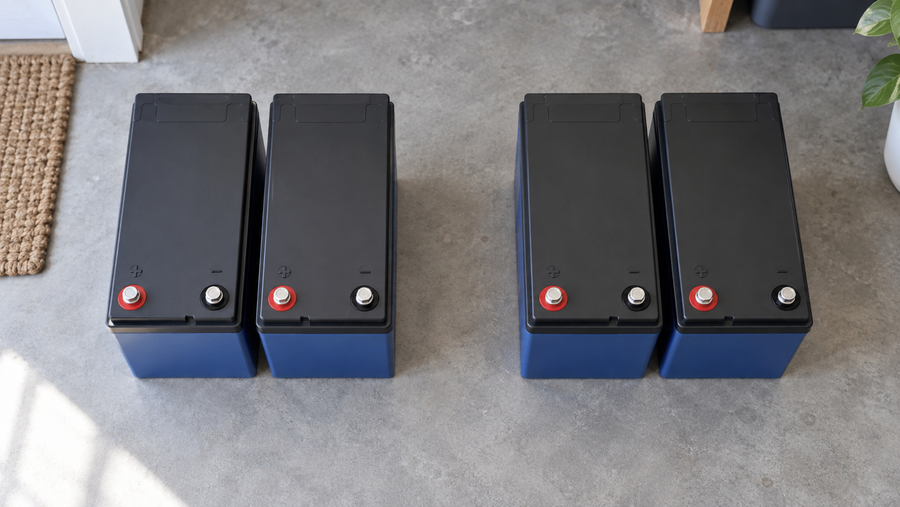
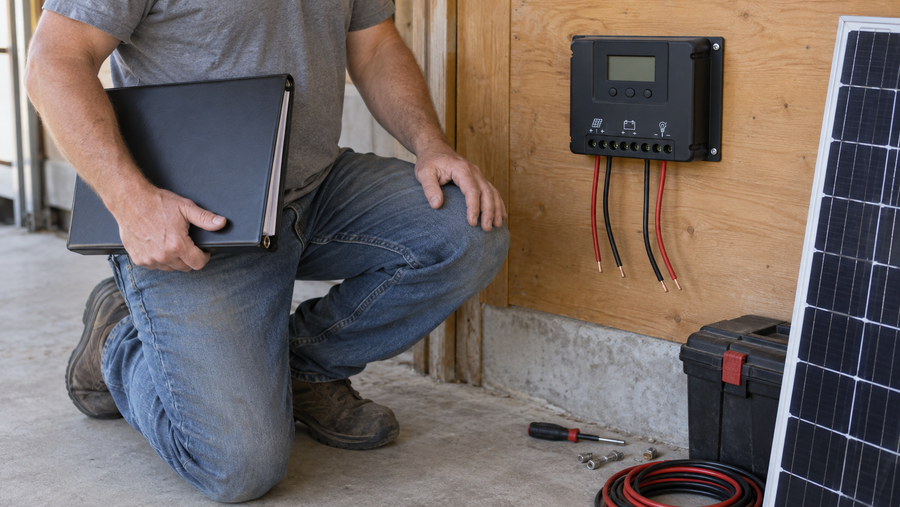
Start with chemistry and hardware quality. Favor lithium iron phosphate battery banks or power stations from reputable manufacturers that publish safety certifications, and look closely at the battery management system built into the product. A robust BMS monitors cell voltages and temperatures, prevents overcharging and over‑discharging, limits current, and can disconnect the pack if any reading goes out of bounds, all of which sharply reduce the chance of abuse‑driven failures lithium batteries safety guide. Treat no‑name packs and unlisted “bargain” inverters the same way you would treat an unvented heater with mystery gas fittings: they do not belong in a timber‑lined structure.
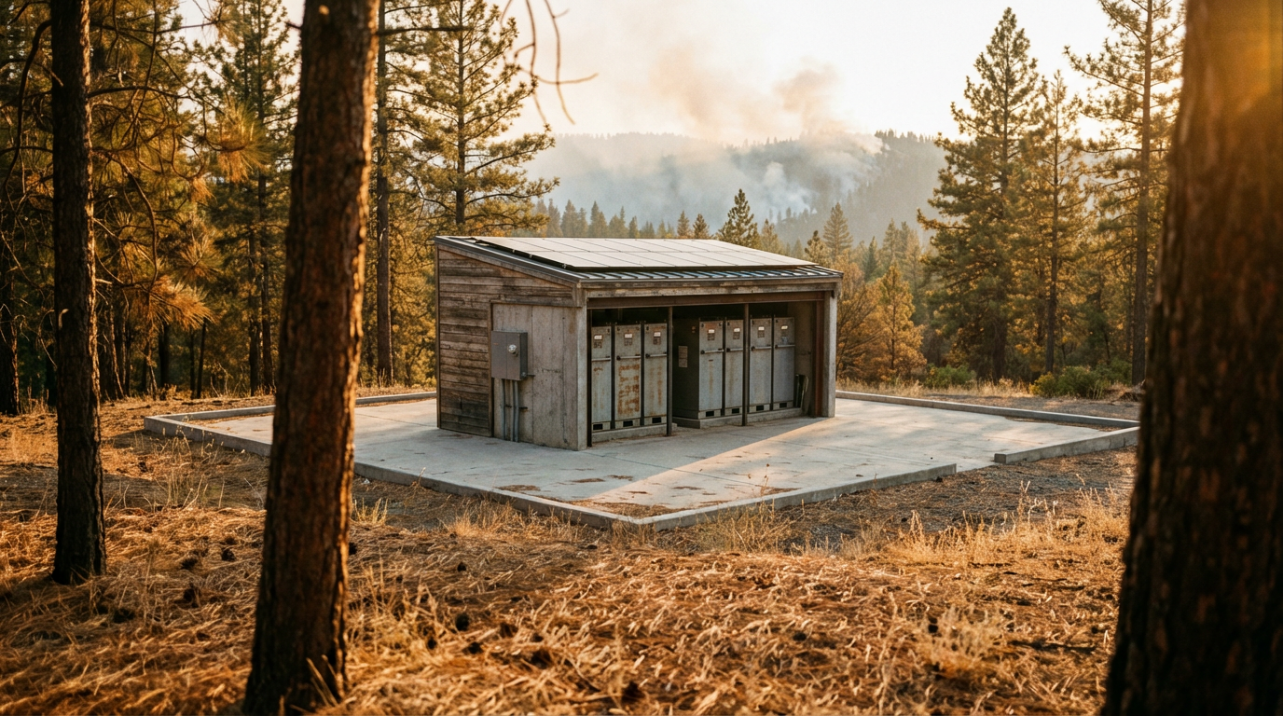
Next, pay attention to where the batteries live. The safest spot is a cool, dry, well‑ventilated space that is easy to access, not a sleeping room, and not the only way out of the building. For many forest properties, that means a small detached shed built of non‑combustible or fire‑resistant materials, with wiring routed in conduit to the main panel. Where batteries are indoors, keep them clear of wood piles, fuel storage, and soft furnishings, and respect any separation distances and enclosure designs recommended by your installer, fire protection engineer, or local code officials. Guidance for larger systems emphasizes separating battery arrays from combustible exposures and ensuring that fire‑rated assemblies and sprinklers can contain a fire within the battery room if one develops lithium-ion battery fires and fire protection, battery energy storage system considerations.
Daily operation and charging habits matter just as much as the spec sheet. Keep batteries and chargers near normal room temperature whenever possible, and avoid charging in spaces that regularly exceed about 105°F or plunge below freezing. Do not charge packs on beds, couches, or stacks of cardboard; use hard, stable, non‑combustible surfaces with air circulation. Do not block doors or walkways with charging devices, and avoid leaving equipment on fast chargers while everyone is asleep. Home and workplace safety guidance stresses supervising charging sessions, using only manufacturer‑approved chargers, and unplugging devices once they are full instead of leaving them connected indefinitely home and workplace lithium‑ion battery fire safety.
Early detection is the next line of defense. Standard smoke alarms are essential, but lithium‑ion fires can develop rapidly and produce unusual smoke signatures, so combining good alarm coverage with situational awareness is important. Signs that demand immediate attention include a battery or enclosure that stays hot after loads are reduced, any swelling or deformation, chemical or “sweet” smells near the system, hissing or crackling sounds, or discolored areas and scorch marks. Modern fire‑detection practice for battery rooms increasingly layers traditional smoke and heat detection with gas sensors and other early warning tools, and national fire organizations are actively developing training and tools for dealing with lithium‑ion and energy storage incidents lithium-ion and energy storage systems.
Finally, have a simple, rehearsed emergency plan. If a battery or enclosure begins venting, smoking, or flame is visible, the priority is to get people away, close doors to contain smoke if that can be done safely, and call 911 early, clearly stating that a lithium‑ion battery is involved. Fire‑safety guidance for homes notes that small, early fires may be knocked back with an ABC extinguisher on surrounding burning materials, but the pack itself can continue to heat and reignite, so re‑entry is risky home and workplace lithium‑ion battery fire safety. Specialized agents like encapsulator solutions have been developed specifically to cool lithium‑ion cells rapidly, encapsulate flammable electrolytes, and cut down explosive and toxic off‑gases, and are widely used in industrial and professional settings lithium-ion battery fire suppression agent. For a forest homeowner, the key is not to stand over a misbehaving pack breathing vapors; it is to evacuate, notify responders early, and let trained crews and equipment handle the suppression.
Where a Generator Still Fits — As the Junior Partner
There are real cases where a generator still earns a place on the property. Deep well pumps, welders, and certain shop tools can demand brief surges of power that would require an oversized battery bank if you tried to handle them purely with lithium. In those situations, the safest strategy is to flip the usual relationship: let solar and batteries run your everyday loads quietly and continuously, and keep a well‑maintained generator as a junior partner that tops up batteries or runs only those heavy tools when absolutely needed.
When you do run a generator in fire season, treat it like a chainsaw or brush mower with extra caution. Operate it on a cleared, non‑combustible pad well away from structures, underbrush, and loose fuels. Let the engine cool completely before refueling, and store fuel in listed containers in a ventilated, protected location away from the cabin and battery shed. Keep exhaust pointed away from vegetation and decks, maintain the unit so it does not shed hot carbon or sparks, and shut it down as soon as your batteries are charged or your heavy work is done. Used sparingly and respectfully, a generator and a lithium bank can complement each other, with the battery system dramatically shrinking the number of hours a hot engine runs on your land.
Community‑scale examples point in the same direction. During a recent wildfire‑driven blackout in northern California, utilities had to run an entire county on diesel generators for weeks, burning tens of thousands of gallons of fuel per day to keep essential services online. That microgrid kept people going but was acknowledged as far less efficient and sustainable than normal service, and nearby communities are now investing in microgrids built around solar and lithium‑ion storage instead of diesel, precisely because those systems offer cleaner, quieter, and inherently lower‑ignition backup during emergencies. The same logic holds at the scale of a single cabin.
Short FAQ
Can a lithium battery bank itself start a forest fire? Yes, a severely abused or defective battery system can ignite, and if that fire spreads beyond the enclosure it can involve nearby vegetation or structures. However, with safer chemistries like lithium iron phosphate, strong battery management, conservative siting in non‑combustible enclosures, and good charging practices, the probability of a cabin‑scale system starting a wildfire is very low compared with common causes like vehicles, power lines, and outdoor burning lithium batteries safety guide, state lithium-ion battery guidance.
Is lithium iron phosphate worth the extra cost for a forest cabin? For most woodland homes, the answer is yes. LFP’s resistance to thermal runaway, lower tendency to release oxygen in a fire, and strong tolerance of electrical and mechanical abuse make it one of the most forgiving lithium chemistries for stationary storage, which is why it is often recommended for home batteries and used in many modern power stations lithium batteries safety guide. It also offers long cycle life and low self‑discharge, so you can leave a cabin system partially charged between seasons without worrying about frequent replacements.
Do I need special fire equipment just because I have a lithium battery bank? For a small, properly installed residential system, the essentials remain smoke and heat detection, clear access around the equipment, and a well‑practiced evacuation plan. Larger battery rooms, shared facilities, or sites with many packs in storage may justify specialized extinguishers or suppression agents that directly address lithium‑ion hazards, along with hazard‑mitigation analyses and coordinated response plans lithium-ion battery fires and fire protection, lithium-ion battery fire suppression agent. In a forest home, focus first on getting the basics right before layering on more complex systems.
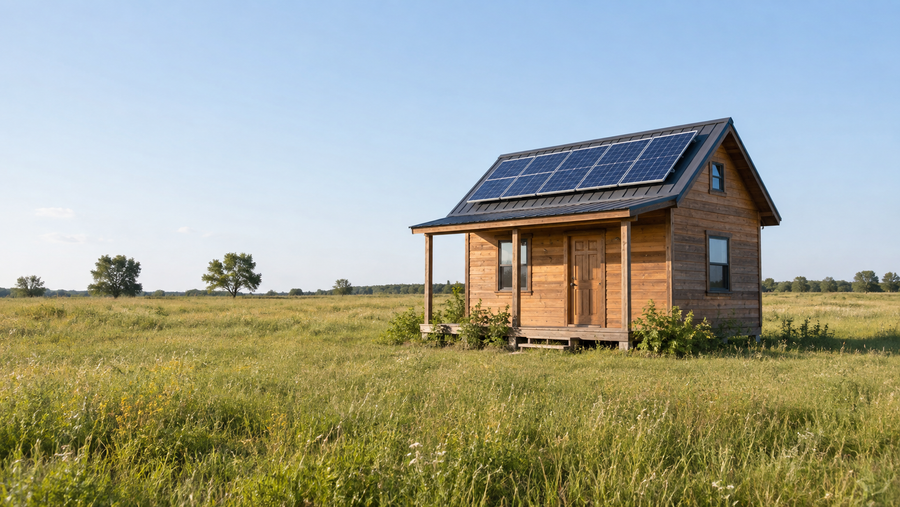
A well‑built lithium system lets you ride out fire‑season outages with the lights on and the forest quiet, instead of adding another exhaust plume and fuel cache to already stressed terrain. Make lithium your primary power source, demote the generator to a rarely used helper, and you dramatically lower the odds that the next plume of smoke you see above the treeline started at your own back door.