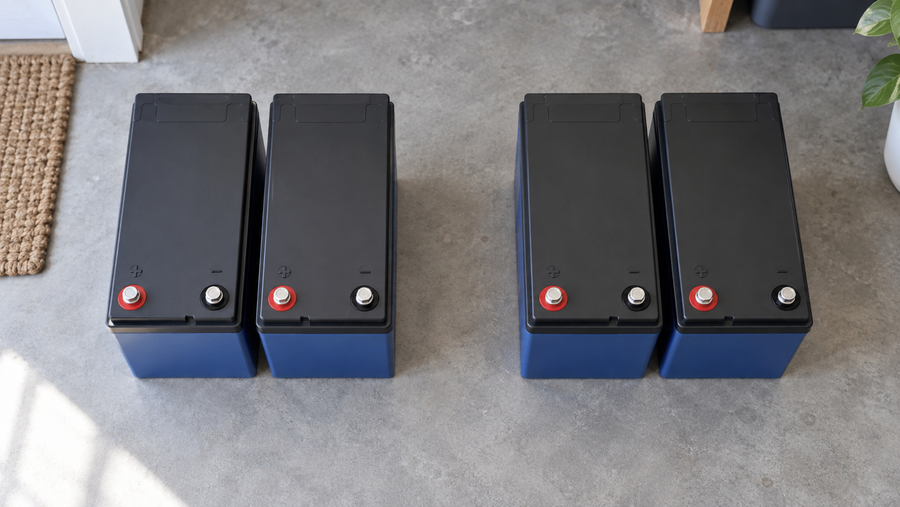

You can generally trust a LiFePO4 monitor percentage for everyday tracking, but not as an exact measure of remaining energy. The percentage is more reliable when the monitor has the correct battery-capacity setting and has recently seen a full charge. If the number looks wrong, check it again after charging stops and heavy loads are turned off. Compare it with how long the battery has actually been running, because voltage alone cannot confirm the exact percentage.
What the percentage actually represents

The percentage is a state-of-charge estimate, not a direct measurement of the energy remaining. Many battery monitors calculate it by tracking current flowing into and out of the battery, then comparing that total with the configured capacity and a full-charge reference.
That estimate depends on accurate capacity settings, current measurement, and synchronization. Small tracking errors can accumulate when the battery is charged and discharged in partial cycles without reaching the monitor's full-charge conditions. The estimate can also drift when some loads or charging sources bypass the monitor's current sensor or when standby loads continue while the main equipment appears to be off.
LiFePO4 voltage makes the estimate harder to check by eye. Its voltage stays relatively flat through much of the usable range, so a reading taken during normal operation may not clearly distinguish a moderately full battery from one that is much closer to empty. A charger raises terminal voltage, while a heavy load can temporarily pull it down; neither value represents rested voltage. Even after the battery rests, voltage is best used as a broad reasonableness check, not a precise fuel gauge through the middle of the discharge curve. Battery University's overview of state-of-charge measurement explains why LiFePO4's flat voltage profile makes voltage-only estimates difficult.
When a LiFePO4 percentage is more reliable
The percentage is more dependable when the configured capacity matches the battery, every relevant charging and load current passes through the monitor's sensor, and the monitor has recently recognized a complete charge.
Use the percentage for routine decisions when it changes gradually and the battery delivers roughly the expected runtime. If a charger or heavy load is active, wait for a suitable rest period before using voltage as a cross-check. If the reading remains implausible after correct setup and synchronization, consult the battery and monitor instructions rather than repeatedly forcing the display to 100%.
For example, the Vipboss 48V 150Ah Lithium Golf Cart Battery Conversion Kit includes an external LCD monitor and Bluetooth status monitoring. Those displays can make charge information easier to check while using the battery, but the percentage still depends on correct setup and synchronization. The kit is a reasonable fit when a golf-cart owner wants both a local display and app-based status information; it should not be treated as proof that every displayed percentage is exact.