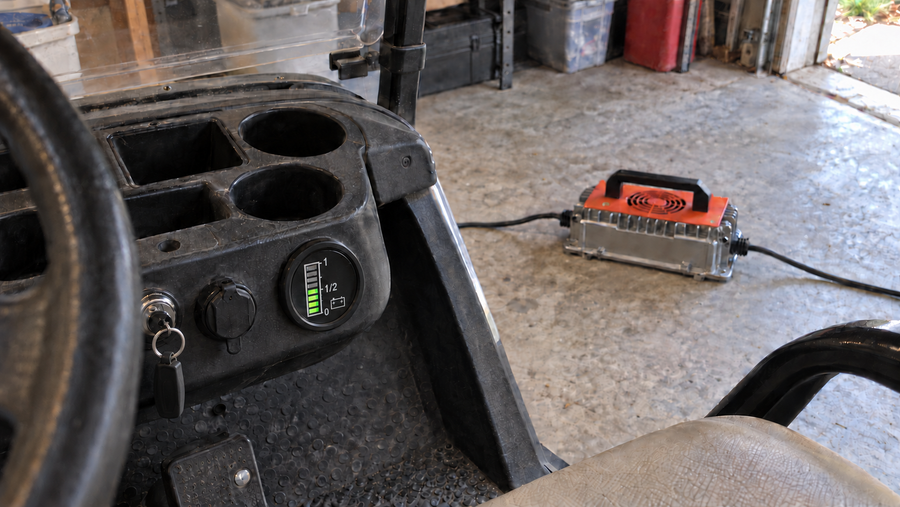

Do not convert an entire fleet at once. Start with a small number of representative assets and sites, prove charging readiness and operational fit, measure the pilot against a defined baseline, and release each subsequent phase only when uptime, cost, and risk assumptions remain credible.
A phased approach makes the transition a controlled operating decision rather than a single battery purchase. It also creates a defensible basis for deciding which assets should move first, which sites need infrastructure work, and which parts of the fleet should remain on lead-acid for now.
Build a Baseline Before Choosing the First Site
Start by dividing the fleet into comparable operating groups: equipment type, location, shift pattern, duty cycle, and charging process. A single migration plan should not assume that every vehicle, machine, or site has the same operating constraints.
For each group, capture a baseline that includes:
- Asset model, age, and current battery configuration
- Battery failures, replacement timing, and maintenance interventions
- Runtime, charging windows, battery-change activity, and downtime
- Shift coverage, route or task volume, and asset availability
- Charger inventory and charging-station use
- Electrical constraints and the expected number of assets charging at once
- Labor spent managing charging, battery changes, faults, or service events
- Current energy, maintenance, and replacement costs
Use a common output measure that fits the asset class. A delivery operation may compare cost per route or delivery; other equipment may use cost per operating hour, mile, or completed task. This is more useful than comparing battery purchase prices or amp-hour ratings alone.
Downtime belongs in the baseline as well. Charging bottlenecks, queues, unreliable availability, detours, and staff time spent managing charging can all affect operating cost, even when they do not appear on a battery invoice.
Prioritize Operational Pain, Not Just Battery Age
A good pilot candidate has a clear operational case and a manageable test environment. Rank each asset group or site against the following questions:
| Priority Factor | Strong Candidate for an Early Pilot | Reason to Defer |
|---|---|---|
| Operational impact | Downtime or charging friction is visible and measurable | Problems are unclear or poorly recorded |
| Duty cycle | Shifts and charging windows are predictable | Utilization varies too widely to evaluate |
| Replacement timing | Existing batteries are approaching planned replacement | Current batteries have no near-term decision point |
| Site readiness | Charging and electrical scope can be assessed | Capacity or charger requirements are unresolved |
| Business measurement | Output, downtime, and labor can be tracked | No reliable baseline exists |
| Risk containment | A fallback plan can protect operations | A pilot failure would disrupt critical activity |
The first phase should be a learning investment. It is not necessarily the largest site, the oldest fleet segment, or the location with the lowest battery price.
Clear Readiness Checks Before Installation
A site should pass three readiness checks before a pilot is installed: asset fit, charging fit, and facility fit. If any one remains unresolved, defer the site or redesign the phase.
Confirm Asset and Battery Fit
Document the required battery configuration and obtain written confirmation for the proposed installation. The review should cover physical dimensions, voltage, connector arrangement, usable-energy requirement, communications or battery-management needs, and any implications for vehicle weight or stability.
Also confirm applicable vehicle or equipment approval requirements and warranty conditions. A proposed battery should not be treated as compatible simply because it has a similar nominal voltage or fits physically in the compartment.
Confirm Charger and Charging-Window Fit
Do not assume an existing lead-acid charger can be retained for lithium operation. Confirm the charging approach in writing with the relevant battery and charger parties before deployment.
Then test the operating pattern:
- When will each asset charge?
- How long is each charging window?
- How many units may charge simultaneously?
- What happens if an asset misses its normal charging window?
- Is spare or fallback capacity needed during the pilot?
Charging utilization, simultaneous charging, and the feasibility of opportunity charging are site-level decision variables that affect shift coverage, spare-battery needs, and charging-station utilization. A plan that works for one shift or one asset group may create queues or availability problems when more units are added.
Confirm Electrical and Facility Scope
Electrical readiness is broader than the charger location. The assessment may need to consider panels, switchgear, transformers, conduit, wiring, service upgrades, and connection work, depending on the planned charging pattern.
Treat this as a proceed-or-hold gate, not a paperwork exercise. The relevant battery, vehicle, charger, electrical, and local-authority parties should provide the written confirmations required for the proposed site and installation.
Run a Pilot That Can Earn the Next Phase

A pilot is successful when it produces evidence for the next decision—not merely when equipment has been installed.
Choose a representative but operationally contained group. Establish the baseline before installation, define owners for each measure, provide a fallback plan, and agree in advance on what will trigger expansion, redesign, pause, or abandonment.
| Pilot Measure | What to Compare | Decision Use |
|---|---|---|
| Asset availability | Baseline versus pilot availability | Determines whether uptime remains acceptable |
| Charging behavior | Planned windows, utilization, and concurrency | Identifies bottlenecks or missed charging opportunities |
| Downtime | Fault, queue, charging, and service downtime | Tests operational-cost assumptions |
| Energy cost | Actual charging pattern against tariff assumptions | Validates the energy-cost model |
| Maintenance and service | Labor, interventions, and recurring issues | Tests lifecycle-cost assumptions |
| Financial case | Actual phase cost against the approved model | Supports or blocks expansion |
Set the pass criteria before installation. There is no universal pilot size, duration, utilization target, or financial threshold: those depend on asset class, shift pattern, site capacity, and the consequences of downtime.
The critical discipline is to record exceptions. A charging queue, tariff change, unplanned service event, or missed charging window is not noise if it could recur at the next site.
Model Cost by Phase, Not as One Fleet Purchase
The financial model should show each rollout phase separately: pilot, first expansion, and later sites. This prevents a favorable assumption at one location from masking infrastructure work or operating constraints elsewhere.
A useful phase-level cost register includes the following categories:
| Cost or Assumption Area | Items to Include |
|---|---|
| Upfront deployment | Batteries, chargers, installation, facility work, and electrical work |
| Charging infrastructure | Hardware, software, communications, utility charges, maintenance, and service arrangements |
| Operations | Electricity, labor, downtime, charging management, and asset-availability assumptions |
| Lifecycle events | Planned battery and charger replacement, removal, disposal scope, and residual-value assumptions |
| Capital timing | Upfront cash by phase, financing costs where applicable, and shared-asset allocation |
| Open dependencies | Unresolved compatibility, utility, electrical, or operating assumptions |
Charging-infrastructure cost planning should extend beyond charger hardware. Electrical work, facility changes, software, maintenance, replacement, removal, disposal, and service arrangements may all matter, although not every site will incur every item.
Model the result against a meaningful business output, then compare the next phase with the cost and operational risk of continuing lead-acid operation. This keeps the decision focused on lifecycle cost and availability rather than acquisition price alone.
Stress-Test the Assumptions Before Releasing Budget

Before approving another site, test whether the decision changes under less favorable but plausible operating conditions. The most important assumptions commonly include:
- Electricity-price structure, including time-based pricing
- Charging losses and auxiliary consumption
- Demand charges or peak penalties
- Charger utilization and simultaneous charging
- Asset utilization and downtime
- Equipment life and replacement timing
- Financing cost
- Residual-value assumptions
Residual value should remain an assumption rather than a guaranteed benefit. Battery health, mileage, market demand, and policy changes can affect the value assigned to an asset or battery at the end of the planning period.
Use scenario analysis to see whether changes in electricity prices, utilization, or residual value reverse the expansion decision. If the result only works under one optimistic case, keep the next phase small or redesign the operating model.
Make the Next Decision Earned
Select one qualified pilot site, complete the readiness checklist, and establish the baseline measures and financial assumptions before committing equipment. Obtain written compatibility and safety confirmations for the proposed asset, charger, and site configuration.
Approve expansion only when the pilot meets predefined uptime, cost, charging-operation, and risk thresholds. If you are evaluating documented battery options for a specific fleet, a Vipboss fleet-fit discussion can help organize the requirements and evidence needed for that decision—without assuming conversion is right for every asset or site.