Add battery backup by choosing a documented DC power path that supports your radio, supply or controller, battery, and charger as a system. Use automatic changeover only when its instructions cover the required load, battery charging, isolation, outage transfer, and mains restoration. Use a manual path only if the actual equipment documents a deliberate, isolated changeover procedure; do not improvise connections or switching.
Choose a documented power path
First trace the power path in each state: what powers the radio while mains power is available, how the battery is charged, what supplies the radio during an outage, and what happens when mains returns. The equipment instructions should answer each question, including whether an operator must act and how the sources are isolated from one another.
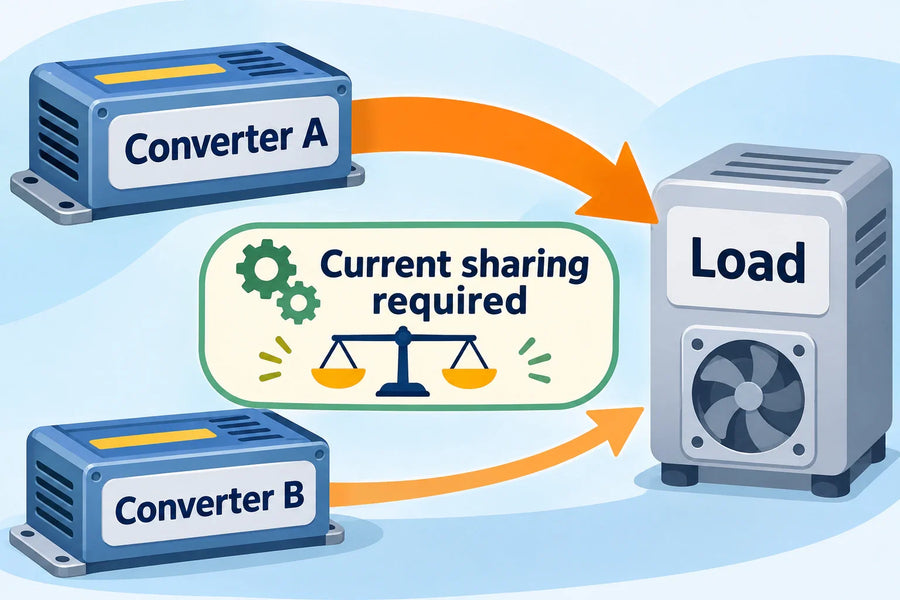
An automatic DC backup system can handle these transitions when it is designed and documented for the station's load and battery. For example, one documented system powers its load from the supply when AC is present, transfers the load to its battery when AC fails, and returns the load to the supply while recharging the battery when AC returns. That example describes that system's behavior, not a general wiring design or proof that it suits another radio or battery. Its manual also says its charging-resistor values are based on a typical 100 Ah deep-cycle marine battery and should be adjusted for a different battery type to meet that battery's charging requirements. This illustrates why both transition and charging behavior matter.
A manual changeover is an option only when the actual equipment instructions specify how to change sources while maintaining the required isolation. If the instructions do not document that procedure, do not treat an available switch, connector, or pair of power leads as permission to switch manually.
Compare the equipment limits
Before connecting a proposed path, gather the specifications for the radio, supply or controller, battery, and charger. Compare the radio's specified DC input range and transmit-current demand with the supply or controller's documented output range and load limits. Check that the limits cover transmitting as well as receiving; a path that powers the radio at receive load may not meet its stated transmit demand.
Then check the battery's charging requirements against the charger's documented chemistry support and settings, and confirm that the selected system's instructions permit that battery and arrangement. The charger must be appropriate for the battery, and the supply or controller must support the intended load and transitions. A missing rating, charging instruction, or documented changeover procedure leaves the proposed path unconfirmed; do not fill the gap by guessing a setting or wiring method.
Estimate runtime and identify low-battery behavior

Use the radio's documented receive and transmit power, along with the expected time in each state, to estimate energy demand. For each state, multiply power in watts by time in hours to get watt-hours (Wh), then add the state totals. For example, if a radio draws 40 W while receiving for 5 hours and 100 W while transmitting for 1 hour, the estimated demand is (40 W × 5 h) + (100 W × 1 h) = 300 Wh. These figures are illustrative; use the ratings and operating schedule for your own station. If the manual gives current instead of power, calculate power for each state as DC voltage in volts multiplied by current in amps, then multiply by hours.
Compare that total with the energy available from the battery through the selected power system. Account for conversion losses or operating limits only when the equipment documents them; do not treat rated battery energy as fully available unless the applicable equipment information supports that. The estimate depends on the assumed receive/transmit duty and documented system limits, so it is a planning comparison, not guaranteed runtime. If estimated demand exceeds documented available energy for the intended period, the path does not meet that runtime estimate; revise the expected operating period or select a documented arrangement with enough available energy.
The Vipboss 12V 105Ah Bluetooth LiFePO4 battery is one example of a storage component: its stated rated energy is 1,344 Wh, it has a built-in 100 A BMS, and Bluetooth provides access to battery status. That rated energy can be compared with the calculated workload, subject to the chosen system's documented limits. The battery is not a changeover system; the backup arrangement still needs compatible charging and power-path equipment.
Find the actual battery or controller's documented low-battery indication or cutoff and what action it requires. Do not infer a cutoff threshold from nominal voltage alone. If the equipment indicates that it has reached its specified limit, follow its instructions rather than relying on an assumed remaining runtime.
Check each operating state

Use the selected equipment's approved commissioning and test procedure. Do not improvise a battery disconnect, force a low-voltage cutoff, or interrupt a source in a way the instructions do not permit.
- On mains: Confirm that the radio receives power within its specified DC range and that the documented charging behavior is present.
- During an outage: Follow the approved test method and observe whether the documented transfer occurs and the radio remains within its operating limits.
- At low battery: Observe the documented indication or cutoff and follow the stated operator response; do not substitute a generic voltage threshold.
- After mains returns: Confirm that the system returns to its documented mains-powered state and resumes the specified charging behavior.
If an observed state differs from the equipment's instructions or the radio's limits, stop relying on the backup path until the mismatch is resolved using the approved procedure. After installation, check the complete station for interference; the ham-radio RFI discussion for battery-powered setups is a related next step.
The backup is ready to rely on only when its documented path covers the radio load, battery charging, and each required transition, and the approved checks match the equipment's stated behavior.
FAQs
How do I estimate how long a battery can power my ham radio base station?
Multiply the radio's documented receive and transmit power by the expected hours in each state, then add the watt-hour totals; if the manual gives current, calculate power from documented DC voltage and current first. Compare the result with energy available through the selected power system, accounting only for documented limits or losses. Treat this as an estimate, not guaranteed runtime.
What should I check when mains power returns?
Using the equipment's approved test procedure, confirm that the system returns to its documented mains-powered state and resumes its specified battery-charging behavior.
How do I check that a backup power path is compatible with my radio and battery?
Compare the radio’s specified DC input range and transmit-current demand with the supply or controller’s documented output range and load limits. Check that the charger supports the battery’s chemistry and documented charging requirements, and that the selected equipment permits the intended arrangement.
How should I check the backup path during a power outage?
Using the selected equipment’s approved test procedure, confirm that the documented transfer occurs and that the radio remains within its specified operating limits. Do not improvise a source interruption or switching procedure.