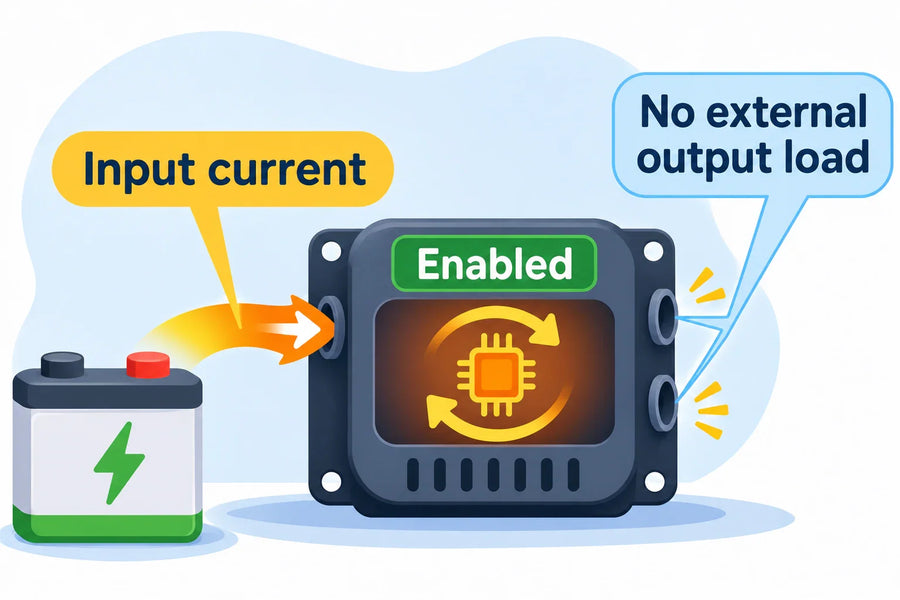
Yes, a battery backup can run an aquarium heater if its output supports the heater, it has enough usable energy for the heater’s actual demand, and the equipment instructions permit the automatic supply path. Output capability and stored energy answer different questions: the first is whether the heater can be powered; the second is how long the available energy may last.
Check what the backup output can power
Compare the output with the heater. Read the heater’s electrical requirements and the backup’s stated output type and load capability. An outlet’s presence, or a runtime claim for another device, does not show that it can supply the heater. In particular, a backup designed for a circulation pump is not evidence that it can power a heater. For example, one aquarium backup’s instructions specify operation of 12 V DC circulation pumps; that example applies to that equipment, not to every backup.
The heater passes this first check only when the backup’s stated output supports the heater’s requirements. If the backup provides only a pump-specific output, do not treat that port as heater-capable.
Estimate energy from actual heater use
Separate rated power from energy over time. A heater’s nameplate wattage describes the element’s power demand while it is on. A thermostatically controlled heater switches its element on and off in response to water temperature, so energy use over time depends on how long the element runs. Heaters without an integrated thermostat, such as the documented titanium-heater type, use a separate temperature controller for that switching. Thermostat operation and element cycling explain why the nameplate rating alone does not tell you the heater’s average energy use.

Use the heater’s actual load and the tank’s measured temperature trend as planning inputs. How often the element runs helps estimate average demand. If the tank temperature continues to fall while the heater is operating under the observed conditions, the supplied heating is not maintaining temperature in those conditions. Read that trend alongside how often the thermostat calls for heat: frequent operation indicates more of the heater’s rated load is being used over time, while less frequent operation means lower average demand under those observations. Together, the cycling and temperature trend help estimate the energy the backup would need to supply; they do not establish a universal cutoff temperature or a fixed outage survival period.
To estimate runtime, compare the heater’s average energy use with the battery’s usable energy using the battery runtime calculation. Use that demand when you size the battery capacity. Rated wattage alone cannot give a reliable duration when the heater cycles, and calculated runtime does not guarantee how long a particular aquarium will remain at a suitable temperature.
Confirm automatic operation is allowed
Check the permitted supply path. Adequate output and energy do not by themselves show that a heater may operate automatically from a backup during an outage. Use only a supply path allowed by the applicable heater or controller instructions and the backup or transfer equipment instructions. If the instructions do not allow the proposed automatic path, do not rely on that arrangement unattended.
The decision is conditional: confirm that the output supports the heater, estimate energy needs from actual demand and temperature behavior, and confirm that the equipment instructions permit automatic supply. If any check fails, that backup arrangement cannot be relied on to run the heater during an outage.
FAQs
What does it mean if the aquarium temperature keeps falling while the heater is operating?
Under those observed conditions, the supplied heating is not maintaining the tank temperature. Read the trend alongside how often the heater cycles to estimate its actual energy demand for backup planning.
Why isn’t the heater’s wattage rating enough to estimate backup runtime?
The rating describes the heater’s power demand while its element is on, but a thermostatically controlled heater switches on and off as water temperature changes. Estimate energy use from how long the element runs and compare that demand with the battery’s usable energy; the rating alone does not determine runtime.
Can a battery backup port intended for a circulation pump run an aquarium heater?
A pump-specific output does not establish that the backup can power a heater. Check that the backup’s stated output supports the heater’s electrical requirements before relying on it.
What must be checked before relying on a battery backup to run an aquarium heater automatically during an outage?
The backup’s output must support the heater, its usable energy must cover the heater’s actual demand, and the applicable heater or controller and backup or transfer equipment instructions must allow the automatic supply path. If the instructions do not allow that path, do not rely on the arrangement unattended.