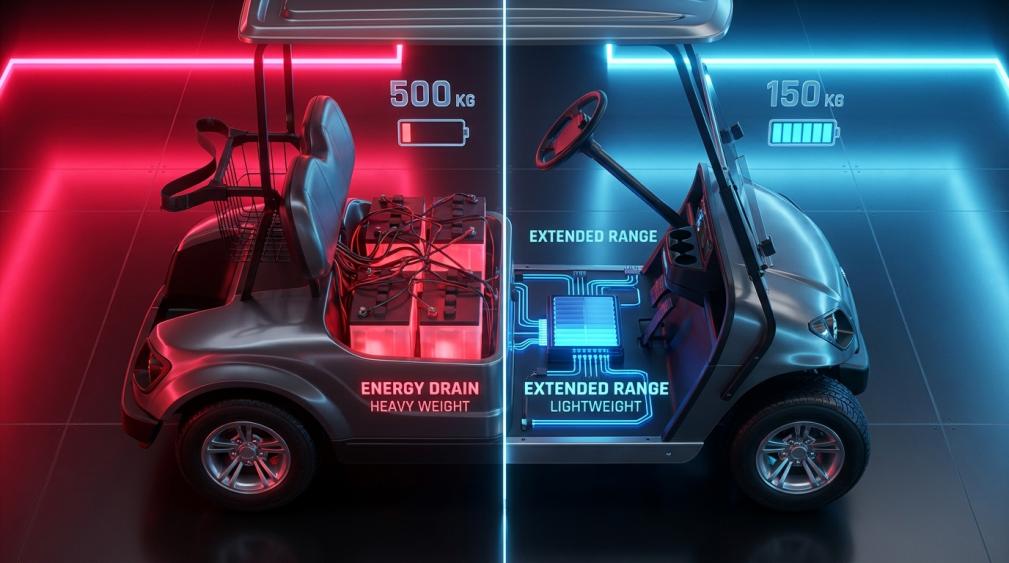

Dropping 300 pounds from a golf cart can dramatically improve range and performance, but weight alone rarely delivers a clean 2x increase unless you fix other energy leaks at the same time.
You know the feeling: the cart crawls up the last hill of the day, the battery meter dips into the danger zone, and you are praying it makes it back to the barn. Owners who have pulled heavy lead-acid packs, cleared out hundreds of pounds of "just in case" gear, and moved to lightweight lithium routinely report dramatically longer run time and a cart that feels alive instead of labored. This guide shows when a 300-pound diet really can come close to doubling practical range, when it cannot, and how to upgrade in a way that pays off for years instead of just one season.
Why Golf Cart Weight Hits Range So Hard
Every pound your cart hauls has to be pushed, pulled, and often lifted up hills by the motor and battery pack. When you exceed the payload your cart was designed for, performance drops, stopping distances grow, motors run hotter, and electric carts burn through charge much faster, especially on slopes and rough ground, as weight-limit guidance from specialty dealers makes clear. Overloading is not just a comfort issue; it actively chews through range and shortens component life.
Range is simply how much usable energy you carry divided by how hard the cart has to work. Extra passengers, a rear seat kit, a steel cargo bed, coolers, tools, hunting gear, and even big knobby tires all push the "work" side of that equation up. Dealers focused on fuel and energy efficiency emphasize that reducing excess weight is one of the simplest ways to extend ride time between fill-ups or charging sessions because the motor no longer has to fight so much rolling resistance and gravity on every hole or neighborhood loop.
On a flat, smooth course at modest speeds, aerodynamic drag and tire friction matter more than weight, so cutting 300 pounds will certainly help but may not feel miraculous. On a hilly property or with a chronically overloaded utility cart, weight becomes the dominant load, and every pound you remove translates much more directly into extra distance per charge.

What Shedding 300 lbs Really Looks Like
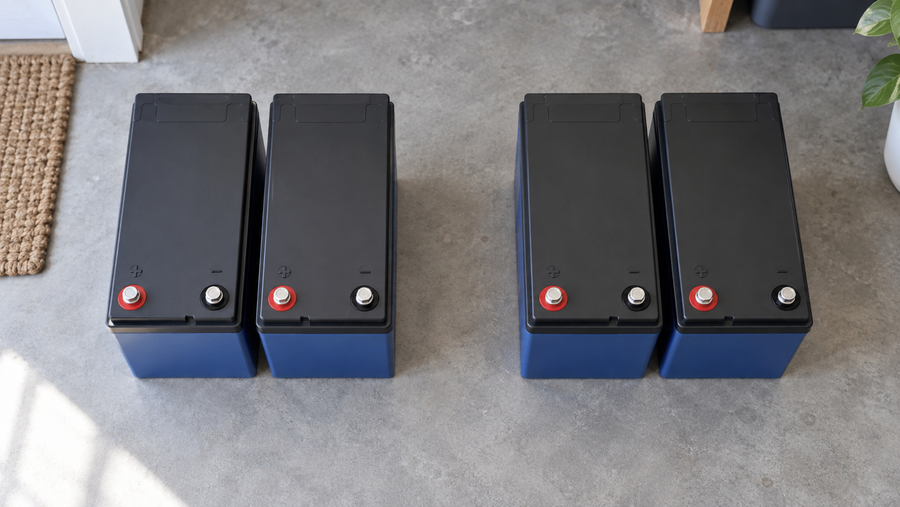
Three hundred pounds sounds abstract until you break it into real components. A typical bank of flooded lead-acid batteries can easily weigh a couple hundred pounds on its own, and upgrade shops report that swapping traditional lead-acid batteries for lithium-ion can remove roughly 200 pounds from a golf cart's curb weight in many common setups. Modern lithium packs deliver the same or greater usable energy with far less mass, so you are stacking higher energy density and reduced weight in your favor.
Lithium golf cart batteries are specifically designed to be lighter, more compact, and more efficient than old lead-acid bricks while delivering consistent power through the discharge cycle, which means better range and fewer mid-day recharges on larger properties or busy courses, as noted lithium performance specialists. Owners also gain several extra years of service life and far lower maintenance needs compared with legacy packs, which turns that weight loss into long-term value, as described in lithium upgrade overviews.
The remaining 100 pounds or so often sits in places most owners forget about. Full coolers, tools, cart covers, folding chairs, sand bottles, hunting accessories, and a trunk full of "might need it" items add up quickly. Forum and dealer checklists of what people remove when they start walking or pushing instead of riding show that non-club gear alone can drive a bag or cart up toward 35 pounds; scale that mentality to a full-size golf cart and it is easy to reclaim another 100-150 pounds simply by separating everyday essentials from occasional-use cargo and keeping the latter in the garage instead of on the roof or rear seat.
The last piece of the 300-pound puzzle is hardware choice. Oversize off-road wheels, heavy steel rear seats or cargo boxes, and large aftermarket accessories can add dozens of pounds compared with lighter aluminum structures and appropriately sized tires. Performance-oriented dealers that specialize in speed and efficiency upgrades repeatedly highlight tire choice and unnecessary add-ons as critical levers because they affect both weight and rolling resistance at the same time.
Here is how a realistic 300-pound cut often breaks down in practice:
Weight cut (approximate) |
Where it usually comes from |
Typical payoff for range and feel |
180-220 lb |
Higher usable energy, lighter cart, stronger acceleration |
|
60-100 lb |
Unneeded cargo, tools, coolers, covers |
Less strain on motor, cooler running, better hill climbing |
20-40 lb |
Heavy seats, racks, or wheels replaced or removed |
Quicker response, smoother ride, reduced rolling losses |
These numbers are illustrative, not promises, but they show that 300 pounds is not a fantasy target when you combine a battery retrofit with honest decluttering and a few smart hardware choices.

Can That Weight Loss Truly Double Range?
Shedding 300 pounds can come close to doubling the usable range of a suffering, overloaded cart, but only when weight reduction is paired with a healthy battery system, correct tire pressure, and efficient driving habits. Weight is powerful, yet it is just one part of the range equation.
Imagine a cart with tired lead-acid batteries that have lost a big chunk of their original capacity. In real life, many older packs only deliver a fraction of the energy they had when new, which means the cart might limp through nine holes and then sag badly. Swap that aging pack for a fresh lithium system with higher usable capacity, remove 200 pounds of battery mass and another 100 pounds of dead weight cargo, and suddenly you have both more stored energy and less work to do with it. Lithium-focused guides underline that these packs keep voltage and power output much more stable as they discharge, so the cart holds its speed deeper into the state of charge instead of fading early, which stretches practical range even further.
On that kind of worst-case starting point, the combination of new chemistry, extra usable amp-hours, and 300 pounds less to haul can indeed make the cart feel like its range has doubled compared with the old setup, but the miracle belongs as much to the new battery as to the diet.

Upgrade resources on electric golf cart performance consistently note that higher-quality, higher-capacity batteries plus weight reduction deliver significantly longer rides between charges, especially when paired with up-to-date motors, controllers, and efficient tires, as described in performance upgrade guides.
Now think about a newer, well-maintained cart that already runs on decent batteries. In that scenario, dropping 300 pounds still reduces strain, improves acceleration, and makes the motor and controller run cooler, but it is less likely to double range by itself. Speed-focused shops emphasize that easy gains such as keeping tire pressure at the recommended PSI, choosing low-rolling-resistance tires, and removing obvious clutter are "free speed" or "free distance," while bigger jumps come when you combine weight reduction with electrical upgrades and smart tuning, as highlighted in speed improvement tips.
Course profile and driving style also matter. On flat ground at moderate speeds, cutting weight may move you from, say, "comfortably finishes 18 holes" to "comfortably finishes 27" with the same pack, which is substantial but not double. On a hilly, stop-and-go route where you are constantly climbing and accelerating, those same changes can feel far more dramatic because the cart spends so much of its time doing hard work where weight matters most.
Smart Ways To Lose The Weight And Gain Range
Start With The Battery Bank
If you are serious about range, the battery compartment is the first and most impactful place to focus. Modern lithium golf cart batteries pack more energy into a lighter, smaller case, deliver consistent power as they discharge, and recharge in a few hours rather than overnight, extending range per charge while cutting downtime according to lithium performance analyses. They also routinely last several years longer than lead-acid while requiring no watering and far less cleaning, which turns the upfront investment into lower total cost of ownership in the long run, as detailed in lithium maintenance and lifespan guides.
For off-grid properties or course fleets, that lighter, longer-lasting energy source is exactly what you want: fewer deep discharges, fewer surprise failures, and more predictable daily range. When retrofitting, make sure the pack voltage and capacity match your cart's requirements, and use a charger designed for that specific lithium chemistry and BMS. Performance-oriented dealers stress that matching the battery, charger, and controller is what keeps the system efficient and reliable at higher loads and longer duty cycles.
Trim The Rolling Load Without Sacrificing Utility
Once the heavy batteries are handled, the next step is to audit what actually rides around on the cart every day. Pull every accessory, cooler, tool, spare part, and storage bin off the vehicle and weigh or at least handle it with an honest eye toward "used weekly" versus "used once a year." Many owners are surprised to find tens of pounds of forgotten gear under seats and in trunks that has not moved in months.
A simple rule that efficiency and lithium-care resources repeat is to minimize unnecessary weight to preserve power and reduce drain on the battery bank. That can mean keeping only a small cooler instead of a full chest, storing rain gear and bulky covers in the garage until the forecast calls for them, and choosing aluminum or composite accessories over steel when you add must-have items. Tire choice matters here as well: larger or more aggressive treads add weight and rolling drag, while appropriately sized tires with smooth, course-friendly tread help the cart roll farther on the same energy budget, a point echoed in speed and performance articles aimed at everyday users.
Dial In Driving And Maintenance For Range
Shedding weight is a powerful lever, but you will not get full value from your 300-pound cut if the cart is wasting energy elsewhere. Dealers who focus on fuel and energy efficiency repeatedly point to basic maintenance like correct tire pressure, smooth steering, and properly adjusted brakes as core range extenders, because underinflated tires and dragging brakes act like invisible hills that the motor must constantly climb, as explained in golf cart fuel-efficiency discussions.
Battery care is just as important. Lithium-specific guides emphasize avoiding routine deep discharges and treating the pack gently if you want both range and lifespan. Some maintenance resources recommend keeping the state of charge roughly between 20 and 80 percent in daily use to limit long-term wear, while others suggest topping back up to full after each outing so you always start with maximum range, a position laid out in lithium battery care advice and maintenance checklists for lithium packs. Some manufacturers even explicitly instruct owners to charge to 100 percent after every use, which lithium knowledge-center articles highlight. The way to reconcile these differences is straightforward: follow the charging profile in your battery's manual, since its BMS and cell chemistry are tuned together, and avoid running the pack down to empty unless absolutely necessary.
Driving style ties it all together.

Gentle, steady acceleration and anticipating hills or stops lets the controller and motor work in their efficient range instead of constantly spiking current. Combined with correct tire pressure, a clean, light cart, and a healthy lithium pack, that smoother driving can easily add an extra loop around the neighborhood or a few more holes to your practical range, even if the battery's rated capacity never changes.
Lithium And Off-Grid Range Confidence
For off-grid cabins, large properties, and utility use where charging opportunities are limited, the goal is not just squeezing out maximum theoretical range on day one; it is having predictable, dependable range every day for years. Lithium systems with proper care can deliver long service lives with stable performance, meaning the range you measure in year one is much closer to what you will see in year five, a point underscored in educational material for lithium-equipped neighborhood and golf vehicles such as dealer-authored lifespan guides.
In that context, dropping 300 pounds is almost like lowering the hills all over your property. The cart accelerates more easily, climbs with less complaint, and comes back with more charge in reserve, which reduces the frequency and depth of discharges and further protects the battery. When you combine that with storage practices that keep the pack at a moderate state of charge in cool, dry conditions during the off-season, you build a system where range is no longer the limiting factor in what you can do with the vehicle.
FAQ: Is Weight Distribution as Important as Total Weight?
Total weight drives how much energy the cart consumes, but where that weight sits matters for stability, traction, and how efficiently the motor can put power to the ground. Guidance on electric push carts and weight limits in full-size vehicles points out that an unbalanced cart is harder to steer, more tiring to drive, and more likely to tip or scrub tires on hills, all of which waste energy. Keeping heavy items low and near the centerline, avoiding big side-to-side imbalances, and not stacking heavy cargo high on roof racks helps the cart track straight, roll freely, and maintain better grip on inclines, which indirectly supports better range along with safer handling.
FAQ: Will A Lithium Retrofit Hurt My Cart's Towing Or Hauling Ability?
Lithium packs themselves do not reduce the rated payload or towing capacity of a cart; those limits depend on frame strength, motor and controller ratings, suspension, and brakes. What the retrofit does is remove significant dead weight from the vehicle while often supplying stronger, more consistent power. That means the cart works less hard to carry the same load and recovers its speed more quickly after hills or stops. As long as the new battery system is properly matched to the cart and installed by someone who understands its electrical and mechanical limits, you can expect equal or better towing and hauling performance with more range safety margin rather than less.
A 300-pound weight cut is a powerful upgrade lever, but it works best as part of a complete power plan: a modern lithium pack, a lighter and cleaner cart, dialed-in tires and brakes, and thoughtful driving habits. Treat those pieces as one system and you turn range from a daily worry into one more strength your golf cart brings to the course, neighborhood, or off-grid property.