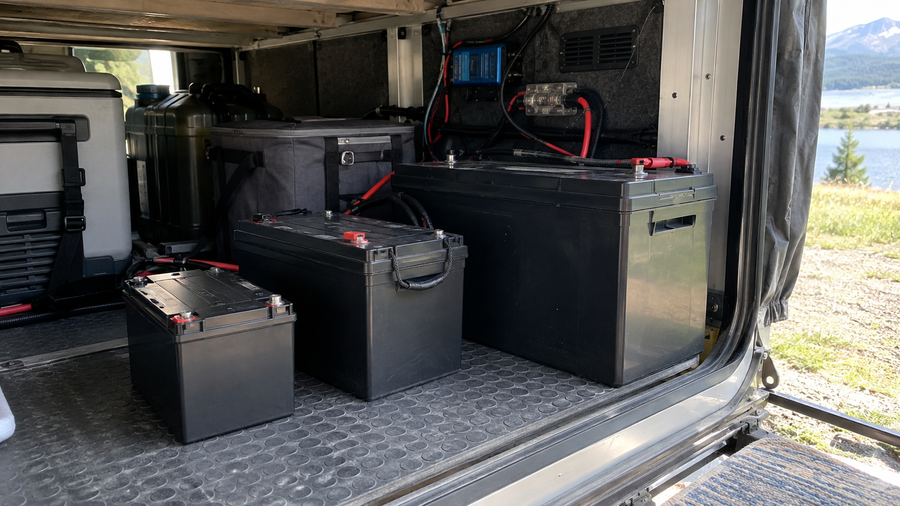

There is no single outcome for commercial LiFePO4 fleet batteries at the end of a financing or lease term. The signed agreement—not a sales label or the fact that payments were made monthly—controls whether the business keeps the batteries, returns them, purchases them, extends the arrangement, or follows another stated path.
The practical task is to make that decision before any contractual deadline and before battery replacement becomes an operational emergency. For every affected site, compare the complete cost of returning, keeping, renewing, or replacing the batteries, including the work required to keep equipment available.
Start with the Governing Agreement
“Financed” can describe different arrangements. A payoff under a loan or security agreement may result in ownership, while a lease may require a return, a purchase election, an extension, or another end-of-term action. Do not assume that a payment schedule answers the ownership question.
Create one controlled record for each battery group or site that includes:
- The signed agreement and amendments
- The named lessor, lender, or equipment owner
- The term-end date
- The asset schedule identifying the batteries
- The end-of-term election language
- Notice and delivery requirements
- Any purchase-option wording
- Documentation, inspection, or return provisions
- The party responsible for removal, freight, and closeout activities
If the agreement uses terms such as fixed-price purchase option, nominal purchase option, $1 purchase option, fair-market-value purchase option, renewal, extension, or return, capture the exact language. Those terms should be interpreted in the context of the agreement rather than treated as shorthand for a universal outcome.
Where ownership, depreciation, tax treatment, or security interests affect a material decision, have the agreement reviewed by appropriate legal, accounting, and tax professionals.
Put Lease-End Dates on an Operational Timeline

A lease-end decision is not only a finance event. It can affect truck availability, forklift uptime, charging arrangements, replacement scheduling, and site labor.
Twelve to Six Months Before Term End
Build the asset list. Confirm which batteries are tied to which agreement, equipment unit, and operating location. This is especially important when a fleet has expanded, moved batteries between sites, or replaced equipment during the term.
At the same time, begin a technical review of the batteries’ current role in the operation:
- Which equipment depends on them?
- Can the site operate during removal or replacement?
- Are chargers, connectors, mounting arrangements, and controls part of the return or replacement plan?
- Is the battery fleet still standardized, or has each site evolved differently?
Six to Three Months Before Term End
Obtain written clarification of the available end-of-term path from the counterparty, using the agreement as the reference point. Then collect the information needed to compare alternatives: a return estimate, a purchase or buyout figure if offered, an extension or renewal proposal if available, and a replacement plan.
Do not leave this step until a notice deadline is close. A rushed decision can turn a planned migration into emergency procurement and unplanned equipment downtime.
Sixty to Thirty Days Before Term End
Document the selected option for each site or fleet segment. Assign owners for notice, removal, continuity planning, battery handling, and asset-register updates.
If returning batteries, coordinate the handoff schedule so that equipment is not left without an operating power source. If purchasing or refinancing, confirm the administrative steps needed to reflect the chosen ownership and payment path. If replacing, align removal and installation with the fleet’s operating calendar.
Compare the Real Cost of Each Path

Monthly payment history is not enough to select an end-of-term option. A useful total-cost comparison should show both the cash due at term end and the operational cost of the choice.
| Path | Questions to Model |
|---|---|
| Return | What notice, removal, inspection, logistics, repair, or closeout costs apply under the agreement? What will power the equipment afterward? |
| Purchase or Buyout | What is the stated purchase amount? How much useful service does the fleet expect from the batteries after purchase? What support or service arrangements continue, if any? |
| Renew or Extend | What new payment, term, and end-of-term conditions would apply? Does an extension delay a replacement decision or solve an operational need? |
| Replace With New Batteries | What are the costs of new batteries, installation, downtime, removal, logistics, and retirement of the outgoing units? Is the fleet gaining a more consistent standard across sites? |
| Refinance | What amount remains to be financed, and how does the revised payment path compare with expected remaining service life and planned replacement timing? |
For each option, use the same worksheet categories:
- Cash due at term end
- Expected remaining service life
- Planned operating downtime
- Removal and installation labor
- Freight and handling
- Inspection or restoration work required by the agreement
- Ongoing service and maintenance expectations
- Battery retirement or recycling costs
- Replacement timing for the next planning cycle
A site may reasonably choose a different path than another site. Batteries serving critical shifts, remote facilities, or equipment with limited replacement windows should not be evaluated solely on the same payment comparison used for lightly utilized assets.
Treat Return Condition as a Contract-Controlled Risk

A return is not simply a physical pickup. The agreement may set the condition, documentation, equipment, or inspection process that applies at handoff. Before committing to return, establish what must be delivered, what records must accompany it, who conducts inspection, and how any disputed findings are handled.
Use a site-level closeout file containing the battery identification, photos, operating records available to the business, and the written return instructions. This creates a clear internal handoff between operations, procurement, and finance.
The same discipline applies to a buyout. Confirm what changes after purchase: ownership records, service arrangements, technical support expectations, insurance records, and the asset register. Do not assume that a service, software, charger, or warranty arrangement automatically follows a purchase election unless the relevant documents say so.
Include Asset-Control and Tax Checkpoints
An end-of-term decision can change how batteries are recorded internally. Update the asset register to show whether batteries were returned, retained, purchased, replaced, or transferred to a new arrangement.
For U.S. federal income-tax purposes, depreciable property generally must be owned by the taxpayer, used in a trade or business or for income production, have a determinable useful life, and be expected to last more than one year. The IRS also notes that a lessee may depreciate leased property only when it retains incidents of ownership. Review the relevant IRS depreciation guidance with a qualified tax adviser; tax treatment does not itself determine the contractual outcome of a battery agreement.
Plan Battery Closeout as a Managed Lithium-Asset Process
A returned battery and a retired battery are not necessarily the same thing. A lessor may direct a return route, while batteries being removed from service may require a separate recycling or collection plan. Either way, assign the route before the batteries leave the site and include handling and logistics in the lease-end budget.
Lithium-ion batteries should not be placed in household garbage or recycling bins. The U.S. Environmental Protection Agency directs them to separate recycling or household hazardous-waste collection points and advises taping terminals and/or placing batteries in separate plastic bags to help prevent fires during end-of-life collection. For commercial fleet batteries, that general guidance is not a complete shipping specification; the business must also follow the applicable requirements of its transport providers and destination facilities. See the EPA’s used lithium-ion battery guidance.
A closeout plan should identify:
- The approved return, recycling, or collection destination
- The party responsible for pickup and transport coordination
- Site handling responsibilities before collection
- Required records for the agreement and asset register
- The replacement-power plan, if equipment remains in service
Make the Decision Before the Deadline Becomes the Decision
For each site, complete a contract-and-total-cost review, document the chosen return, purchase, renewal, replacement, or refinance path, and assign operational owners for the handoff. The goal is not merely to close an agreement; it is to preserve fleet continuity while avoiding unplanned closeout costs.
When replacement is the selected path, begin a verified commercial LiFePO4 migration assessment with Vipboss early enough to evaluate fleet sizing, equipment compatibility, charging arrangements, and implementation timing, while separately confirming contractual, accounting, transport, and recycling responsibilities.