
Building a range extender pack can turn your electric skateboard or PEV into a true door‑to‑door commuter, but it also stacks more energy, heat, and failure points under your feet; done right, it’s a powerful upgrade, done poorly, it can become a rolling fire hazard and warranty shredder.
Why Riders Chase More Range
If your board taps out at 10–12 miles but your round‑trip commute is 18–20 miles, a range extender feels like the obvious solution. Double the watt‑hours and, in ideal conditions, you can almost double realistic range.
Modern PEVs run on high‑energy lithium packs that squeeze serious power into a slim deck or frame, so adding another pack is like bolting on a second gas tank. The payoff is flexibility: longer routes, fewer charging stops, and the freedom to ride hard without “range anxiety” dominating every throttle pull.
From an off‑grid perspective, a well‑designed extender also lets you stage energy: top off from solar at home, then swap packs or plug the extender in only when you truly need the extra miles.

The Real Risks of DIY Range Extender Packs
Here’s the blunt truth I’ve seen in retrofit work: almost every serious failure involved batteries, not motors. When you bolt on a second pack, you multiply the risk envelope, not just the range.
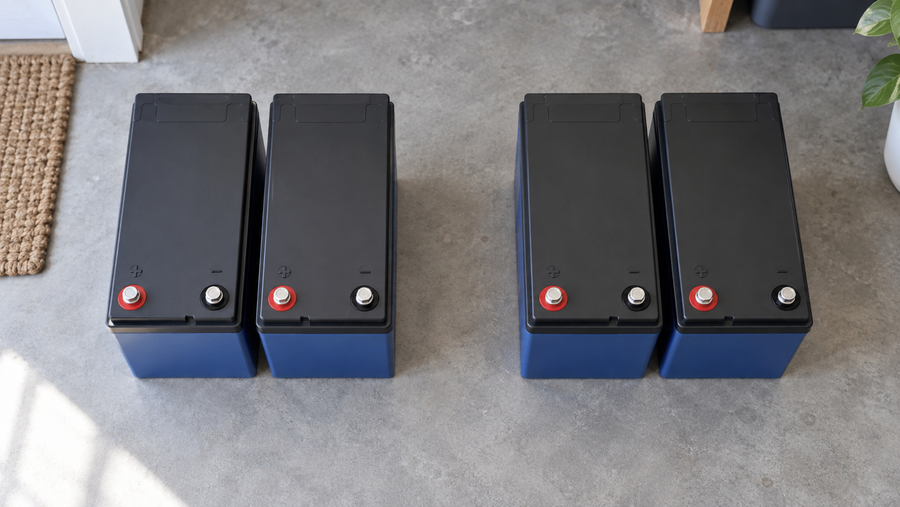
A single 400 Wh skateboard pack already stores enough energy to do damage if shorted; put two in parallel at 36–50 V and now any wiring mistake can push massive current from one pack into the other. Mismatched voltages, chemistries, or aging levels can cause “tug‑of‑war” currents that no fuse or connector was sized for.
Mechanical and environmental risks climb too. More weight stresses the enclosure and deck; a poorly supported extender can vibrate, chafe wires, and invite water ingress—the same moisture exposure that brands warn about as a top failure mode in maintenance guides. If the pack sits low or off‑center, you also lengthen stopping distances and change how the board behaves in emergency braking.

Build It Right: Safer Pack Design Choices
On my bench, I don’t sign off a range extender design unless voltage, chemistry, and protection are all aligned. Your extender must match the main pack’s series count and chemistry, and it needs its own robust battery management system (BMS); bypassing or “sharing” a BMS is asking for uneven cells and thermal runaway.
When in doubt, a swappable extender—a physically separate pack you plug in instead of the main pack—is safer than hard‑paralleling two packs. You still get extra watt‑hours, but you avoid complex current‑sharing logic and reduce the chance of one pack back‑feeding another.
Treat the enclosure like armor, not decoration.

Use a rigid, impact‑resistant housing with internal padding, and mount it where deck flex and road shocks won’t pound the cells or rip solder joints. If you’re adding 4–6 lb of battery, design your mounting so a curb strike or pothole doesn’t turn that mass into a lever against your deck or scooter frame.
Charge Strategy and When a Range Extender Is Worth It
Once you stack more lithium on board, charging behavior becomes just as important as wiring. For daily use, keeping both packs mostly in the 20–80% band—an adaptation of the 80/20 rule for lithium charging—reduces stress and heat while still giving solid usable range.
Some skateboard brands encourage topping to 100% for maximum performance or BMS calibration, while others emphasize stopping around 80–90% for longevity. When your main and extender packs disagree, default to the more conservative target and follow each manufacturer’s thermal and storage limits. A practical rhythm is standard‑rate charging, no overnight unattended charging, letting packs cool 20–30 minutes after hard rides, and storing both around half charge if they’ll sit for weeks.
A range extender is usually worth the complexity when your regular rides exceed roughly 70–80% of the stock range even in good weather, you ride hilly routes where energy use can jump compared with flat paths, you rely on the board or PEV as primary transportation and don’t have mid‑day charging, and you’re willing to invest in quality cells, BMS hardware, and pro‑level assembly.
If you treat a range extender pack like a serious power upgrade—engineered protection first, range second—you can turn your electric skateboard or PEV into a confident long‑range machine without gambling on safety.