
For most campers and van dwellers, a lithium-powered 12V fridge saves roughly 600 per year on ice and gas, usually paying for itself within one to two seasons.
Why Ice Gets Expensive Fast
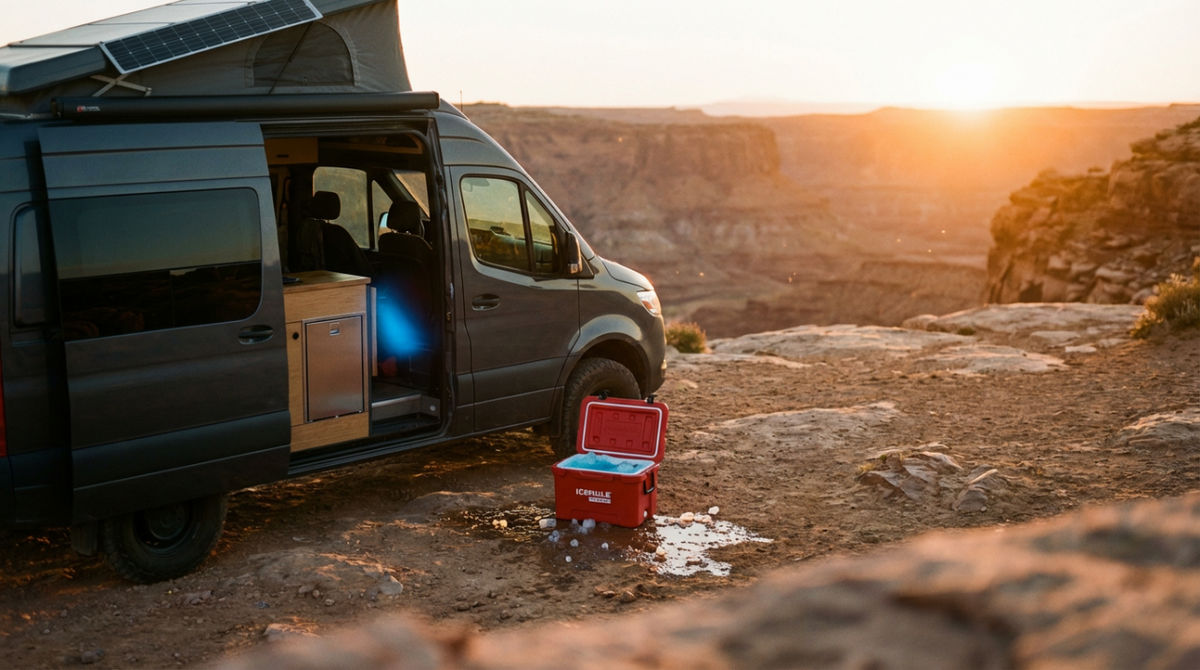
An ice chest feels cheap on day one, but the meter never stops running. A full-time van dweller running a well-insulated cooler reports roughly three bags of ice per week at 4 per bag, or about 10 per week and roughly 500 per year.
That does not include fuel and time. If your “quick ice run” is a 10-mile round trip in a rig that gets 15 mpg, you burn about 3.00 in gas every visit at typical prices, plus 30–60 minutes of your day. Over a long boondocking season, that can mean dozens of extra trips to town just to keep food cold.

Even lighter users feel it. Camp 15 weekends a year and buy two $4 bags per trip, and you are at about $120 per year in ice, not counting food you toss when packaging leaks or the cooler warms up during a heat wave.
What It Takes to Power a 12V Fridge on Lithium
A modern compressor fridge is built for off-grid 12V setups. A typical 12V camping fridge draws around 40–60W when running and, with a reasonable duty cycle, usually lands near 300–600Wh per day in real weather.
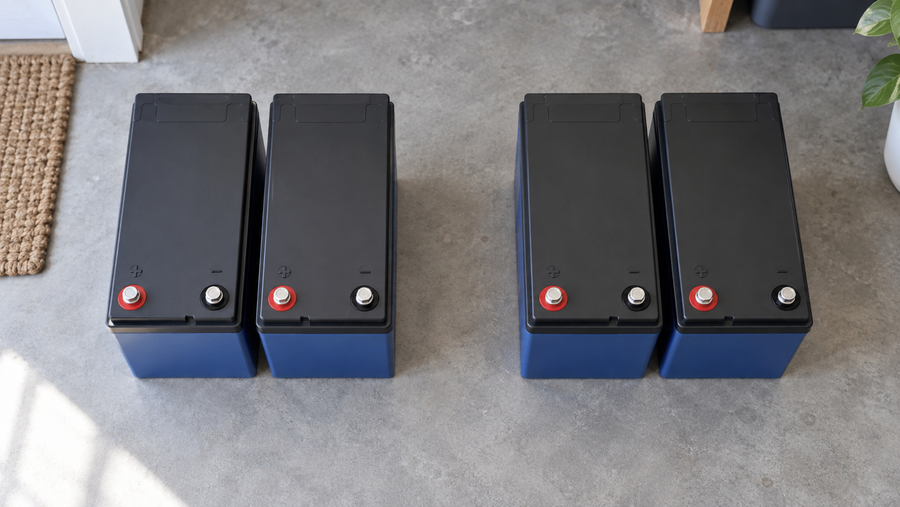
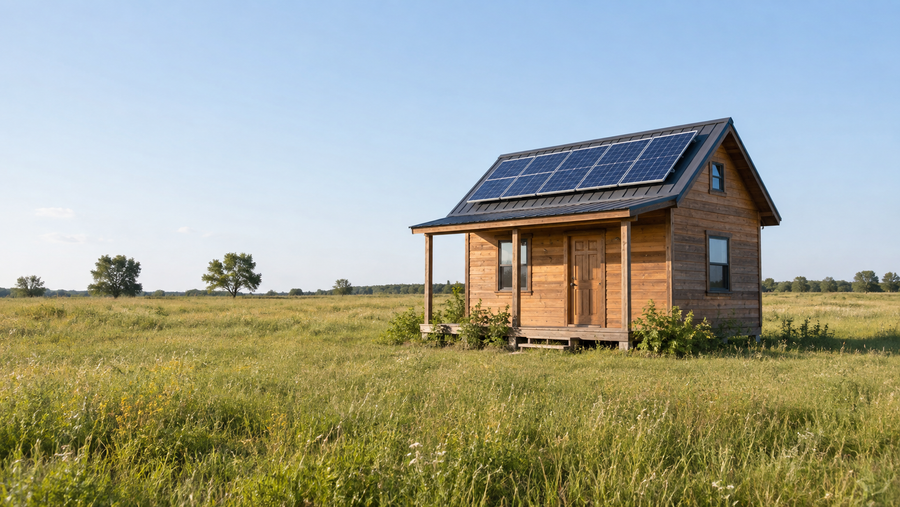
Pair that with a 100Ah lithium battery (roughly 1,200Wh, with about 800–1,000Wh usable) and you can run the fridge alone for a couple of days with no charging, or share that power with lights, fans, and device charging. Add 150–200W of roof solar and, in typical summer sun, the panels backfill most or all of the fridge’s daily draw.
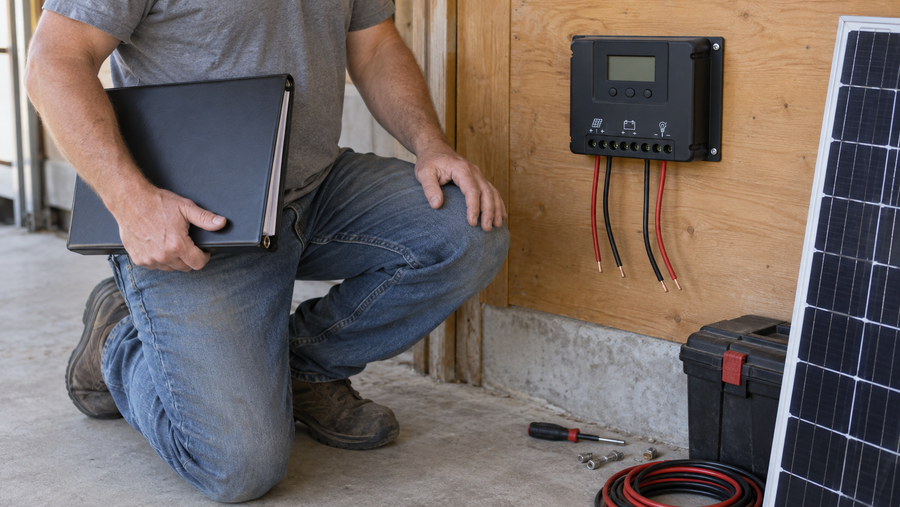
Because the fridge runs directly on DC, you avoid inverter losses that AC dorm fridges suffer, so every watt you store in lithium does more useful cooling. In field installs built around a 12V fridge, a tight lithium-and-solar system routinely runs for days without touching shore power or a generator.

How Much You’ll Save in a Year
Think of the savings in three typical scenarios:
- Full-time van or seasonal boondocker (4–6 months of heavy use): expect 500 per year in ice plus $100+ in fuel, so a 700 fridge often pays for itself in about 12–18 months.
- Serious weekend user (15–25 trips per year): plan on 200 per year in ice with less food waste, so payback on the fridge is typically 2–4 years, faster if you already want lithium for other loads.
- All-in power system buyer: a complete camping-fridge power system with fridge, battery, isolator, and solar can run around $1,300, and while the fridge still erases the ice bill, the batteries and panels also power everything else, so the payback is on your whole electrical system, not just cold food.
If you only camp a couple of weekends a year, the math tilts back toward a good cooler, and it can make sense to wait until another project pushes you toward lithium and a 12V fridge anyway.

Fridge vs. Cooler: Comfort, Safety, and Autonomy
Money is only half the story. A compressor fridge holds rock-steady fridge temperatures in hot weather, while even premium coolers slowly warm up as ice melts, pushing food-safety limits and forcing you to overpack with ice “just in case.”
A 12V fridge also uses every cubic inch for food and drinks. About 55 quarts of powered space stores more usable groceries than a much larger ice chest because there is no big ice block taking up room. That means fewer grocery runs and the ability to stock real meat, dairy, and produce instead of just cans and dry goods.
From a power-upgrade standpoint, the fridge becomes a strategic anchor load. Once your lithium bank and solar are sized to keep it cold, you have usually bought enough margin to run fans, lights, pumps, and work gear without constantly babying the batteries. The result is more days parked where you actually want to be, and a rig that feels less like camping around a cooler and more like a compact, self-sufficient home.