
You can boil water on battery power, but electric kettles draw short, intense bursts of current and heat that can slash runtime and, over time, erode battery lifespan if your system is not designed and operated for that load.
You flip on the kettle in your off-grid cabin or van, and in the time it takes to make coffee, the battery monitor dives and the inverter fan howls. That reaction is not drama; it is your pack showing that boiling water is one of the hardest jobs you can throw at it. The good news is that with the right sizing, temperature control, and habits, you can enjoy plug-in hot water without quietly cooking your lithium bank to an early death, and this guide walks you through how to do that.
What It Really Means to Boil Water From Batteries
Lithium-ion batteries pack a lot of energy into a small space, with modern cells delivering high specific energy and very high peak power compared with older chemistries. That combination of energy and power is what makes a kettle on batteries possible in the first place, because the cells can both store enough watt-hours and deliver amps fast enough for a heating element when managed correctly, as described for typical lithium-ion cells in the general overview of their performance and applications in the lithium-ion entry on rechargeable batteries.
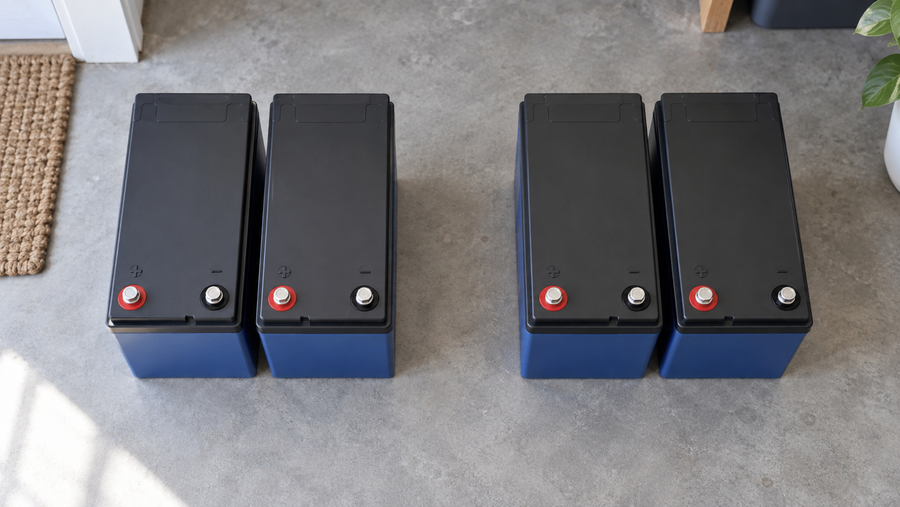
In practical off-grid systems you are not dealing with loose cells but with a battery bank and an inverter. The inverter has to turn low-voltage DC into high-voltage AC, and the bank has to supply very high current during that conversion. If you imagine, purely as an example, a bank that holds about 2 kilowatt-hours of usable energy and a kettle rated around 1,500 watts, running that kettle continuously would mathematically empty the bank in a little over an hour, even before you account for inverter losses and safety margins. In reality you only boil intermittently, but every boil is a sprint that draws far more power than lighting and electronics, so a few minutes of kettle time can feel like a deep discharge on your state-of-charge gauge.

Designers describe this "how hard you are pushing the pack" with C-rate and state of charge. C-rate is discharge or charge current relative to the battery's capacity, and state of charge is simply how full the pack is in percent terms; both are key levers for runtime and wear. Detailed analysis of lithium-ion packs used in electronics and vehicles shows that as you raise current, internal resistance and voltage sag under load become more pronounced, reducing effective usable capacity at high C-rates and making runtime much shorter than the nameplate watt-hours would suggest, especially as cells age and their internal resistance grows, as explained in work on resistance, temperature, and charging behavior in battery state-of-charge and state-of-health estimation battery modeling research.
Why Kettles Are Hard on Lithium Batteries
High Current, Voltage Sag, and Internal Losses
When you power a kettle from a battery, you are forcing a large current through the cells and the inverter's electronics for a short period. Inside each lithium-ion cell, that current encounters internal resistance, so some of the energy you think you are sending to the kettle is actually turning into heat inside the battery. Studies of lithium-ion aging consistently show that as cells cycle, their internal resistance rises and the voltage they can maintain under load drops, especially at high C-rates. High-power bursts like kettle runs therefore cause more heating and reduce the amount of energy you can pull out before hitting the system's cutoff voltage as the pack's state of health declines, a trend quantified in impedance and resistance growth measurements in analytical work on battery health and performance from battery diagnostics research.
To see why this matters, imagine a 24-volt battery system feeding a kettle rated at 1,500 watts. Even ignoring any losses, that kettle would need on the order of 60 amps from the battery during the boil. If the cells and bus bars are sized and cooled for that load, they will survive, but they will still heat up more than they do during lower-power uses. This current advantage at higher voltage is one reason many RV owners upgrading to larger inverters consider switching from 12V to 24V house systems.
Heat: The Quiet Battery Killer
Temperature is the second half of the hidden toll. Lithium-ion chemistry has a Goldilocks band: too cold and the reactions slow, too hot and unwanted side reactions, gas generation, and structural damage speed up. Both experimental and field data point to a moderate window around the upper 60s°F to mid 70s°F where lithium-ion batteries deliver good power with manageable aging, while long periods above roughly the low 100s°F increase degradation and safety risk; for example, tests on lithium-ion cells showed that charging repeatedly around 113°F roughly doubled early-cycle performance loss compared with similar cycling around 77°F, underscoring that seemingly modest temperature increases in that range significantly erode life in real solar-plus-storage systems documented by solar storage performance studies.
Short kettle runs build heat in a few places at once: inside the cells from current flow, in the inverter electronics, and in the enclosure where all of this hardware lives. In a cool climate that extra thermal load can be almost welcome, but in hot weather, especially in enclosed vans or utility closets that already run warm, those extra degrees can push the pack outside its comfort zone.

Research on lithium-ion battery behavior at elevated temperatures notes that at internal temperatures approaching around 160°F, degradation rates can increase severalfold and the onset of self-heating and thermal runaway shifts to lower trigger points, making thermal management and avoidance of hot-soak operation critical, as detailed in high-temperature aging and heat generation studies reviewed in lithium-ion degradation research.
Field experience with automotive batteries reinforces how unforgiving heat can be. In very hot regions where summer days regularly exceed about 110°F ambient, car batteries, even robust lead-acid designs, often last only a few years because high under-hood temperatures accelerate electrolyte loss, corrosion, and plate damage, a pattern described for everyday vehicles in hot states by independent service centers reporting on the impact of extreme summer heat on car battery life. Lithium-ion packs are even more sensitive to sustained high temperatures, so a battery bank already sitting in a hot compartment will age noticeably faster if it is repeatedly asked to dump heavy current into kettles and other heating loads.
Hot Charging After Heavy Loads
Kettle use does not happen in isolation. In many off-grid setups, a typical pattern is to hit the kettle in the morning, leave the bank partially discharged and warm, then slam it with a strong charge when the sun comes up or a generator starts. From the cells' point of view, this is a worst-case combination: moderate to high state of charge, elevated temperature, and high charge current. At these conditions, the beneficial reactions that store energy proceed faster, but so do parasitic reactions that thicken protective layers, consume cyclable lithium, and generate gas, all of which raise internal resistance and accelerate capacity loss, a mechanism documented in detail in thermal aging experiments on lithium-ion pouch cells where capacity fell much faster during high-temperature cycling and high-temperature charging than under cooler conditions in high-temperature lithium-ion studies.
While lithium plating is most famous as a cold-weather charging danger, where charging below freezing encourages metallic lithium to deposit on the anode surface instead of intercalating properly, the common thread is that charging outside the recommended temperature window damages the cells. Guidance from cell makers and pack integrators emphasizes keeping lithium-ion batteries within manufacturer temperature limits, charging only when the cells are within a safe band, and relying on battery management systems with temperature sensing to reduce or cut off charge if conditions drift out of range, practices that off-grid designers increasingly adopt for stationary systems in line with recommendations on operating temperature and monitoring from advanced lithium battery developers such as Amprius and application-focused guidance on lithium battery care in varying climates from Bolt Energy USA.
Designing a System That Can Handle a Kettle
Sizing for Current and C-Rate
The first step toward a kettle-ready system is honest math on current. Take your kettle's wattage from its label and divide by the inverter's input voltage to estimate the DC current the battery sees during a boil. Compare that number with the battery bank's continuous and surge discharge ratings; if the kettle current is close to or above those values, you are asking for nuisance trips at best and excessive stress at worst. Engineers express this workload as C-rate, where 1C would discharge a full battery in about an hour, so a kettle that draws current at a fraction of C might be acceptable on a large bank but intolerable on a small one, a framing that aligns with the use of C-rate to balance aging and performance in lithium-ion cycling experiments on varying current levels and temperatures in energy storage research cataloged in lithium-ion performance studies.
Alongside that current check, pay attention to how often and how deeply you cycle the bank. State of charge shows how full the pack is right now, while state of health compares its present performance to when it was new; both are eroded faster by deep discharges and repeated operation at very high or very low states of charge. Analytical and field work on lithium-ion packs consistently recommend avoiding repeated deep discharges and minimizing time spent parked at 100% state of charge, with long-life designs often using a narrower band such as roughly 20-80% to trade some energy capacity for longer service life, operational guidance that is now widely used in battery management strategies described in technical notes on SOC and SOH management from battery health modeling research.
Chemistry, Climate, and Location
Chemistry choice matters if you plan to run heating loads regularly. Lithium iron phosphate packs are generally more thermally stable and tolerate higher cycle counts than many nickel-rich chemistries, which makes them attractive for hot-climate and high-cycle applications, though they can deliver less energy at a given volume and can underperform in very cold weather. Practical guidance from cold-weather lithium system providers notes that lithium iron phosphate batteries can typically operate from roughly -4°F to 140°F, maintaining a high fraction of their rated capacity at freezing compared with lead-acid, but that charging below about 32°F must be handled carefully or avoided unless the pack includes built-in heaters that bring the cells into a safe temperature band, advice reflected in application notes on using lithium batteries in cold-weather off-grid and RV systems cold-weather LFP guidance.
Where you physically locate the bank and inverter also shapes the kettle's toll. In hot regions or tight mechanical rooms, ambient temperatures can push equipment well above the mid 70s°F that lithium-ion cells prefer, especially when you add the heat from inverters and other electronics. Solar-storage designers have documented that real sites can see ambient temperatures near battery enclosures approach or exceed 110°F during summer heat waves, and that raising the operating temperature from around 77°F to around 113°F can both increase short-term capacity and sharply accelerate long-term degradation, making explicit temperature modeling and mitigation a core part of system design, as emphasized in renewable-energy storage guidance on temperature impacts in solar-plus-storage systems from battery performance in varying temperatures.
Protecting Against Moisture and Condensation
Boiling water in a small, tight space is not only a power problem; it is a moisture problem. The steam from cooking and kettles can raise humidity around your battery and electronics, and if that humid air contacts cold enclosure walls or terminal hardware, condensation can form. A thin film of water or small droplets on circuit boards and battery terminals creates conductive paths between points that were meant to stay isolated, inviting leakage currents, corrosion, and in some cases shorts and overheating, a chain of failures described in detail for enclosed electronics and battery systems exposed to condensation and humidity swings in field reports on moisture-driven failures in enclosed electronics and batteries.
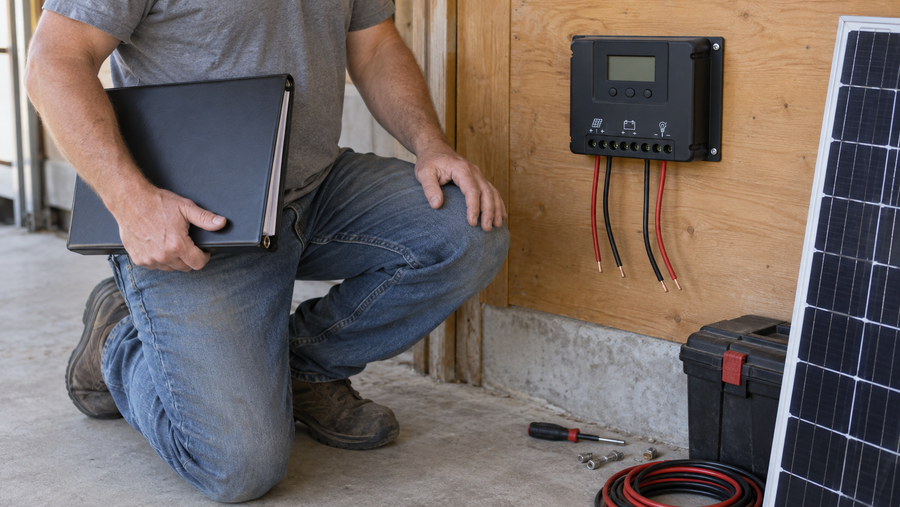
Smart enclosure design and environmental control go hand in hand with electrical sizing. Keeping battery and inverter cabinets dry, well sealed from direct steam, and either gently ventilated or temperature-controlled reduces both thermal and moisture stress. In cold climates, small cabinet heaters can keep internal temperatures above the dew point to prevent condensation, while in hot climates, shading and airflow limit peak temperatures. Remote monitoring of temperature and humidity adds another layer of protection, allowing you to catch trends—like a battery room that spikes in humidity every time the indoor kettle runs—before they translate into corrosion and premature failure, aligning with broader recommendations for temperature and environment monitoring in critical battery installations from industrial battery safety and storage best-practice resources such as lithium battery safety guidance.
Smart Operating Habits So the Kettle Does Not Kill Your Pack
Once the hardware is capable, operating habits determine whether boiling on battery becomes a party trick or a lifespan killer. The single biggest win is to align high-power kettle use with strong charge input. If you boil primarily when the sun is high or a generator is already running, much of the energy flows straight from panels or alternator through the inverter to the kettle, with the battery acting as a buffer instead of the sole source. This shallow cycling is far easier on state of health than deep, stand-alone discharges, and it keeps battery temperatures closer to ambient because the pack sees shorter effective discharge windows, an effect that complements the efficiency and longevity benefits of keeping batteries in their preferred operating temperature window highlighted in grid-storage and EV thermal management discussions in lithium-ion and heat behavior.
Equally important is treating boil time and frequency as part of your depth-of-discharge budget. Instead of reflexively filling the kettle to the top, boil only what you need, and avoid back-to-back kettles when the bank is already low and warm. Pair that with conservative charge settings: allow the battery to recharge fully enough for your needs, but avoid leaving it parked at 100% state of charge in high heat, and consider using a slightly lower voltage target or narrower state-of-charge window if your charger and battery support it. These modest tweaks align with the now standard recommendation in lithium-ion system design to minimize both very deep discharges and extended time at full charge to slow down side reactions that consume lithium and thicken internal layers, extending useful life as described in SOC and SOH management recommendations for lithium-ion packs in battery health optimization research.
Temperature awareness should stay in the daily routine. In hot weather, try not to boil when the battery compartment is already hot from sun or engine heat; in cold weather, remember that lithium-ion packs temporarily lose apparent capacity and show more voltage sag at low temperatures, so a hard kettle run on a freezing-cold bank can trigger early low-voltage cutoffs and, if followed by aggressive charging before the cells warm up, can risk damage. Cold-weather lithium guidance for off-grid applications emphasizes charging lithium-ion only once the cells are above about freezing, or using packs with built-in pre-heaters that bring the cells into a safe range before full-rate charging, recommendations that match the behavior of cold-rated lithium iron phosphate products outlined in practical notes on using lithium batteries in low temperatures from cold-weather LFP guidance.
Finally, do not overlook alternatives. In some installations the cleanest solution is to keep boiling off the battery entirely and use a stove-top kettle on gas or a separate fuel when practical, reserving the battery bank for lighting, electronics, pumps, and other loads that are far gentler on cycle life. In others, the answer is a deliberately oversized and well-managed lithium system whose owner consciously budgets kettle use as a high-impact load, watches state of charge and temperature, and lets the battery management system enforce limits instead of fighting it. In both cases, you are intentionally designing your lifestyle around what the chemistry can sustain, rather than treating the pack as an infinite wall socket.

A kettle on battery power can be either a daily convenience or a slow battery killer; the difference is whether you size, cool, and operate your system with that high-power burst in mind, then respect the limits your lithium cells need to deliver hot water for years instead of just one enthusiastic season.