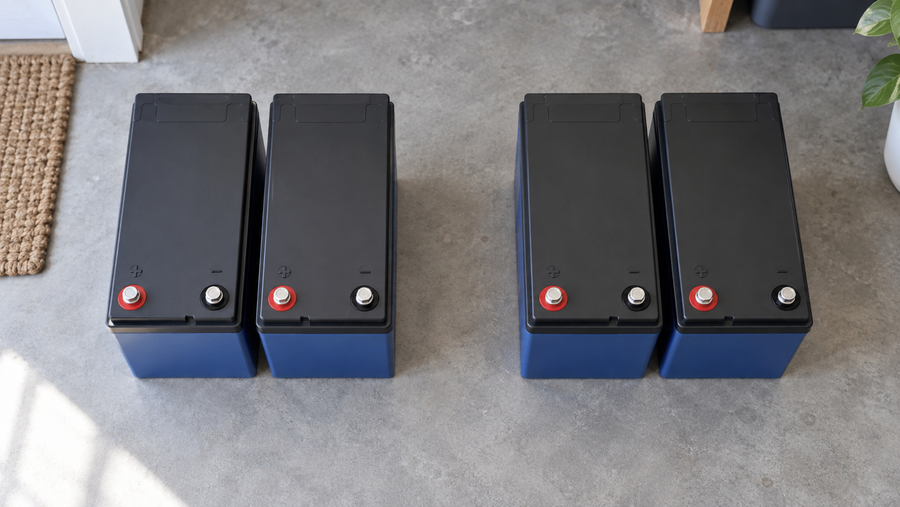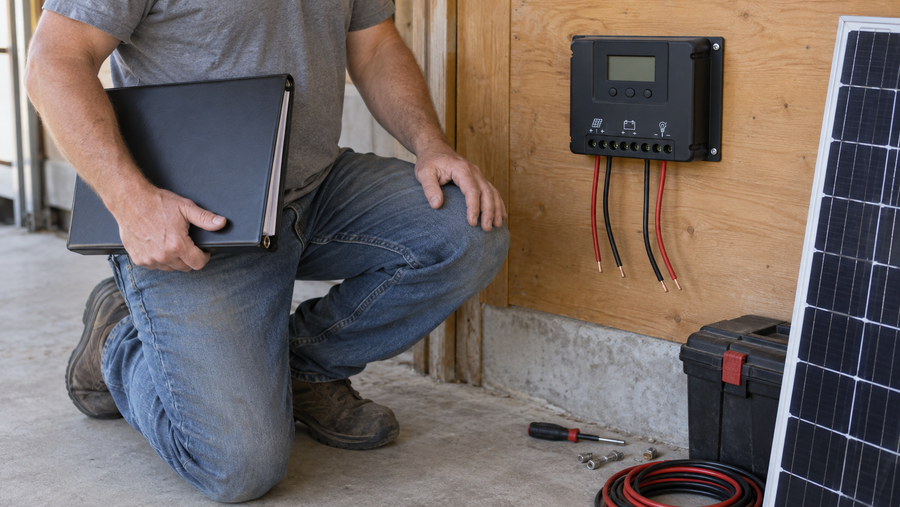

In humid rainforest or coastal climates, the right conformal coating strategy can be the difference between a reliable battery management system (BMS) and a control board that quietly corrodes toward failure.
In rainforest or coastal climates, conformal coating on your BMS often separates a predictable lithium bank from a control board slowly degrading in the background. Coating is essential, but it only works as intended when you match chemistry, thickness, and enclosure strategy to the humidity your system actually faces.
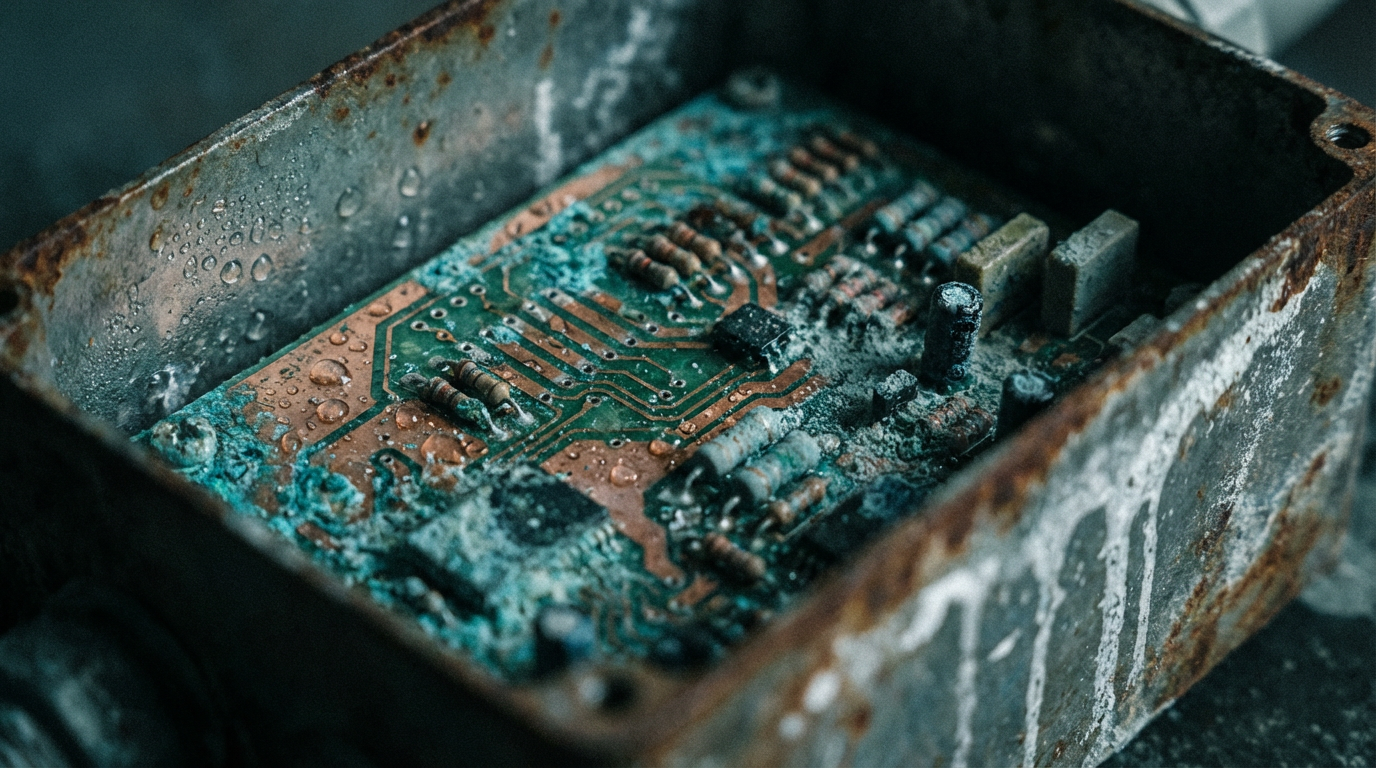
Picture this: you open the battery cabinet in your coastal cabin and see a faint mist on the small control board that runs your lithium bank, along with a few greenish stains along fine traces. A few weeks later you are chasing random shutdowns and sensor errors even though the packs and wiring look perfect. When humidity stays high day after day, lab tests and field experience agree that unprotected electronics quickly show rust, creeping discoloration, and moisture tracks, while properly coated and cured boards hold their insulation strength far longer. The goal is to know when simple protection is enough, when you need heavier sealing, and how to specify coating that truly survives rainforest and marine air.
Why humid air is brutal on BMS electronics
A BMS board is an electronic assembly, and humid air attacks it through chemistry, not drama. Once relative humidity climbs to around 80% and stays there, a microscopic film of water forms on surfaces, often only a few molecules thick. That thin film is enough to dissolve acidic and alkaline dust, leftover flux residues, and salt into a conductive solution that creeps across the board.
In that state, you do not just get “damp electronics.” You get mobile ion streams that squeeze through tiny pores and defects in the coating and across bare areas with no coating at all. These ion paths drive shorts, corrosion, and treelike growths of metal that can eventually bridge fine gaps and take down high‑voltage assemblies.
Humidity chambers running near 100% relative humidity are routinely used to accelerate this damage. Testing of coatings and electronics under these conditions shows rapid rusting of printed wiring, rising leakage currents, and drop‑offs in insulation resistance when assemblies are unprotected or poorly coated. That is exactly the environment you simulate if your BMS lives in a warm rainforest powerhouse or a damp coastal locker with no dehumidification and very little airflow.
For a lithium bank, the result is not always a spectacular failure. The more common early symptoms are nuisance trips, unstable current readings, voltage sensing that drifts, and rare but dangerous cases where creeping corrosion changes creepage distances on high‑voltage modules. All of this can happen while the pack and busbars still look fine at a glance.

What conformal coating really does—and what it cannot do
Moisture barrier, not magic waterproofing
Conformal coatings are thin polymer films laid over the BMS board to build a dielectric, moisture‑resistant layer. Typical thickness is about 0.002–0.010 inch, often in the 1–3 mil range. Industry data makes one key point very clear: these films are moisture resistant, not fully waterproof, and they are deliberately semi‑permeable.
That semi‑permeable behavior is measured as moisture vapor transmission rate, the mass of water vapor that passes through a given area and thickness of coating in 24 hours at specified conditions. Lower numbers mean better vapor‑barrier performance. Comparative measurements on plastic films and coatings show that some chemistries, especially dense synthetic rubbers and certain epoxies, have very low transmission rates, while others such as silicones allow more vapor through.
Coatings are not made perfectly impermeable for a reason. You want trapped moisture and volatiles inside the board to outgas over time instead of being locked in forever. That is good for long‑term reliability but sets a hard limit: in continuous liquid water or constantly saturated air, a conformal coating alone is not enough. Guidance from coating manufacturers is consistent: for electronics that face long‑term immersion or regularly sit wet, you step up to thicker encapsulation, potting compounds, or hermetically sealed enclosures, even though that adds material, weight, and rework complexity.
Humidity physics that matter for a BMS
In a rainforest or coastal microgrid, the realistic scenario is constant high humidity, frequent condensation, and salt or pollutants in the air, not necessarily permanent submersion. That is exactly where conformal coating shines. Water vapor permeability still exists, but a well‑chosen film slows the rate enough that the board can dry during off‑cycles or when enclosure temperature rises, while blocking most direct ion transport and surface wetting.
Above roughly 80% relative humidity, a board without adequate protection can quickly develop continuous conductive paths. Coatings with good hydrolytic stability—meaning they maintain their mechanical and chemical properties at high humidity—keep their barrier behavior, while weak formulations soften, crack, or chemically degrade. In that degraded state, moisture and ions race through, and the coating becomes more of a sponge than armor.
For a BMS driving a 48 V off‑grid bank or managing an 800 V power module, the voltage stress across each little contaminated gap can be substantial. The same physical gap that is safe in humid air becomes less safe when immersed or under a water film, because the liquid with dissolved ions supports conduction at lower voltages. The coating’s job is to prevent that continuous wet path from forming and to keep ions away from the copper and component leads.
Choosing the right coating strategy for rainforest and coastal BMS
Chemistry options in wet, salty air
Different coating chemistries respond very differently to humidity, salt, heat, and rework needs. They are broadly characterized this way:
Coating type |
Moisture barrier tendency |
Strengths in humid/coastal service |
Trade‑offs for BMS boards |
Acrylic |
Moderate barrier, easy to apply and remove |
Good general moisture and UV resistance, excellent for low‑volume work and repairs |
Limited high‑temperature capability and poor solvent resistance; not ideal for the harshest salt‑spray environments |
Silicone |
Strong hydrophobic, water‑repellent surface with relatively higher vapor permeability |
Very good in humid and high‑salinity conditions, remains elastic under vibration, handles high temperatures well |
Can trap heat, especially over hot components; more permeable to vapor so board cleanliness and enclosure design matter; harder to rework than acrylic |
Polyurethane (urethane) |
Tough, adherent film with strong chemical resistance |
Suitable for harsh industrial and marine environments where solvents or fuels may be present |
Oven or UV curing often required; difficult to remove, which complicates field repair of BMS boards |
Epoxy |
Dense, hard film with very low moisture vapor transmission |
Excellent barrier against moisture and chemicals, good for very harsh settings |
Very rigid and hard to rework; can induce stress during thermal cycling and board flex, which matters on high‑power BMS boards |
Parylene |
Thin, pinhole‑free coating applied by vapor deposition |
High dielectric strength and good chemical resistance, ideal for high‑reliability electronics |
Requires specialized chemical vapor deposition equipment, best suited to factory‑level production rather than small retrofit jobs |
Guidance focused on humid and salty environments often points to silicone coatings because of their hydrophobic behavior and elasticity. Case studies mention their widespread use in appliances and cabin electronics exposed to moisture and salt‑laden air. At the same time, moisture‑barrier testing shows that some epoxies, synthetic rubbers, and specialized UV‑curable films have lower vapor transmission, so when persistent saturation is expected, you consider stepping up to those systems, provided you can handle their more demanding processing and rework limitations.
For an off‑grid BMS in a rainforest or near the ocean, a common, robust pattern is a well‑cleaned board with either a carefully selected silicone or polyurethane conformal coating, combined with a sensible enclosure and cable‑entry strategy. Epoxy or parylene systems are reserved for mission‑critical or volume‑manufactured units where you control the entire process chain.
Thickness, coverage, and board design
Regardless of chemistry, thickness and coverage are where most BMS owners either win or lose. Coating suppliers recommend films on the order of 1–3 mil thick for typical electronics, with thicker layers improving the vapor barrier while also raising mechanical stress and hindering heat flow.
Boards and enclosures should be designed with coating in mind. You define keep‑out areas in your layout for connectors or components that cannot be coated, and you ensure that clearance paths, such as around high‑voltage edges, actually receive a continuous film. Process guidance from industry experts emphasizes full coverage, avoidance of de‑wetting, and strict adherence to cure schedules. Under‑cured coatings are softer, more permeable, and more likely to fail in high humidity.
Board orientation under condensation also matters. Experience from humid‑climate applications shows that horizontal boards tend to retain water droplets, while vertical mounting allows water to run off faster and reduces dwell time for moisture on the surface. For a BMS tucked into a tight cabinet, even slightly tilting the board or using drip shields over sensitive sections can help the coating do its job.
When coating alone is not enough
There are clear situations where conformal coating on the BMS board is necessary but not sufficient. If your electronics are exposed to continuous liquid water, heavy splash, or long periods of standing condensation, you need a more robust protection system.
Options include full potting with epoxy, urethane, or silicone resins, low‑pressure molding with polyamides, or placing the BMS in a sealed housing with proper gaskets and cable glands. Conformal coating then becomes the inner line of defense, while the enclosure or encapsulant keeps bulk water away. These solutions are specifically recommended for electronics intended for long‑term immersion or constantly wet service, despite the added cost and reduced repairability.
Consider a lithium system in a small boat where the BMS enclosure sits low in the hull. Even if the box is nominally sealed, bilge humidity and occasional standing water make it behave much more like a tank interior than a dry wall cabinet. In that scenario, a reasonable approach is a coated BMS inside a robust enclosure with a gasketed lid and strain‑relieved, sealed cable entries, and possibly a localized gel or potting fill around the most exposed connections.
Humidity during application: getting coating on the BMS the right way
The way you apply conformal coating matters just as much as the product label. Facility setup guides for coating operations stress tight control of both cleanliness and environment. A coating room is kept clean and dust‑free so airborne particles do not become permanent defects in the drying film. Temperature is managed to keep viscosity and film build consistent, but humidity is even more critical.
Professional facilities often hold relative humidity between about 35% and 55%. Below that range, static charge rises and dust is drawn to the board, while above it, moisture interferes with adhesion and long‑term reliability. Many water‑based and powder systems, as well as high‑performance industrial coatings, show their best behavior near 50–70% relative humidity; outside that band, defect rates and rework climb.
Ideal application conditions for protective coatings tend to converge on a narrow temperature range around 60–80°F, with a sweet spot close to 70–75°F, and relative humidity near 50%. When humidity pushes into the 70% band and beyond, water‑based films can take up to twice as long to cure, and trapped water leads to blisters, bubbles, and soft spots in the finished coat.
Dew point control is the other non‑negotiable. Recommendations for steel and industrial substrates state that the surface temperature should be kept at least about 5°F above the dew point before and during coating. When the surface is cooler than that margin, a thin film of water condenses that is nearly invisible to the eye but devastating to adhesion. Coating experts estimate that a large share of premature coating failures trace back to poor surface prep and uncontrolled moisture at this stage.
Translating that to a BMS retrofit: spraying a board on a hot, rainy coastal afternoon with no dehumidification is asking for trouble.

If your shop air is in the low 70s with very high humidity, the dew point may be only a few degrees below the actual temperature, meaning condensation risk is real. Even a simple handheld dew point meter, like those widely used in protective coating work, can tell you whether it is safe to proceed or whether you should wait for drier air, close the space and run a dehumidifier, or move coating operations to a more controlled environment.
A practical decision framework for rainforest and coastal BMS
Choosing how far to go with conformal coating on a BMS in harsh humidity is ultimately a design decision, but you can anchor it to a few concrete questions instead of guesswork.
Start with the environment. If your BMS lives where relative humidity often stays above 80% for hours on end, or where nighttime temperatures routinely drop to the point that dew forms inside the enclosure, you should treat conformal coating as mandatory rather than optional. Water‑film formation at those humidity levels drives the very failure mechanisms—ion movement, corrosion, and insulation breakdown—you want to avoid.
Next, look at contamination. Coastal or industrial air carries salt and aggressive particles that dissolve into any water that lands on the board. Even the best films have some pathways for ions to move, particularly through defects and micro‑pores. That makes meticulous cleaning before coating non‑negotiable and tips the balance toward chemistries with strong resistance to ionic attack, such as silicones and robust urethanes, combined with a thoughtful enclosure layout.
Then consider your voltage and spacing. Pin spacing, operating voltage, and construction details heavily influence whether a coating will prevent humidity‑related failures. High‑voltage BMS designs with tight creepage distances gain more from a well‑specified coating and may justify thicker films or higher‑performance chemistries than low‑voltage house‑battery controllers, especially where salt fog is constant.
Finally, be honest about process control. Storage and handling best practices for conformal coatings call for cool, dry storage, typically around 41–77°F with humidity below about 50%, and careful attention to shelf life. Application guidance emphasizes clean tools, correct mixing for two‑part systems, and strict compliance with cure schedules. If your off‑grid workshop cannot reliably provide that environment, it may be smarter to specify coated boards from the manufacturer or use a contract coating shop that runs proper climate control, rather than trying to improvise under tropical downpours.
Closing
In hot, wet rainforests and salt‑laden coastal zones, conformal coating on a BMS is not a luxury upgrade; it is core reliability hardware. When you combine a cleaned board, the right coating chemistry and thickness, controlled application conditions, and a sensible enclosure, you turn a humidity‑soaked cabinet into a stable power brain that quietly runs for years instead of seasons. Build that protection in early, and your next lithium retrofit is far more likely to spend its life balancing cells instead of fighting moisture.

References
- https://content.ampp.org/materials-performance/article-split/54/9/42/70509/Effect-of-Humidity-on-Surface-Preparation-and
- https://www.chemtronics.com/the-ultimate-guide-to-conformal-coating?srsltid=AfmBOopc-7HYziHN5kk-g6_BCWCybnSX1k4kkUoYJ223dM3ZZyVaDrEt
- https://www.lejeuneceramiccoating.com/ideal-temperature-and-environment-for-coating-application-guidelines-for-perfect-results
- https://www.acdi.com/considerations-for-conformal-coating/
- https://resources.altium.com/p/everything-you-need-know-about-conformal-coating
- https://blog.chasecorp.com/humiseal/the-importance-of-moisture-vapor-transmission-rate-of-conformal-coatings
- https://www.circuitnet.com/experts/55993.html
- https://www.aicoatings.com.au/impact-of-weather-conditions-on-industrial-protective-coatings/
- https://www.glidexwash.com/why-high-humidity-is-bad-for-your-vehicles-paint/
- https://waxisdead.com/how-temperature-and-humidity-affect-ceramic-coating-application/