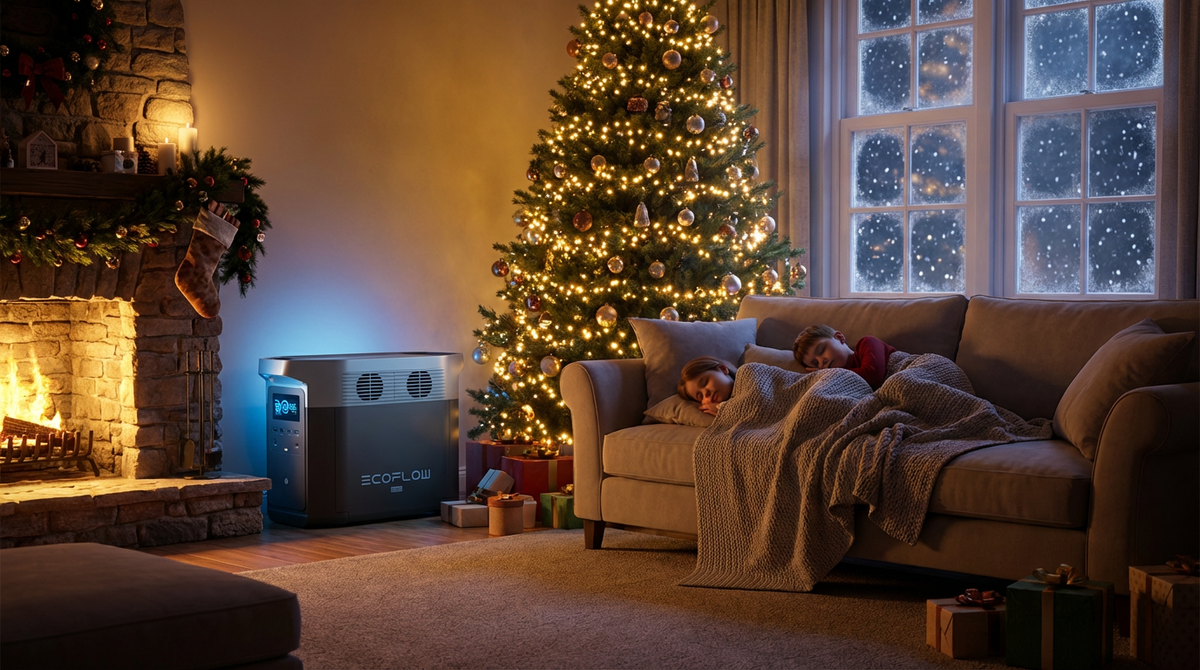

Lithium battery backup keeps your home quiet, warm, and powered through Christmas Eve storms without the noise, fumes, or hassles of a gas generator.
Picture the kids finally asleep, the tree glowing, and then the old generator coughs to life outside, rattling the windows and drowning out every carol. Thousands of operators who have switched from small engines to modern battery power have cut noise from vacuum-cleaner levels to a soft fan whisper while still running fridges, lights, and electronics through the night. If you want that same quiet confidence, this guide shows how lithium delivers near-silent power, why it beats generators and older batteries, and how to size a system that keeps Christmas Eve peaceful even when the grid does not.
The Soundtrack of Christmas: Generator Roar vs. Lithium Quiet
On a still winter night, a gas generator is often the loudest thing in the neighborhood. Noise measurements for typical portable generators fall in roughly the 60–85 dB range, similar to a vacuum cleaner or a busy street. Rental owners often ban them outright because that noise, combined with exhaust fumes and on-site fuel, breaks house rules, violates local noise ordinances, and risks carbon monoxide incidents according to property and solar backup providers.
Lithium battery systems paired with solar or the grid flip that experience. Instead of a combustion engine, you get an enclosed power unit whose only sound is a cooling fan. Well-designed lithium energy storage systems for homes and rentals run their fans in roughly the 25–45 dB band, similar to a whisper or a quiet room and effectively unnoticeable indoors based on data shared by residential solar-battery manufacturers. In practice, that means you hear crackling logs and quiet conversation while the battery silently keeps the fridge cold, the Wi‑Fi up, and the tree lights glowing.
Consider a typical noise-sensitive rental. The lease bans generators, but you still want backup for a Christmas Eve storm. A portable lithium power station on the balcony or patio, fed by solar panels or topped up from the grid during the day, can carry phone chargers, a modem, a laptop, and a couple of lamps through an outage with no complaints from neighbors and no risk of fuel storage violations. The same quiet behavior scales up to integrated lithium energy storage systems that can keep an entire apartment powered without that dreaded engine rumble in the courtyard.

Why Generators Ruin a Peaceful Christmas Eve
The problems with generators are not just aesthetic. Gas units bring three Christmas Eve deal-breakers: continuous noise, fumes, and constant attention. Their sound profile is broad and rough, so even if you place one several yards away, the growl carries straight through walls and windows. Exhaust gases and carbon monoxide risk are why many landlords and safety codes restrict where you can run them and how close they can be to doors and windows.
Then there is the ritual of tending the machine. When the fuel runs low, someone has to go outside in the cold, often after midnight, to refuel a hot engine while everyone else is sleeping. In food truck operations, case studies from lithium system suppliers show generators consuming roughly half of a truck’s total fuel budget and causing costly downtime and maintenance. On Christmas Eve at home, that translates into noise and risk with very little upside when quiet alternatives now exist.

How Lithium Keeps Christmas Eve Truly Quiet
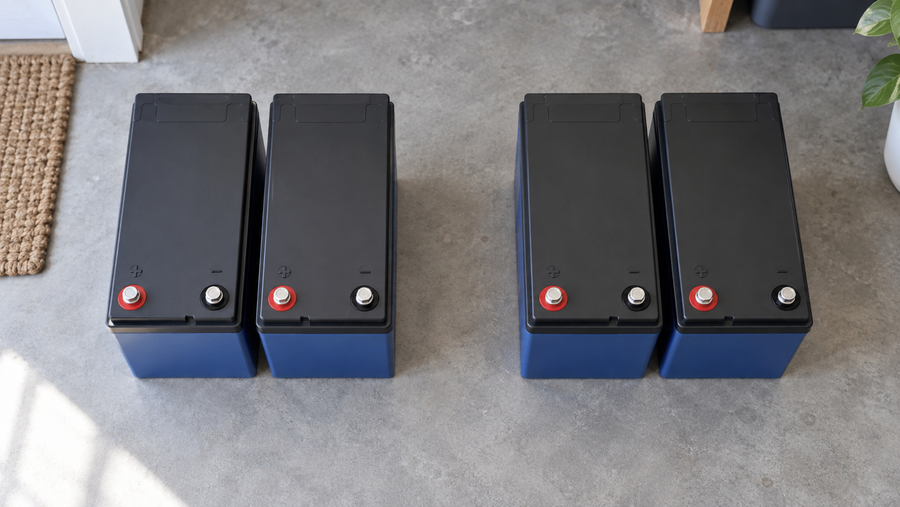
Lithium battery systems solve all three issues at once. There is no combustion, so there is no exhaust and no gas can sitting by the back door waiting to spill. The only moving parts are small fans and sometimes pumps, which produce a low, steady sound rather than the sharp mechanical pulses of an engine. Manufacturers of rental-friendly solar-battery systems report fan levels in the 25–45 dB range, which blend into background noise and are often inaudible once the unit is indoors or in a utility closet.
On the practical side, a lithium system can be fully charged during the day from rooftop solar or the grid and then run all night without attention. Hybrid inverters quietly switch between solar, battery, and grid input in the background, so when the grid fails, the handover is seamless. For a Christmas Eve storm, you simply start the evening with a full battery and go back to your movie, rather than babysitting an engine outside in the snow.
A real-world example comes from noise-sensitive rentals that switched from “no generator allowed” to integrated lithium energy storage systems. Owners now power essential circuits for tenants, including refrigerators, internet routers, and some lighting, while meeting strict noise limits and avoiding neighbor complaints. The same logic applies in single-family homes and cabins: lithium lets the power stay on without the holiday turning into a shouting match over generator noise.
Why Lithium Beats Lead-Acid and Gas for Holiday Backup
The question is not only “Is it quiet?” It is “Will it last all night, year after year, without surprise failures?” This is where lithium’s core battery advantages matter.
Lithium battery chemistries such as lithium iron phosphate are engineered for high energy density and long cycle life. Industry overviews from battery manufacturers describe lithium packs delivering hundreds to thousands of charge-discharge cycles, with LiFePO4 families typically rated around 3,000–6,000 cycles, which translates to roughly 10–15 years of daily use in many residential setups. Lead-acid batteries, by contrast, usually last only a few years in heavy use and lose voltage as they discharge, which means dimmer lights and faltering inverters toward the end of the night.
Lithium also holds its voltage much more steadily as it discharges. Makers of trolling motor and off-grid systems emphasize that lithium stays at strong power until almost empty, instead of sagging like lead-acid. On Christmas Eve, that means your string lights stay bright and your blower fan or mini‑split keeps running at full performance, instead of slowly collapsing as the night goes on.
One more reason lithium suits holiday duty is the way it handles charging. Apple and power-tool manufacturers highlight that lithium does not suffer from the classic “memory effect” seen in older chemistries, so you can top it up whenever convenient without waiting for a deep discharge. That lets you treat December like a preparation month: charge from rooftop solar whenever the sun appears, add grid top-ups on clear days, and head into Christmas with a full, healthy battery instead of worrying about conditioning cycles.
A simple comparison makes the trade-offs clear.
System type |
Typical noise on Christmas Eve |
Maintenance and hassle |
Holiday performance for a full-night outage |
Gas generator |
Loud engine hum, often 60–85 dB, heard through windows |
Fuel runs, oil changes, pull-starts, exhaust routing |
Strong power but only while fueled and attended |
Fan and inverter noise, lower than generators but variable |
Regular water top-off, venting, shorter lifetime |
Good early runtime but voltage sag and shorter lifespan |
|
Lithium battery system |
Low fan hum around 25–45 dB, often inaudible indoors |
Little to no routine maintenance, long cycle life |
Consistent power output for many hours, year after year |
Think of a lakeside cabin that sees one big snowstorm a year. A lead-acid bank may need replacement after a few seasons of deep discharges, while a lithium pack, used just a handful of times each winter plus occasional summer weekends, can keep delivering consistent power for a decade or more. The upfront cost is higher, but spread over those years and the avoided generator fuel, maintenance, and noise penalties, lithium tends to be the more economical “set it and forget it” choice.
Designing Your Silent Christmas Eve Lithium System
To make Christmas Eve genuinely generator-free, you need a clear picture of what you want to power and for how long.
Start by listing your essentials. Backup suppliers for rentals suggest simple numbers: many refrigerators draw around 150–200 W when running, while a laptop charger uses about 50–100 W. Add a modem and router, a few efficient LED strings on the tree, and perhaps a small space heater or heat pump if your system is sized for it. Add the wattages and then multiply by the number of hours you want to cover to estimate daily watt-hours. For example, if your fridge averages around 200 W and you want coverage for 10 hours of overnight runtime, that single load accounts for about 2,000 Wh, or 2 kWh, before you even add lights and electronics. Planning with this kind of simple math lets you choose a battery in the right kilowatt-hour range instead of guessing.
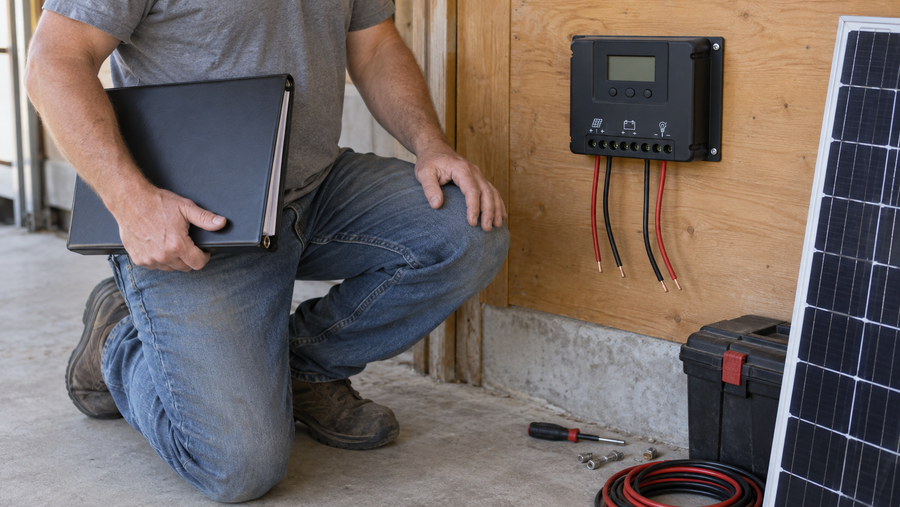
Next, choose the right type of lithium system for your situation. Portable solar power stations are compact units that combine lithium batteries, an inverter, and charge controllers in one box, with foldable solar panels you can move to a sunny spot. They shine in apartments, condos, and small homes where you mostly need device charging, a fridge, and a few lights. For a whole-home setup, integrated energy storage systems pair high-capacity lithium batteries with a hybrid inverter that can feed entire circuits or even your main panel, taking over quietly when the grid fails and storing surplus rooftop solar for the evening.
When you evaluate products, look beyond capacity and price. Manufacturers and acoustical consultants both stress the importance of fan and inverter noise. Look for published sound levels similar to quiet indoor spaces and design the installation so that any vents or cooling fans face away from bedrooms and outdoor seating areas. Data from large battery projects shows that smart fan-speed optimization can cut noise by 4–13 dB while still maintaining safe temperatures, and the same principle—adequate but not aggressive cooling—helps keep a home system unobtrusive on a silent night.
Finally, think about scalability and mobility. Lithium’s high energy density and low weight compared with lead-acid make it easy to add another module later or move a portable power station between home, RV, and cabin. Manufacturers of RV and marine packs highlight that a single lithium bank can handle both propulsion or high-draw appliances and comfort loads such as lights, water pumps, and entertainment systems. That means the same investment that keeps Christmas Eve quiet at home can also power a summer road trip without hauling extra lead-acid batteries or a small generator.
Safety, Reliability, and Environmental Impact on a Winter Night
Silence is not worth much if it comes with hidden risk. The good news is that modern lithium systems designed for homes, vehicles, and mobile businesses have robust safety features, and the industry continues to harden them, especially for extreme conditions.
Chemistry choice is the foundation. Technical reviews and safety case studies point out that lithium iron phosphate cells have much higher thermal stability than high-energy chemistries such as nickel-manganese-cobalt. In practice, this means LiFePO4 cells tolerate abuse better and are less prone to runaway reactions if something goes wrong, though no battery is completely risk-free. Industrial suppliers emphasize that they pair this chemistry with a smart battery management system that constantly measures cell voltage, temperature, and state of charge, and can shut down charge or discharge if it detects anomalies.
Safety researchers are even adding new detection layers. Studies on grid-scale storage have shown that the first signs of thermal runaway are usually gas venting, not temperature rise, and that gas sensors can pick up those early signals several minutes before a conventional temperature sensor reacts. Some industrial packs now integrate gas detection and condensed aerosol fire suppression systems designed to snuff out a battery fire at the chemical level by binding to the free radicals that sustain combustion, without damaging nearby electronics. While home systems are simpler, these advances in large installations strongly influence their design standards and practices.
Weather resilience matters too. Heavy snow, ice, and meltwater around Christmas can expose enclosures to moisture. To manage this, at least one lithium manufacturer builds packs with an IP67 rating, meaning the battery enclosure is dust-tight and can withstand submersion in about 3 ft of water for 30 minutes without water getting inside. That level of environmental sealing, combined with reduced risk of acid or lead leakage compared with lead-acid batteries, makes lithium packs better suited to damp basements, garages, and outdoor enclosures that see winter storms.
On the environmental side, lithium is not perfect. Extracting lithium, nickel, and cobalt can stress water resources and local ecosystems, and both consumer and grid-scale lithium systems have to be handled properly at end of life. However, recycling technologies are improving rapidly, with some processes recovering up to about 95 percent of the materials for re-use in new cells according to sustainability-focused battery manufacturers. When you combine that with the fact that a lithium system eliminates the local exhaust, fuel spills, and sulfuric acid leakage associated with generators and many lead-acid batteries, the overall footprint for a long-lived lithium pack used for a decade of Christmases looks far better than regular generator updates and lead-acid replacements.
FAQ: Making the Switch Before Christmas
Can a lithium system really carry a full Christmas Eve blackout?
Yes, as long as you size it correctly. Lithium’s high energy density, flat discharge voltage, and long cycle life are the same characteristics that have made it the backbone of electric vehicles, RVs, boats, and food trucks that run for long hours every day. If you add up the wattage of your essential loads and multiply by the hours you want covered, a properly selected lithium pack can deliver a full-night storm ride-through without the generator ever leaving the shed.
Is lithium safe to use while everyone is asleep?
Credible vendors design their packs to meet key safety standards such as UL 2743 and IEC 62619, and they rely on built-in battery management systems that shut down charge and discharge if anything abnormal happens. Choosing stable chemistries like lithium iron phosphate, installing equipment according to manufacturer instructions, and avoiding no-name bargain packs are the most important steps you can take. When those conditions are met, a lithium system quietly working in the background is a far lower risk than fueling and running a gas generator outdoors all night.
What if my rental lease bans generators?
That is exactly the scenario portable lithium systems were built for. Solar-plus-lithium setups are silent, produce no exhaust, and typically meet strict rental noise limits because their cooling fans are in the whisper-quiet range. Many units are modular and free-standing, so they can be installed without permanent changes and removed easily when you move out. Landlords who would never accept a noisy gas generator are often far more comfortable with a quiet, emission-free battery that protects their tenants and building.
A peaceful Christmas Eve is not a fantasy; it is an engineering choice.

Swap the roar of a generator for the quiet confidence of lithium, design your system around the loads that actually matter, and this year let the only thing making noise outside be the snowfall.
References
- https://www.eastmanworld.com/BMS-The-Technology-That-Protects-Optimizes-and-Connects
- https://beasfa.com/what-are-lithium-batterie/
- https://www.wallmark.com.au/why-noise-walls-are-essential-for-battery-energy-storage-systems/
- https://www.energy-storage.news/dont-let-noise-be-a-drain-on-bess-developments/
- https://www.super-b.com/post/why-choose-lithium-batteries-the-advantages
- https://www.acentech.com/resources/battery-energy-storage-systems-charged-up-for-noise-control/
- https://www.anernstore.com/blogs/portable-solar-power/power-noise-sensitive-rentals-no-generators?srsltid=AfmBOoo69xv0nwFEQwN9TnJ3z9gXnhM2AOaGk8XHUlo2mAr1XdMfNUEN
- https://www.bioennopower.com/blogs/news/the-lithium-battery-revolution?srsltid=AfmBOopP2pAM8oA3pfCxTBkhC0lqXHSa3AAeA8cJ_-MKv_yFSXMO4p08
- https://www.ecoflow.com/us/blog/lithium-batteries-what-makes-them-top-choice
- https://embatterysystems.com/blog/what-is-a-lithium-ion-battery/