
A difference between your lithium battery app and LCD does not automatically mean the battery is failing. The main reason is that the two displays may use different state-of-charge data or estimation methods. A reading that changes with load may reflect temporary voltage sag, while a persistent difference can point to different capacity settings, calibration, or update timing.
The two displays may be estimating different things

A battery percentage is an estimate of state of charge, not a direct measurement of energy remaining. State of charge is often shortened to SoC.
The app may receive a SoC value from the battery management system, or BMS. The LCD may estimate charge from terminal voltage, current flow, or a separate calibration setting. Those methods can produce different percentages even while both devices are working.
Voltage-based readings are especially limited with LiFePO4 batteries. Their voltage can remain fairly steady through much of the usable range, so voltage alone cannot always distinguish, for example, 45% from 60%. A heavy load can also cause temporary voltage sag. When the load stops, the voltage may recover and the LCD percentage may move back up. For background on the limits of voltage-based estimates, see this overview of state-of-charge measurement.
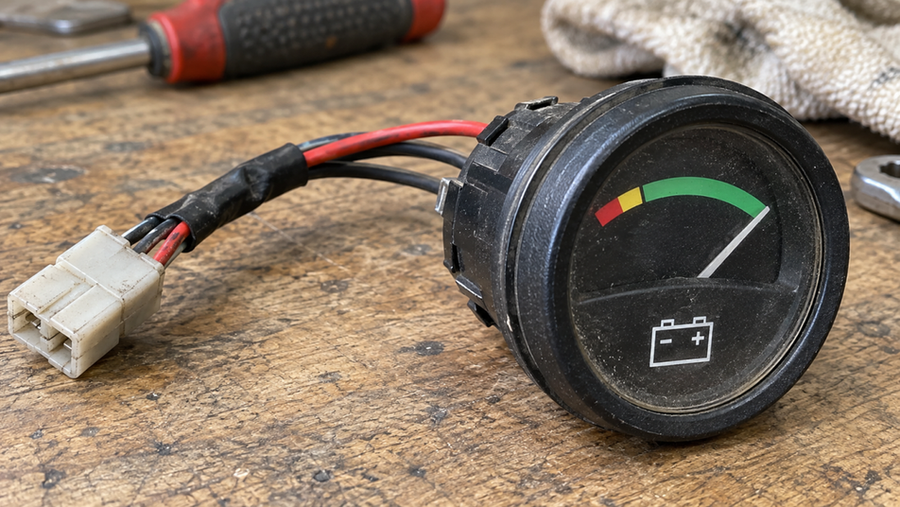
If you want both an at-a-glance screen and phone-based status information, the Vipboss 48V 150Ah conversion kit includes an external LCD monitor and Bluetooth app access. Its two views may still show different percentages because they can receive or calculate the value differently; neither display should be assumed to be independently more accurate without additional evidence.