For many RV owners, yes. If you camp off-grid, run an inverter, or rely on solar, the higher upfront price often pays back through more usable daily power, less weight, and fewer replacements over time. If your trips are occasional and you spend most nights on hookups, a traditional RV deep-cycle battery can still be a sensible choice. The key is not the label on the battery. It is how often you cycle your bank, how much power you need between charges, and how long you plan to keep your rig.
This article breaks the decision down in a practical way so you can match the battery type to your real travel habits.
Why Lithium RV Batteries Cost More Up Front
A modern lithium pack is built as a system, not just a box of cells. The battery management system tracks voltage, current, temperature, and cell balance. That adds cost, yet it also reduces the chances of accidental damage from common real-life use, like deeper discharges or uneven charging habits.
Chemistry also plays a role. In RV applications, LiFePO4 is the dominant choice because the chemistry is well-suited to deep-cycle use and is widely regarded as more thermally stable than some other lithium-ion options. For an owner comparing a single 12V unit on price alone, that engineering can feel hard to justify. The value starts to make more sense once you compare usable capacity and replacement frequency over time.
Lithium RV Batteries vs RV Deep Cycle Battery Options
Three differences shape most buying decisions: usable capacity, weight, and charging experience.
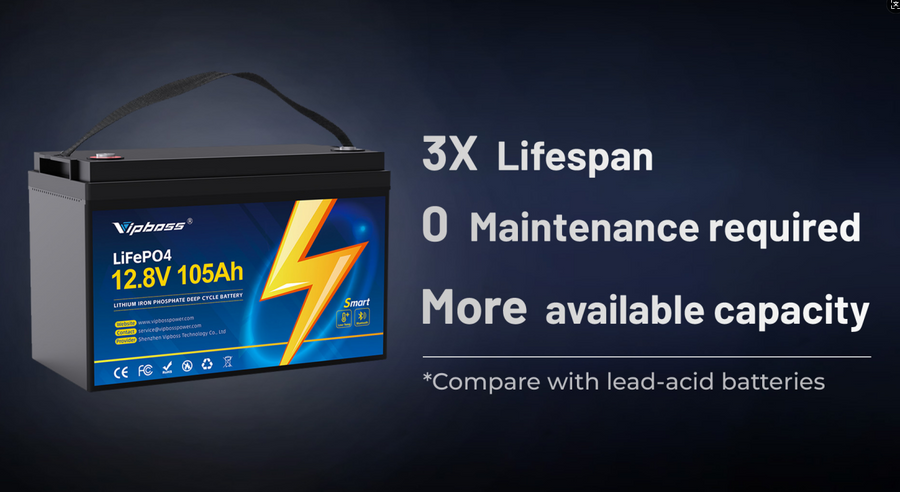
The term RV deep cycle battery describes the job, not the chemistry. Flooded lead-acid, AGM, gel, and lithium can all be deep-cycle designs. The everyday gap shows up in how you are expected to use them. Many manufacturers advise limiting lead-acid depth of discharge to around half of the rated capacity to protect the lifespan. A LiFePO4 RV battery is commonly used at higher usable levels in typical RV setups, depending on system settings and protections.
That practical reality changes planning. A 100Ah RV lithium battery often delivers a noticeably larger chunk of usable energy in daily life than a 100Ah lead-acid battery.
Weight and Space Matter on Real Trips
Weight affects payload, handling, and how much gear you can bring without stress. Lithium banks usually provide similar usable energy at a lower weight and smaller footprint. Owners of smaller trailers or vans often feel this benefit immediately.
Maintenance and Recovery
Lead-acid batteries are more sensitive to being left partially charged, which can contribute to sulfation over time. Lithium systems generally demand less routine maintenance and tend to recover more efficiently after deep use, which helps owners who rely on solar or short generator runs.

Quick Comparison Snapshot
| Factor | Lead-Acid / AGM | LiFePO4 |
| Typical usable capacity guidance | Often planned around ~50% for longevity | Commonly planned around higher usable levels |
| Weight for similar usable energy | Heavier | Lighter |
| Charging feel off-grid | Slower near full | Efficient charge acceptance in many setups |
| Maintenance | More attention needed | Less routine upkeep |
These patterns vary with temperature, discharge rate, and the quality of charging equipment.
How Long Does a LiFePO4 RV Battery Last in Real RV Use?
A LiFePO4 RV battery is built for frequent deep cycling, so published specs and industry summaries often place it in the thousands-of-cycles range under typical deep-cycle conditions. Lead-acid and AGM options sold as an RV deep cycle battery are more commonly tied to hundreds to around a thousand cycles, with the exact number shifting based on depth of discharge and care.
That gap matters most when your battery bank gets real work. If you boondock, lean on solar, or use an inverter regularly, lithium’s longer cycle-life design is easier to convert into real years of dependable use. If your batteries only get light duty a few weekends a season, the practical difference shrinks.
A quick estimate can keep expectations realistic:
Estimated years of service ≈ rated cycle life ÷ your cycles per year
The final outcome still depends on three everyday realities folded into one simple idea: deeper discharges, harsher temperatures, and charging gear that is not tuned for LiFePO4 will reduce the lifespan you see on the road.
Who Benefits Most From Lithium Batteries for RV?
Boondockers and Solar-Reliant Owners
When your plan involves long stretches without hookups, lithium batteries for RVs can simplify the routine. Faster, more efficient charge acceptance helps you make better use of short sun windows and reduces generator time.
Inverter-Heavy Setups
Microwaves, coffee makers, induction cooktops, and remote-work gear push a battery bank harder than lighting and fans. Higher usable capacity and steadier voltage under load often translate to less frustration in everyday use.
Weight-Sensitive Builds
If payload margin is tight, lithium can offer a cleaner way to add usable energy without piling on extra mass.
When a Traditional RV Deep Cycle Battery Still Makes Sense
Some owners will still be well served by a traditional RV deep-cycle battery.
Low-Use Patterns
If you camp a few times a year, spend most nights connected to shore power, and rarely run large inverter loads, the long-term payback of lithium may not line up with your reality.
Short Ownership Timelines
Planning to sell the rig soon can make a big lithium investment harder to justify.
Cold-Weather Simplicity
Many modern LiFePO4 packs include protections that limit charging in low temperatures, yet cold-weather planning still takes thought. If your rig lacks a protected battery space and you do not want to adjust your charging setup, AGM may feel more straightforward.

How to Choose the Best Lithium Battery for RV
A good purchase starts with honest load planning.
Size for Your Actual Day
Estimate your daily use based on your typical routines, not your most ambitious travel week. Think about your fridge type, lighting habits, water pump use, fans, and the devices you plan to run through an inverter.
Match the Rest of the System
A 12V lithium RV battery can be dropped in from a physical standpoint, but charging profiles still matter. Check your converter or charger, confirm your solar controller settings, and ensure wiring and fusing are appropriate for the potential current your new bank can deliver.
Focus on Safety and Support Features
A solid BMS, clear documentation, and sensible temperature protections are usually more important than chasing the highest marketing numbers.
When these pieces align, the phrase best lithium battery for RV becomes less about a single product and more about a system that fits how you travel.
Make Your Next RV Power Upgrade Count with Lithium RV Batteries
For many RV owners, the decision becomes clear once you map the battery choice to real travel frequency and real loads. High-use, off-grid, and inverter-heavy rigs tend to benefit most from the higher usable capacity and reduced maintenance that lithium RV batteries can bring. The higher upfront price can feel reasonable in that context, especially when fewer replacements are likely over a long ownership window.
Light-use weekend travelers may still find traditional options perfectly satisfying. The smartest move is choosing a battery bank that fits your habits today, while leaving room to scale if your travel style grows. That approach protects your budget, keeps your system reliable, and helps every trip feel a little easier.
FAQs
Q1: Can I charge a LiFePO4 battery from my RV alternator?
Yes, but use a DC-DC charger sized for your battery bank. Direct alternator charging can overwork some systems or cause unstable charging behavior. A DC-DC unit regulates current and voltage, improving safety and protecting both battery and alternator.
Q2: Is it okay to mix lithium and lead-acid batteries in one bank?
In most cases, no. Different chemistries charge and discharge differently, which can cause imbalance, poor performance, and shorter life for both. If you are transitioning, keep them on separate circuits or replace the bank as a matched set.
Q3: What’s the best way to store LiFePO4 batteries during the off-season?
Store them partially charged, typically around 40–60%, in a cool, dry place. Disconnect non-essential loads and check the state of charge every couple of months. Avoid storing fully empty or fully topped off for long periods.
Q4: What are the early signs that a lithium battery is nearing the end of its life?
You may notice reduced runtime, faster voltage drop under load, or more frequent Battery Management System(BMS) cutoffs. Capacity testing can confirm a decline. A gradual loss is normal over the years, but sudden changes often point to wiring, charging, or cell-balance issues.
Q5: Do certifications and warranty terms matter for RV lithium batteries?
They matter a lot. Look for documented safety testing and clear warranty conditions that specify cycle or time coverage. Good manufacturers provide transparent operating limits and support. This reduces risk, helps with insurance questions, and can strengthen resale confidence.