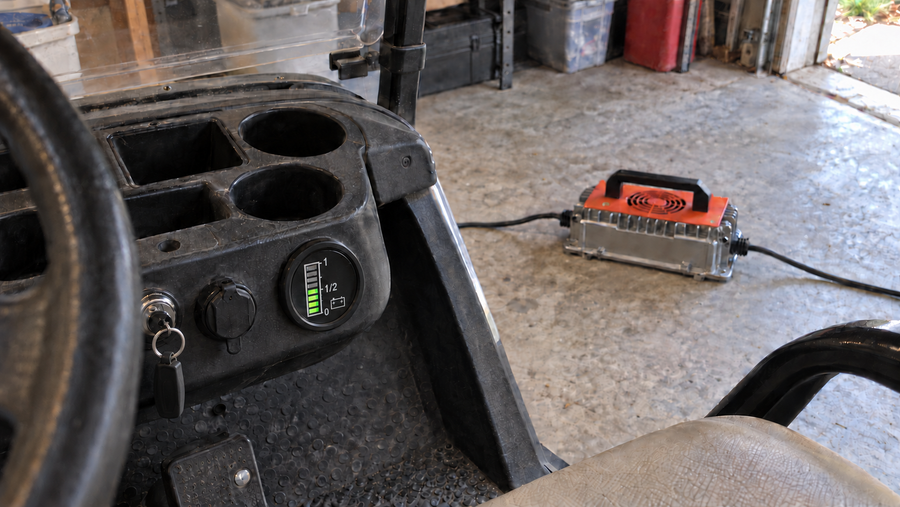

For lithium batteries and energy-storage equipment, a supplier claim or a logo is not enough for a procurement or facility-approval decision. Meaningful third-party certification can be traced to the issuing body, the applicable safety standard, and the exact product configuration. Transport testing such as UN 38.3 answers a different question and does not establish approval for installation or workplace use.
A Claim is Not the Same as Independent Certification

A manufacturer may state that a battery meets a requirement, provide a declaration, or display a certification mark. Those materials can be useful starting points, but they are not equally strong evidence.
Third-party certification adds an independent record: a recognized organization evaluates a product against identified standards and authorizes use of its mark when the product is certified within that program’s scope. Under OSHA’s Nationally Recognized Testing Laboratory program, an NRTL mark signifies that the laboratory tested and certified the product to one or more appropriate product-safety test standards within its recognized scope. OSHA recognizes NRTLs for certification of certain products related to construction and general-industry electrical standards. OSHA’s NRTL Program explains that scope is central to what an NRTL mark means.
| Evidence Presented by a Supplier | What It Can Tell You | What You Still Need to Confirm |
|---|---|---|
| Datasheet statement or self-declaration | The manufacturer’s stated position | Whether an independent body has certified the exact product |
| Logo on a label, brochure, or web page | A certification claim may exist | That the mark is authorized and applies to the specific model |
| Test report | A product was evaluated in a test context | Whether a certification body formally certified the product and for what use |
| Third-party listing or certificate | An independent evaluation may be traceable | The precise model, configuration, standard, market, and intended application |
The distinction matters because battery equipment exists at several levels: cells, modules, battery packs, BMS-equipped batteries, integrated systems, and completed installations. Evidence for one level does not automatically establish certification for another.
A mark should therefore trigger verification, not end it. An authorized mark can be applied after certification, but the presence of a familiar mark does not prove that every product from that manufacturer—or every variation of a product family—has the same certification scope.
Verify the Exact Battery, Not the General Brand Claim
Treat certification review as a document-matching exercise. The goal is not simply to find a matching logo; it is to establish that the record covers the battery you intend to buy, ship, install, or approve.
Use a Repeatable Verification Checklist
-
Identify the exact product. Record the manufacturer, full model number, product family, ratings, and configuration. Do not rely on a shortened sales name.
-
Request the traceable record. Ask for the certificate or listing identifier, issuing body, applicable standard, revision or date status, and any factory or production scope that applies.
-
Check the issuer’s directory. Listing databases are designed to help buyers determine whether products have been evaluated. For example, the CSA Group Product Listing database can be searched using product type, manufacturer information, and listing-record details such as file or class number. ETL’s directory also supports searches by company name, product information, or standard number.
-
Match the record line by line. Confirm that the directory or controlled record aligns with:
- manufacturer name;
- exact model or listed product family;
- battery configuration and relevant ratings;
- applicable standard;
- intended market;
- intended application; and
- current certification status.
-
Resolve ambiguity before approval. A public search result is useful evidence, but it must still match the actual product. If an ETL listing is missing or unclear, the directory provides a path to request certification verification. Pause the approval decision until the issuer or manufacturer provides written clarification.
This process prevents a common scope error: accepting a certificate for a related cell, a previous revision, a different factory, or another market as proof for the battery system under review.
For a Vipboss battery or energy-storage product under consideration, apply the same standard. Request current documentation tied to the exact model and intended installation rather than relying on a general product-page badge.
Keep Testing, Transport, and Product Approval Separate

Testing and certification are related but different activities. Testing evaluates how a product meets specified standards; certification formally confirms that a product meets the standards within the certification service’s scope.
UN 38.3 is transportation testing for lithium batteries and cells. It is relevant when shipment is involved, but it does not by itself establish a product listing or approval for installation, workplace use, or a complete energy-storage system.
Scope warning: A UN 38.3 document, a laboratory test report, and a third-party product certification are not interchangeable evidence.
The same caution applies to a certification mark. In the United States, unauthorized use of a registered safety certification mark can carry legal consequences when a person knew or should have known the mark was unauthorized. The CPSC notice on counterfeit certification marks describes this statutory context. It does not mean a particular product is counterfeit; it reinforces why visual inspection alone is not a verification method.
Make Certification a Procurement Gate
Before purchase, shipment, installation, or facility approval, ask for evidence that connects the product to its intended use:
- exact model and configuration;
- issuer and certificate or listing identifier;
- applicable standard;
- current status and relevant revision;
- installation documentation for the proposed application; and
- a UN 38.3 transport-test summary when shipment is part of the decision.
If the certification cannot be traced to the exact product and intended use, treat the claim as unverified until documentation resolves the gap. Use this checklist for every supplier, including Vipboss, before approving battery equipment.