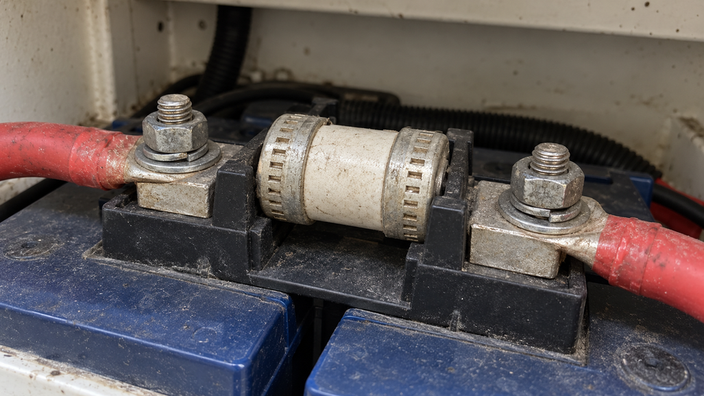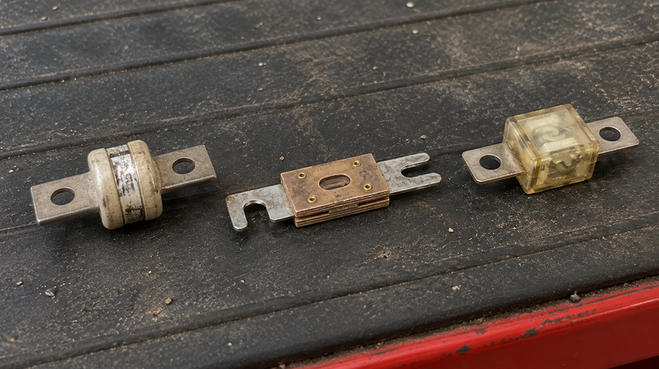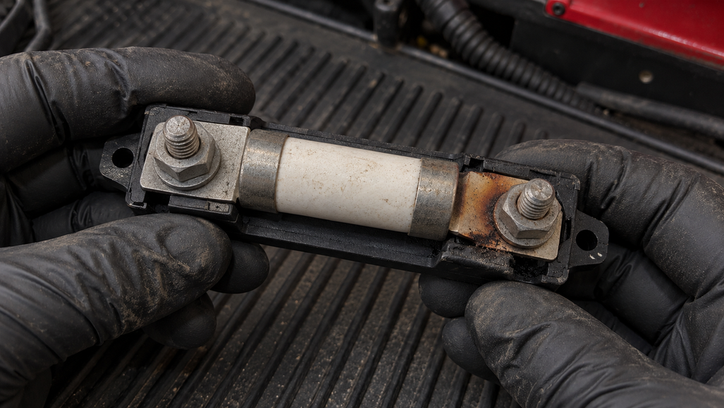

A Class T fuse can open after a system has worked normally because an overcurrent developed or a fuse connection became resistive and overheated. Its opening signals a condition to investigate, not a diagnosis; normal operation beforehand does not rule out either possibility.
What may have caused it

A fuse’s opening time generally decreases as overcurrent rises, and a properly rated fuse protects against overloads and short circuits. A larger load or fault current could therefore open a fuse that had previously carried the system’s current. These are general fuse behaviors, not Class T-specific thresholds or proof of what happened in your system, as general fuse characteristics explain.
A connection at the fuse or holder is another possibility. Looseness, corrosion, or oxidation can increase resistance and create localized heating; in some cases, that heating can damage the assembly and open the circuit. High-resistance fuse connections can cause localized heating, but this mechanism does not establish the cause in your system.
What to do next
- Record the event: Note when the fuse opened and which loads were operating, including whether a load had just started. This information helps focus the inspection.
- Isolate power before inspection: Do not handle or inspect the fuse assembly while it is energized.
- Have the system inspected: Ask a qualified technician to examine the fuse, holder, connections, wiring, and load, and compare measured current and installed components with the actual system and fuse specifications. The available general evidence cannot identify a specific installation’s cause.
If your system uses the Vipboss 12V 105Ah Bluetooth LiFePO4 battery, its built-in 100A smart BMS and Bluetooth monitoring can provide battery-status context during diagnosis.
FAQs
What are common reasons a Class T fuse opens after working normally?
A developing overcurrent, such as from a larger load or a fault, can open a fuse; a loose, corroded, or oxidized connection can also develop resistance, heat locally, and eventually open the circuit. The opening alone does not identify which cause occurred.