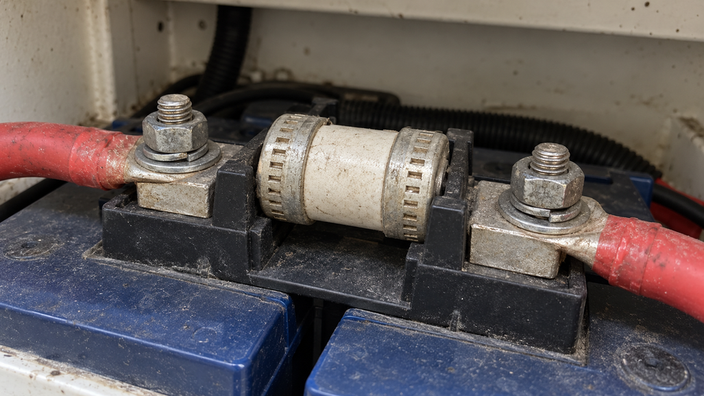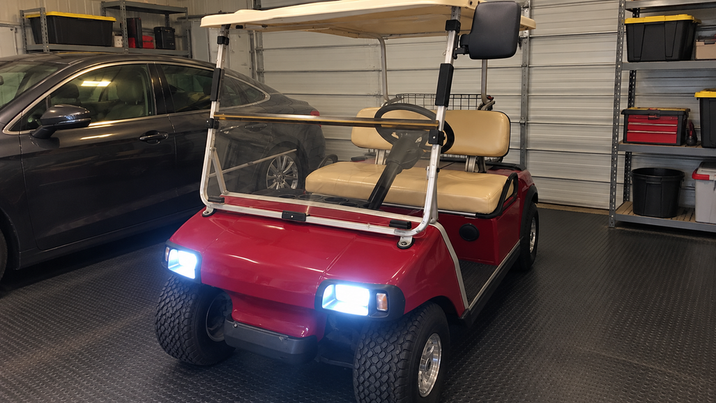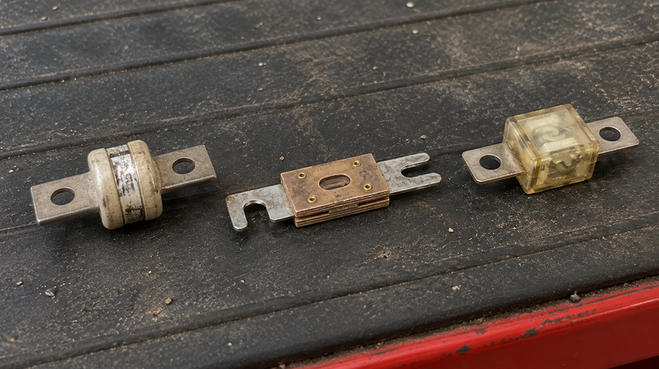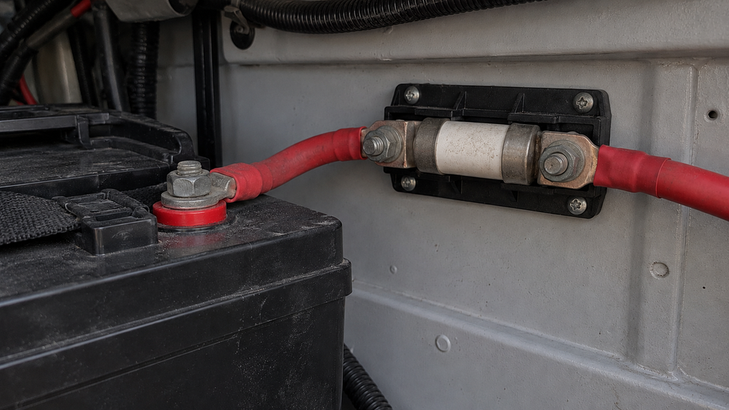

Place the main Class T fuse in the positive, ungrounded cable as close to the battery positive terminal as practical. Install it before the cable reaches a distribution bus, inverter, or other major load, keeping the unfused cable run short.
Plan the cable route

A typical layout is battery positive terminal → short cable → Class T fuse and holder → disconnect or distribution bus → inverter and other loads. A fuse at a distant load does not protect the cable between the battery and that fuse. Route negative and chassis or ground conductors according to the system design and applicable installation requirements.
Fuse location and fuse rating are separate decisions. Choose a rating that protects the cable and accounts for expected continuous and surge current, the fuse’s DC voltage and interrupt ratings, equipment requirements, and applicable installation rules.
Marine installations

For installations governed by 33 CFR § 183.455, place overcurrent protection at the source of power. If that is physically impractical, the regulation allows placement within 7 inches of the source, measured along the conductor. If placement at the source or within 7 inches is physically impractical, it allows placement within 40 inches, measured along the conductor, only if the entire intervening conductor is enclosed in a sheath or enclosure. These distances apply only within the regulation’s scope; they are not universal rules for every battery system.
Location checklist
- Start at battery positive: Put the main fuse in the positive, ungrounded conductor near the source.
- Keep the unfused run short: Place the fuse before the cable reaches distribution or major loads.
- Apply marine exceptions in order: Use the 7-inch and 40-inch allowances only when their stated conditions apply.
FAQs
Where should the main Class T fuse go in a battery system?
Install it in the positive, ungrounded cable as close to the battery positive terminal as practical, before the cable reaches a distribution bus or major load.
What fuse placement distances does 33 CFR § 183.455 allow for covered marine installations?
The fuse or circuit breaker must be at the power source unless that is physically impractical, in which case it may be within 7 inches measured along the conductor. If placement at or within 7 inches is also physically impractical, it may be within 40 inches only if the entire intervening conductor is enclosed in a sheath or enclosure.