The Group 31 label is probably not the explanation. Group 31 describes the battery's physical size, not its electrical fit for every trolling motor. Power loss usually points instead to one of five areas: low remaining energy, the wrong system voltage, excessive current demand, resistance or interruption in the power path, or a motor-side problem.
Start with the symptom. A gradual loss of thrust and an instant shutdown are different faults and should not be diagnosed the same way.
Match the symptom to the first check

| What you observe | What it can point to | First useful check |
|---|---|---|
| Thrust gradually weakens during a long run | Remaining battery energy, high sustained load, or voltage loss in the cable path | Check battery status, then inspect plugs, terminals, breaker, and cable for heat or damage |
| Motor shuts off when high speed is selected | Battery/BMS protection, breaker operation, or a connection that fails under heavier load | Record any battery-app alert and whether power returns after reducing the load |
| Motor cuts out when the boat turns or hits waves | An intermittent plug, terminal, breaker, or damaged cable | With power isolated, inspect and secure the complete connection path |
| Other 12V equipment also goes dark | A battery-side, BMS, breaker, or main-connection interruption | Check the battery status and main protection before blaming the motor |
| Battery and other equipment stay on, but only the motor stops | Propeller obstruction, motor control, or an internal motor fault | Disconnect power, inspect the propeller, and follow the motor's troubleshooting procedure |
These are diagnostic directions, not proof of a particular failure. Do not bypass the breaker or BMS to see whether the motor keeps running.
Check voltage before capacity
A 12V battery belongs with a 12V motor only when both product manuals approve the combination. A 24V or 36V motor needs an approved battery configuration that provides that system voltage; installing a larger 12V Group 31 battery does not turn it into a 24V or 36V source.
Next compare current, not just amp-hours. The motor's maximum current demand must remain within the documented limits of the battery, BMS, breaker, connector, and cable. The 105Ah label describes capacity; it does not mean that every 105Ah battery can run every motor.
Separate a runtime problem from a shutdown problem
If the motor works normally but stops after a predictable number of hours, estimate whether the battery is simply reaching the end of its available runtime:
estimated runtime in hours = usable battery amp-hours / average total current in amps
For a 105Ah battery and an illustrative 20A average draw, the nominal calculation is:
105Ah / 20A = 5.25 hours
Real runtime will be shorter when other boat loads share the battery, average motor current is higher, or operating conditions reduce usable capacity. Use the motor's actual current data and the battery manufacturer's usable-capacity guidance rather than treating 5.25 hours as a promise.
An abrupt cutoff well before the expected runtime is a different clue. Record the speed setting, battery status, other loads, and whether the system recovers after the load is removed. That information helps distinguish depleted capacity from a protection event or intermittent connection.
Inspect the complete power path
With charging and motor power disconnected, examine the path from the battery to the motor:
- Battery terminals and lugs
- Battery switch and circuit breaker
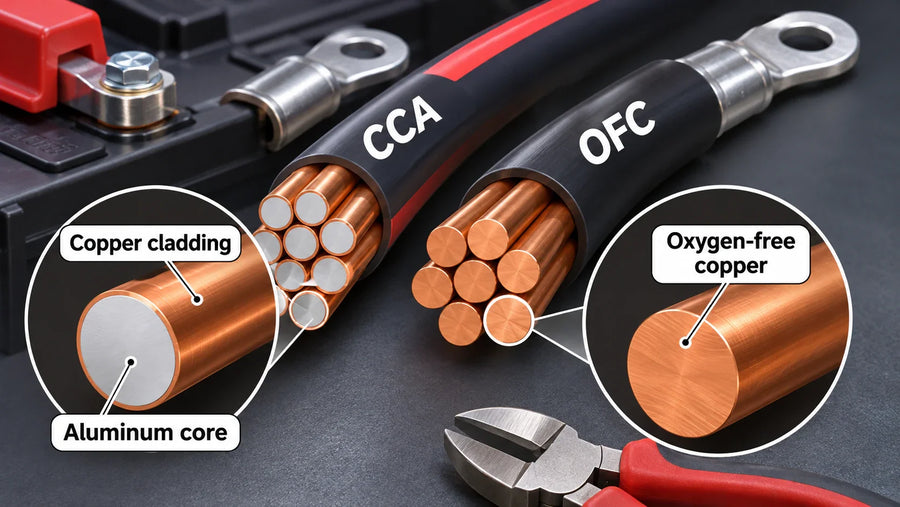
- Cable size, length, insulation, and splices
- Trolling-motor plug and receptacle
- Motor leads and propeller
Look for looseness, corrosion, discoloration, melted plastic, damaged insulation, or a component that became unusually hot. A battery can report a normal state while resistance elsewhere prevents the motor from receiving adequate power under load.
After any visible fault is corrected according to the equipment instructions, test at a low setting before increasing the load. If the shutdown returns, stop rather than repeatedly resetting protection.
How the Vipboss battery fits this diagnosis
The Vipboss 12V 105Ah Bluetooth LiFePO4 battery is a 12.8V Group 31 model with 1,344Wh of rated energy and a built-in 100A smart BMS. Its Bluetooth monitoring is useful here because battery status can be checked before the test and again when the power loss occurs.
Those features do not make the battery a universal trolling-motor match. Confirm that the motor is a compatible 12V load, its current demand fits the battery's documented discharge limits, and the breaker and wiring meet the motor manufacturer's requirements. For a higher-voltage motor, use only an approved series configuration and charging plan.
Use the app result to divide the fault. If the battery remains online while the motor stops, inspect the breaker, cable, connector, propeller, and motor circuit. If the app records a BMS protection event at the same moment, compare the motor's current demand with the battery's discharge limits and check for voltage loss or a stalled propeller that raised current.
The key distinction is whether battery output disappeared or only motor operation stopped. Record the app status, motor speed setting, and behavior of other 12V loads at the moment of failure; those observations determine whether the next test belongs on the battery side, the power path, or the motor itself.