
During harvest, every minute your scales or grain testers are down costs yield, overtime, and data quality. This guide shows how to build rugged off-grid power so your "field lab" stays live from the first truck to the last load, with no grid, no gas, and no excuses.
The Harvest-Time Power Problem
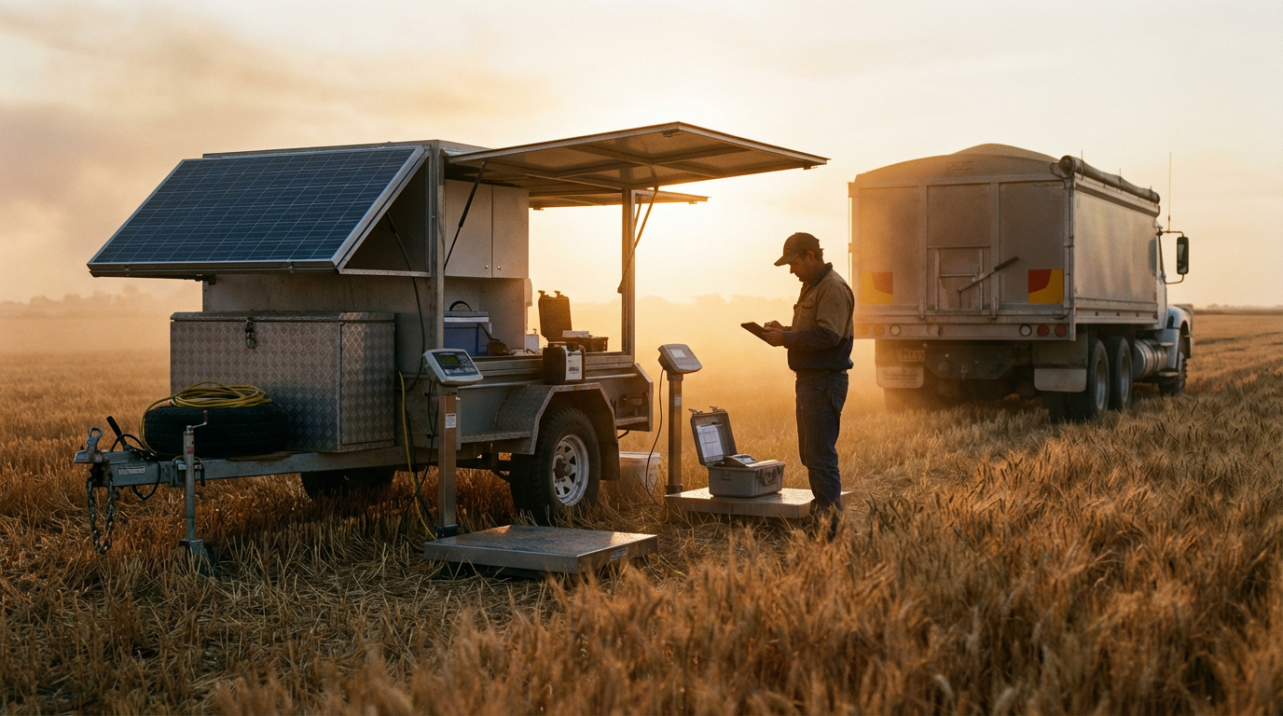
Modern harvest runs on measurements: truck weights, grain moisture, and quick quality checks that decide where every load goes. Yet those mobile benches are often parked at the far end of a field where the grid is weak, nonexistent, or miles away.
Dragging generators and cords from field to field wastes time and invites failure: tripped breakers, empty fuel cans, and "weighbridge down" radio calls when you can least afford them. When scales or testers go dark, trucks idle, crews wait, and loads get misrouted.

Well-designed on-farm renewable energy lets you keep these critical stations powered independently, cutting outage risk while you are pushing long harvest days.
Sizing Off-Grid Power for Field Labs
Most harvest field labs can run all day on a compact lithium off-grid kit if you size it correctly. Start with the load: a platform scale, moisture tester, label printer, laptop or tablet, Wi-Fi hotspot, and a couple of LED work lights.
In practice, that is usually around 300 watts running, with 600 to 800 watts of startup surge. Over a 12-hour shift, plan on roughly 3 to 4 kWh of use once you include inverter and wiring losses.

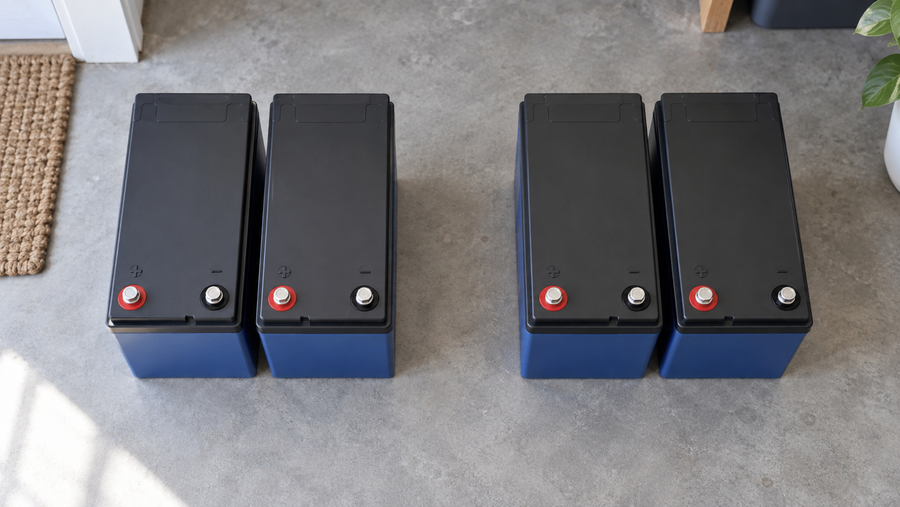
For that package, plan on a 1,500 to 2,000 W pure sine inverter, a 4 to 5 kWh lithium iron phosphate battery, and 600 to 800 W of solar on a cart or small trailer.
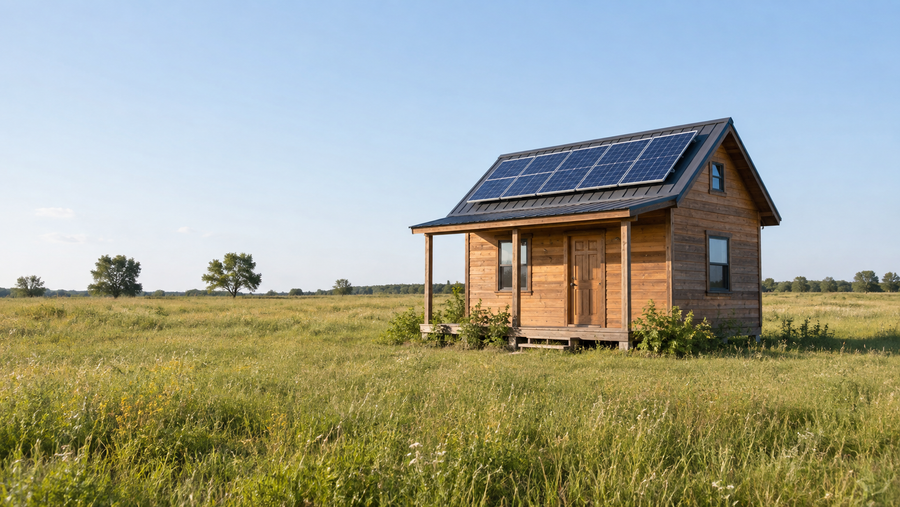
A system in this class mirrors proven standalone off-grid systems that target one to two days of autonomy. High-quality lithium iron phosphate packs routinely outlast lead-acid batteries by several times the cycle life, which is why many off-grid farm solar specialists now standardize on lithium for remote loads.
Mobile Solar vs. Gas Generators in the Field
Most farms already own a small gas generator, but for mobile scales and testers, it is usually the wrong tool. You are trading fumes, noise, and maintenance for a load that barely needs a kilowatt.
A lithium-plus-solar kit wins on the ground because it runs quietly so crews can hear radios and each other, produces no exhaust near grain and livestock, needs almost no maintenance beyond keeping panels clean, and can ride in the truck bed to power gear right at the scale.
Larger mobile rigs are following the same pattern: mobile PV farms and trailers deliver fast, reusable solar-plus-battery power for temporary sites instead of diesel. At utility scale, clean energy is the cheapest new power on the system; declining panel prices and rising fuel costs push your small harvest kits in the same direction.
Large three-phase loads like grain dryers may still need the grid or a generator, so focus your batteries on lighter, high-value measurement and control loads.

Designing a Rugged, Expandable Harvest Power Kit
Treat each power kit as a mini, hardened off-grid system that can plug into your broader farm energy strategy. Build it once, then send it wherever the combines are.
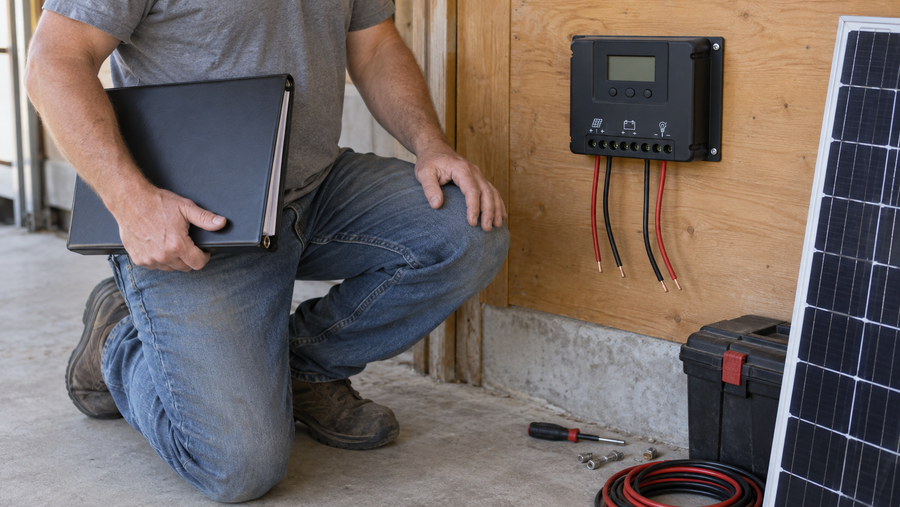
A proven field layout includes a weatherproof case with the inverter, breakers, and exterior outlets; a wheeled lithium battery bank sized for two shifts of use; a foldout solar rack parked upwind of dust and traffic; short, heavy-duty cords from the box to the bench instead of long, fragile runs; and a simple laminated start-of-day checklist for whoever is on scales.
Over time, tie these harvest kits into a bigger plan: use grid-tied solar at the main yard, then dedicate off-grid units to remote pumps, gates, and field labs as you expand. That mixed approach aligns with broader renewable energy on farms trends, cutting diesel use, boosting energy security, and keeping your harvest data flowing even when the grid does not.