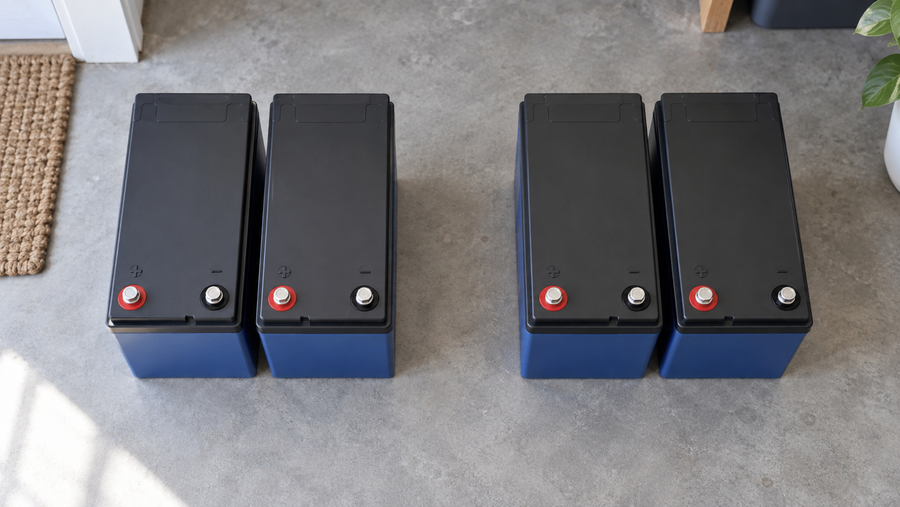

A smart, lightweight battery swap can strip serious pounds from your bike’s core, giving you quicker pop off the face, easier whips, and more forgiving landings.
On the first day back at the track, you load a familiar tabletop, but the bike feels glued to the ground and every scrub takes more effort than you remember. Riders who replace a stock battery with a lightweight lithium unit often cut roughly half the battery weight and immediately feel the bike preload easier, snap off the lip faster, and respond more cleanly in the air. This guide breaks down how that simple battery mod translates into higher, more controlled jumps, which battery to choose, and how to set it up so it lasts all season.
The Physics Of Pop: Why Battery Weight Matters For Jumps
Most stock dirt bike batteries are conventional lead‑acid units that weigh in the 10–15 lb range. Lithium motorcycle batteries of similar output typically come in around 2–6 lb, slashing several pounds from the bike with a single part swap and directly affecting handling and maneuverability by reducing overall mass and making direction changes easier. Motorcycle battery weight ranges and their handling impact show that riders feel those savings in agility, not just on the scale.
From a pure physics standpoint, if speed off the lip stays identical, weight does not change jump height, which is why climbing‑time models only show about a 1% penalty when adding roughly 2 lb to a typical bike‑and‑rider system. Yet careful analysis of real riding shows that small weight differences matter much more when you are bunnyhopping, pumping, or repeatedly yanking the bike off the ground, because you are moving the bike under you rather than just rolling it along a climb. A detailed comparison of realistic bike weight changes found that weight has a modest impact on steady climbing but becomes more noticeable for bunnyhops and aggressive pumping, and those are exactly the movements you rely on to preload a lip and scrub or whip in the air. Bike weight and bunnyhop/pumping sensitivity helps explain why a lighter battery can feel “poppier” even if the stopwatch barely notices on a long hill.
Think about what your legs and arms actually move during a jump. If a 240 lb bike carries a 12 lb battery under the seat and you drop that battery mass to 4 lb, you just removed about 8 lb from the part of the system you are trying to lift and rotate when you preload and pull. That is more than a 3% reduction in the bike’s own mass, focused high in the chassis, which makes it easier to compress the suspension, snap the front end up, and bring the bike back in line before landing. You may still hit the same lip speed, but the effort it takes to get there—and to clean up your pitch in the air—drops enough that riders notice it within a lap.

What A Lightweight Lithium Dirt Bike Battery Actually Changes
On most modern dirt bikes, you are choosing between three basic battery families: conventional flooded lead‑acid, AGM (a sealed lead‑acid variant), and lithium, typically using LiFePO₄ chemistry. Conventional and AGM lead‑acid batteries are affordable, familiar, and reliable but heavy and maintenance‑hungry, while lithium LiFePO₄ packs are maintenance‑free, unspillable, dramatically lighter, and built to deliver high cranking amps in a compact case. Modern designs include internal battery management electronics to work reliably with standard 12 V motorcycle charging systems. These characteristics make LiFePO₄ lithium motorcycle batteries one of the highest‑value performance upgrades compared with OEM units.
In weight terms, the spread is stark. Typical lead‑acid motorcycle batteries fall around 10–15 lb, sealed AGM versions trim that to about 8–12 lb, and lithium units land in the 2–6 lb window for comparable applications, with some dirt‑bike‑specific LiFePO₄ packs dropping below a pound. This range is documented across multiple battery types and use cases and reinforces why the battery is one of the cleanest places to cut dead weight from a dirt bike without sacrificing strength elsewhere in the chassis. Typical motorcycle battery weights by chemistry capture these differences clearly.
To put concrete numbers on it, one popular LiFePO₄ dirt‑bike replacement battery line includes models like the ETZ5G and ETX12A, which deliver roughly 135–140 cold‑cranking amps while weighing only about 0.9–1.3 lb, nearly tripling the cranking power of many OEM lead‑acid units at less than a quarter of the mass. These packs drop directly into the battery boxes of major off‑road brands, include integrated battery management systems, and are engineered around dirt and snow applications where vibration, temperature swings, and repeated hard starts are the norm. Lightweight LiFePO₄ dirt bike batteries with integrated BMS demonstrate how far starter‑battery design has come compared with 170‑year‑old lead‑acid technology.
A simple way to visualize this is to look at the battery types side by side.
Battery type |
Typical weight |
Key traits off‑road |
Jump and handling feel |
Flooded lead‑acid |
10–15 lb |
Cheap, spillable, needs fluid checks, heavy case |
Stable but makes the bike feel planted and harder to preload |
AGM lead‑acid |
8–12 lb |
Sealed, less maintenance, still fairly heavy |
Slightly more agile than flooded, still a “brick” under the seat |
Lithium Li‑ion / LiFePO₄ |
2–6 lb (some near 1 lb) |
Maintenance‑free, unspillable, very high cranking amps, higher upfront cost |
Noticeably easier to lift, whip, and correct in the air |
These are typical ranges drawn from multiple motorcycle and powersports battery applications rather than a single SKU, but the message is consistent: swapping to lithium takes a big bite out of mass in a place that matters for turning, jumping, and quick body‑English corrections.

Comparisons of lead‑acid vs lithium motorcycle batteries support both the weight reduction and the practical trade‑offs.
Pros And Cons Of Going Lightweight For Jumps
Advantages You Will Feel On The Track
The first upside is agility. Dropping several pounds from high on the bike makes quick transitions—seat‑bounce to standing, preload to extension, scrub to straight—noticeably easier. Riders report that bikes fitted with lightweight lithium packs feel less “top heavy” and respond faster to body input, which matches the broader observation that lighter bikes are easier to throw into turns and require less effort when changing direction or correcting in the air. Research on battery weight in performance machines shows that mass concentrated in the battery influences acceleration, braking, and overall dynamics, reinforcing why trimming battery weight is more than a cosmetic spec sheet change. Analyses of battery weight’s impact on vehicle performance explain how reducing that static mass improves responsiveness.
The second advantage is cranking power and reliability, especially when the season starts after storage. LiFePO₄ dirt‑bike batteries are typically rated at nearly three times the cranking amps of comparable OEM lead‑acid units, yet they hold voltage better when parked and recover quickly with a brief charge, meaning fewer weak‑start dramas right before the first moto. Specific examples show riders running quality lithium packs for many years in off‑road machines, replacing a string of traditional batteries that failed after one or two seasons, and crediting lithium’s ability to sit all winter and still crank strongly in spring. Long‑term rider reports from off‑road forums and the high CCA ratings on modern LiFePO₄ dirt‑bike replacements together illustrate that a well‑matched lithium battery can significantly outlast and outperform successive lead‑acid units in real trail and race use. User experience with long‑lived lithium dirt bike batteries lines up with the higher cranking and lifespan claims of modern off‑road lithium designs.
The third advantage is reduced maintenance overhead. Lithium motorcycle batteries have no fluid to top up, no acid to spill, and typically far slower self‑discharge than old flooded designs, which means fewer mid‑season surprises from a neglected battery hidden under the seat. General motorcycle maintenance guidance emphasizes that even “maintenance‑free” batteries still need clean terminals, tight cable connections, and reasonable charging habits, but lithium’s sealed construction and high cycle life make it more forgiving when bikes sit between track days. Motorcycle battery maintenance best practices highlight how keeping any battery clean and properly charged drastically cuts early failures.

Trade‑Offs, Costs, And Safety
Weight and performance gains do not come free. Lithium batteries cost more up front than equivalent lead‑acid units, and while the longer service life and reduced replacement frequency can even out that cost over time, you still feel the initial hit when outfitting multiple bikes or spares. Comparative analyses of motorcycle battery types make it clear that lithium and AGM options carry higher sticker prices than conventional flooded units but return value through reduced mass, more cranking power, and longer lifespans. Comparisons of conventional, AGM, and LiFePO₄ motorcycle batteries frame this trade‑off in practical terms for riders.
Battery management systems are another nuance. Some lightweight LiFePO₄ batteries include very comprehensive BMS protection—guarding against overcharge, over‑discharge, and excessive cranking—but a few dirt‑focused models deliberately relax certain protections so they do not shut down during long cold‑weather starts or repeated attempts in tough conditions. This design choice makes sense for a snow bike or a winter hard‑start scenario, but it also shifts more responsibility onto the rider to avoid fully flattening the pack and to use the right charger. Detailed product specs from premium dirt‑bike lithium brands highlight differences in BMS features, cranking ratings, and warranty length so you can decide whether maximum protection or maximum “never shuts off” behavior is more important in your conditions. Technical descriptions of LiFePO₄ dirt bike batteries and their BMS strategies illustrate these trade‑offs.
Chemical and electrical safety deserve respect as well. Retailers selling dirt bike batteries and related products often carry broad Prop 65 warnings that some components can expose users to chemicals tied to cancer or reproductive harm, which is a reminder to wear gloves, avoid skin contact with leaked electrolyte, and follow handling instructions rather than tossing old batteries in the trash. Those warnings, along with official state resources, reinforce that battery components warrant careful disposal and sensible protective gear. Consumer chemical‑exposure warnings on dirt bike batteries make this clear.
If you ride or plan to convert to a full electric dirt bike, there is an additional dimension. High‑voltage battery systems in electric motorcycles can run at several hundred volts and deliver very high current, which makes opening packs or modifying wiring without training genuinely dangerous. Experienced electric dirt riders emphasize that routine tasks like plugging in to charge are safe, but opening high‑voltage systems, custom wiring, and DIY battery builds should be treated as serious electrical work, not casual tinkering. Real‑world accounts of DIY electric dirt bike maintenance and safety concerns underline that anything beyond a plug‑and‑play battery swap on a low‑voltage starter system demands deep knowledge and proper tools.
How To Pick And Set Up A Lightweight Battery For Bigger Jumps
The first decision is fit and rating. Start by confirming your bike’s stock battery dimensions, mounting layout, and minimum cold‑cranking amp requirement; then choose a lithium replacement that matches the case size (or includes foam spacers) and meets or exceeds the CCA spec. Technical documentation for modern off‑road LiFePO₄ lines shows direct‑fit models for most major dirt bike brands along with detailed CCA, peak cranking, and warranty information, making it straightforward to cross‑reference your OEM number and pick an appropriate upgrade. Dirt bike‑specific LiFePO₄ replacements and their compatibility charts are a good example of how manufacturers simplify this step.
Next comes a reality check on weight versus use. If your stock battery is a 10–12 lb lead‑acid unit and your chosen lithium replacement weighs about 2 lb, you have just removed around 8–10 lb from the bike, concentrated under the seat or in the subframe area. For a 240 lb bike, that is roughly a 3–4% reduction in bike mass with zero change to suspension, frame, or wheels, and it is instantly noticeable when you manual over track bumps or preload for a jump. Even if you are not chasing lap records, that kind of central weight loss makes the bike easier to move around at low speed, less tiring on technical climbs, and more playful off lips or trail features, particularly for lighter riders who feel every pound more acutely. General research on weight sensitivity in bike dynamics backs up the observation that while big weight cuts do not magically transform climb times, they pay off in how responsive the bike feels to rider input and pumping. Weight comparisons and their real‑world effect on bike performance capture that nuance.
You can think of the swap in “before/after” terms.
Setup |
Approximate battery weight |
Bike feel over jumps |
Stock flooded or AGM lead‑acid |
10–15 lb |
Stable but heavier to preload and whip; more effort to correct pitch in the air |
Lightweight LiFePO₄ |
2–6 lb (sometimes near 1 lb) |
Noticeably easier to snap off the lip, move the bike underneath you, and bring it back before landing |
Once you have the right battery in hand, setup and maintenance determine whether it keeps delivering that pop year after year. Long‑term rider reports and general maintenance guides converge on a few habits: keep terminals clean and tight, avoid letting the battery sit deeply discharged, and use a smart charger matched to the chemistry. Riders who pair a quality lithium pack with a proper maintainer and pay attention to storage temperature routinely see far longer lifespans than the 2–5 year average often associated with neglected motorcycle batteries, especially when bikes sit through winter. Practical guidance from experienced riders and industry mechanics emphasizes the value of periodic voltage checks, terminal cleaning, and the use of compatible tenders on stored bikes to avoid springtime no‑start surprises. Motorcycle battery maintenance routines and reports from off‑road riders running lithium packs for many seasons both highlight how simple habits prevent early failures.
As you prep for the first ride of the season, treat the battery swap and check as part of your standard shakedown. Charge the new lithium pack fully with a lithium‑compatible smart charger, install it with care, tightening terminals firmly after cleaning away any old corrosion, and then verify that your bike’s charging system is delivering roughly mid‑13 to mid‑14 volt levels at a fast idle. If the bike will sit for more than a couple of weeks, especially in a cold garage, connect an appropriate maintainer rather than letting the battery slowly discharge; riders who ignore storage and charging most often discover battery problems right when the good weather finally arrives. Experienced electric dirt bike owners also recommend storing batteries at moderate temperatures and avoiding extended time at absolute full charge when the bike is parked, since heat and high state‑of‑charge together accelerate aging.

FAQ
Will a lightweight battery really make my bike jump higher, or does it just feel different?
Strictly speaking, if you hit the same lip at exactly the same speed, weight alone does not change the maximum height your tires can reach, which is why climbing‑time modeling shows only tiny differences from a few added pounds in a bike‑and‑rider system. However, real jumps are not laboratory launches: you are constantly pumping, pulling, and correcting the bike, and a lighter machine is easier to accelerate, preload, and reposition underneath you for the same rider effort. Detailed analyses of bike weight suggest that while small changes barely move the needle on steady climbs, they matter more for bunnyhops and pumping, and that is precisely where a lighter battery helps you squeeze more pop out of the face and clean up in‑air adjustments. Studies on bike weight’s effect on different riding scenarios and work on how battery mass influences acceleration and dynamics together support this practical, rider‑focused view.
Is a lithium battery safe and durable enough for off‑road and race use?
For starter batteries on gas dirt bikes, LiFePO₄ designs are effectively non‑spillable, far more stable than some high‑energy consumer lithium chemistries, and built to handle vibration, heat, and repeated high‑current starts, provided you follow the manufacturer’s charging and installation guidelines. Real‑world usage shows high‑quality lithium motorcycle batteries delivering several years of reliable service, often outlasting multiple conventional replacements, and modern designs integrate battery management systems that protect cells from overcharge and short circuits while working with standard 12 V motorcycle charging systems. Comparisons of motorcycle battery types and their safety characteristics, along with technical descriptions of LiFePO₄ dirt‑bike‑specific batteries with integrated battery management systems, show how these packs are engineered for off‑road use. The main safety obligations on your side are to avoid using aggressive desulfation chargers that are meant for lead‑acid, to dispose of old batteries through proper recycling channels due to chemical hazards highlighted in Prop 65‑style warnings, and—if you work with full electric dirt bikes—to treat high‑voltage packs with the respect you would give any serious electrical system. DIY electric dirt bike safety advice and retailer chemical‑exposure warnings on dirt bike batteries both support a cautious but confident approach.
Final Lap
If your bike feels heavy and reluctant to leave the ground as dirt season kicks off, a properly chosen lightweight lithium battery is one of the cleanest, most effective ways to sharpen its jump game without tearing the chassis apart. Strip unneeded pounds from the subframe, give the starter real authority, respect the chemistry with smart charging and storage, and you will roll into the first gate with a bike that pops higher, corrects easier, and keeps cranking hard all season long.