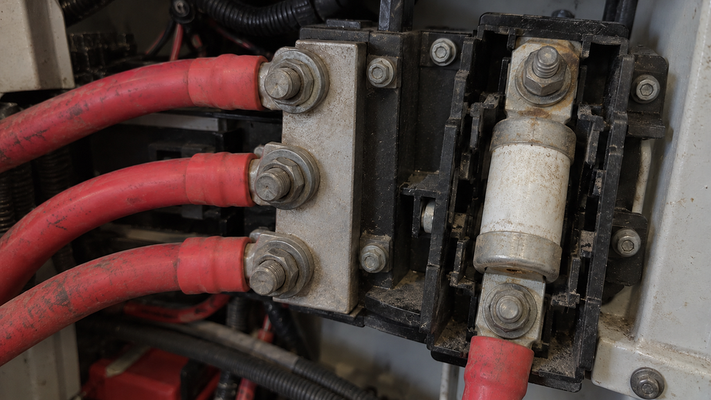

A LiFePO4 fuse needs an interrupt rating at least as high as the maximum prospective fault current it must clear at its installation point. Determine that available fault current for the actual circuit, including connected energy sources, then select a fuse with a suitable DC voltage rating and an interrupt rating that meets or exceeds it. The NFPA 2022 NEC revision report gives this general rule for power fuses.
Interrupt rating is not the fuse amp rating
A fuse's ampere rating concerns the current it can carry under its specified operating conditions. Its interrupt rating is the fault current it can safely interrupt. A fuse can have an appropriate normal ampere rating yet lack enough interrupting capacity for the fault current available at its location.
Determine the available fault current

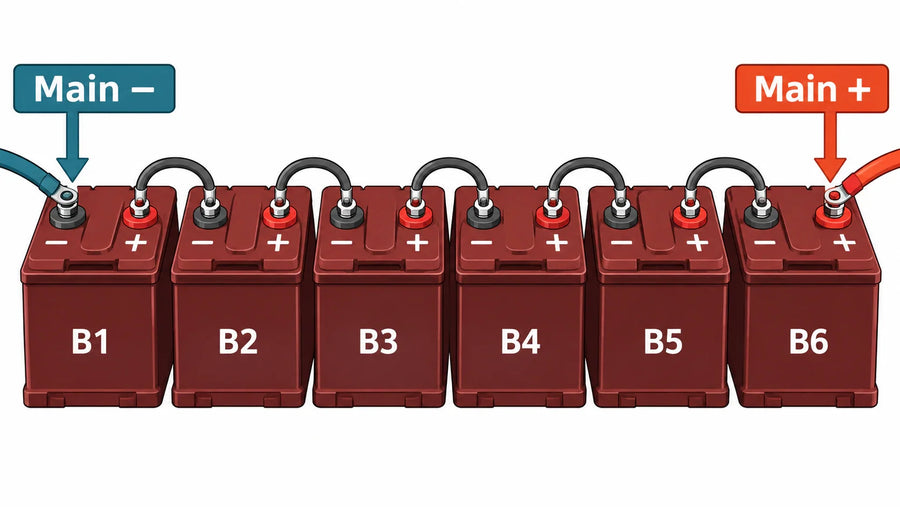
1. Identify the fuse location and connected sources. Establish which battery banks and other energy sources can feed a fault through that point. The available fault current depends on the actual system and fuse location; the general power-fuse rule includes contributions from all connected energy sources.
2. Establish the prospective fault current at that point. Use applicable battery and system technical data or have a qualified system designer determine the available fault current. Do not infer it from amp-hours or a BMS current rating.
3. Compare the fuse ratings with the circuit. Choose a fuse with a suitable DC voltage rating and an interrupt rating no lower than the established prospective fault current at its location. If that fault-current value has not been established, the interrupting-capacity requirement cannot yet be determined.
FAQs
How is a fuse’s interrupt rating different from its amp rating?
The amp rating concerns the current the fuse can carry under specified operating conditions, while the interrupt rating is the fault current it can safely interrupt.
Can one interrupt rating be used for every LiFePO4 battery system?
No. The required interrupt rating depends on the prospective fault current available at the fuse's actual location, including contributions from connected energy sources. Select an exact fuse whose interrupt rating meets or exceeds that established value.
Do battery amp-hours or BMS current determine the required interrupt rating?
No. Battery capacity and the BMS continuous-current rating do not establish the fault current a fuse may need to interrupt. Use system-specific fault-current data or an evaluation of the installed circuit.