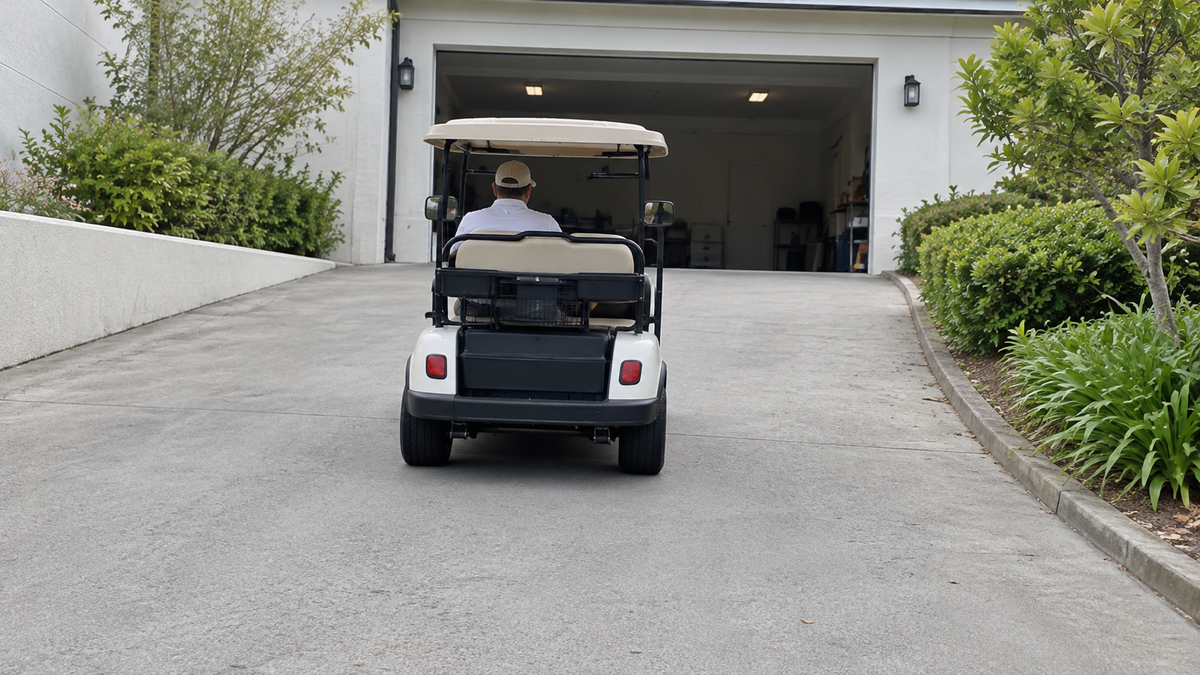

Repeated hill climbs can make a golf cart lose power because sustained high load creates heat faster than the motor and controller can release it. Stop on level ground and let the cart cool. If normal power returns and then fades again only after more climbing, treat that pattern as a clue for further inspection of heat-related causes. If the cart is weak on the first climb while still cold, check the battery and electrical connections as well. Do not keep forcing a cart that smells burnt, shows melted insulation, or repeatedly cuts out.
Why the power loss appears after several climbs

A motor needs more torque to move the cart uphill. Producing that torque requires more electrical current, so the motor, controller, cables, and connections all run hotter than they do on level ground. Starting another climb before the system sheds the previous climb's heat lets the temperature keep rising.
As heat accumulates, the cart may accelerate normally at first but become slower on each later climb. A hot motor can operate less effectively, and high motor heat can eventually cause damage.
The pattern becomes more likely when the cart carries extra passengers or cargo, uses larger tires, climbs at full throttle, or has dragging brakes. Hot weather also leaves less room for the drive system to shed heat. These conditions do not prove that the motor is defective; they show that the same hill is placing a heavier or longer-lasting load on the system.
Use the cooling pattern to identify heat-related power loss

Start with the cart fully cooled and adequately charged. On the same hill and with the same load, compare the first climb with later climbs rather than changing several conditions at once. If the cart is initially normal but loses power after repeated climbs and recovers after cooling, that pattern is consistent with heat-related power loss, but it does not identify a specific hot component. If the cart is weak on the first cold climb, consider the battery and connections as alternate areas for inspection.
Stop the comparison if power drops sharply, an electrical smell appears, or the cart cuts out. Park safely on level ground, switch it off, and let it cool; do not touch the motor, controller, cables, or terminals to judge their temperature. Reduce the load or stop repeating the climb if the fade appears sooner with passengers, cargo, or higher ambient heat, because those conditions change the heat and load on the system.
If a verified battery limitation is part of the cold-climb diagnosis, the Vipboss 48V 150Ah lithium golf cart battery kit is a 51.2V, 150Ah LiFePO4 pack with 7.68kWh of energy and an LCD monitor with Bluetooth status monitoring. The monitoring features can help observe battery status during a comparison, but they do not measure motor temperature or establish compatibility with a particular cart. Before considering the kit, confirm the cart's voltage, controller demand, charger and connector requirements, and available battery space. It should be considered only for a confirmed battery-related limitation, not as a conclusion that repeated motor or controller heat has been resolved.