
For most long-term off-grid and backup systems built around lithium batteries, rigid solar panels are the default workhorse, while flexible panels shine when weight, shape, or portability are your hard limits.
Picture this: the lights in your cabin or RV dim after sunset even though the lithium battery bank is brand new, and you start wondering if the real bottleneck is on the roof. After watching many systems struggle or thrive based on panel choice alone, the difference in daily runtime, generator hours, and long-term reliability is enormous. This guide walks you through how flexible and rigid solar panels actually behave over years of use so you can build a lithium-powered system that just works.
What Your Lithium Batteries Need from Solar Panels
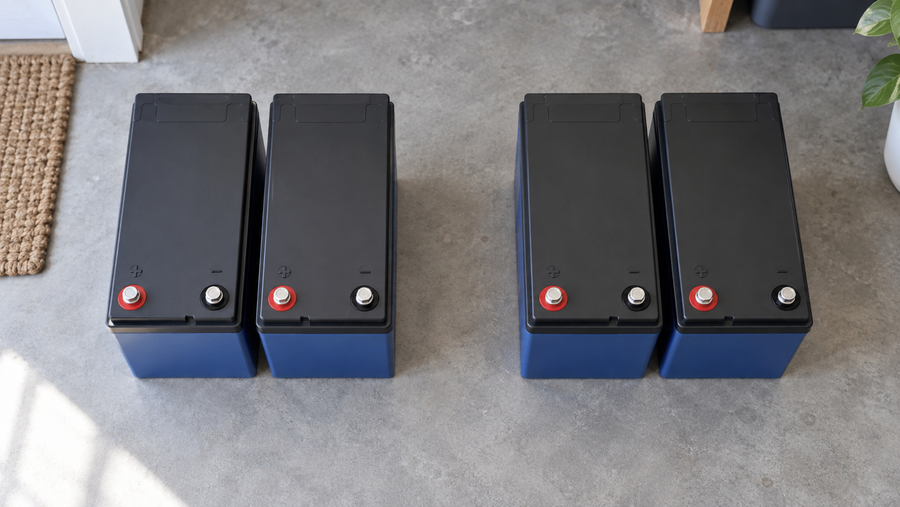
Lithium batteries built for solar storage commonly deliver about 10–15 years of service and thousands of charge cycles, far outliving typical lead-acid banks. Many off-grid setups lean on lithium iron phosphate (LiFePO₄) batteries that can tolerate deep discharges while staying stable and safe, making them ideal for cabins, RVs, and remote homes that need dependable nighttime power rather than constant maintenance or frequent replacements.
The way lithium batteries handle energy makes panel choice even more critical. Lithium solar batteries often reach round-trip efficiencies around 90–95%, and high-quality LiFePO₄ can exceed 95% in real systems. On top of that, lithium chemistries typically allow 80–100% usable capacity per cycle, instead of the roughly half-capacity limit that keeps lead-acid alive. In plain terms, almost every watt-hour your panels collect can be stored and used, so any chronic underproduction on the roof shows up quickly as low state-of-charge, short runtimes, and more generator or grid use.

Modern solar-plus-storage systems tie panels, batteries, charge controllers, and inverters into one coordinated setup, often via hybrid inverters and smart charge control. When panels are properly sized and paired with lithium storage, homeowners can store excess solar during the day and cover evening or outage loads with minimal waste. Energy agencies and industry groups describe solar-plus-storage as a cornerstone of future grids, but on the ground it all comes down to one simple question: can your panels reliably keep your lithium bank full?
Flexible Solar Panels: Advantages, Limits, and Best Pairings with Lithium
Flexible solar panels use thin, pliable substrates that can bend and conform to curved or irregular surfaces, unlike glass-and-frame panels. They are dramatically lighter, often installed with adhesive or low-profile brackets instead of heavy racking, and can turn odd spaces like RV roofs, boat decks, or gently curved metal sheds into useful solar real estate. This lower structural load is a major advantage on older roofs and lightweight structures where conventional panels might require expensive reinforcement.
In practical off-grid life, flexible panels shine wherever the roof or surface is the limiting factor rather than the battery bank. For RVs, van builds, and camping setups, flexible modules provide a dedicated onboard power source without adding much weight, and their portability means they can be carried in a backpack or laid out on the ground when parked. Real-world examples in outdoor use show flexible panels keeping phones, lights, cameras, and navigation gear charged while enabling off-grid trips far away from hookups.
On performance, flexible panels do involve tradeoffs. Compared with conventional silicon rigid panels, flexible modules usually trade a small drop in efficiency for big gains in flexibility and lower weight. Early thin-film products often delivered significantly lower conversion efficiencies than framed crystalline modules, though recent advances in cell materials and encapsulation have pushed top-tier flexible modules into the same general efficiency range as many mainstream rigid panels. The bottom line is that you may need more surface area to hit a given wattage with flexible panels, but when curved or weight-limited surfaces are your only option, that trade is often worth it.
Durability is improving but remains uneven across the flexible market. Some manufacturers build flexible panels with aerospace-grade polymers, protective glass layers, and self-healing coatings and promote lifetimes above 25 years, rivaling many rigid panels. Other analyses still caution that many flexible modules offer lower power output, reduced longevity, and more cost–benefit challenges than standard glass-and-frame arrays. In practice, that means flexible panels can absolutely be long-term partners for lithium, but they demand more careful product selection and realistic expectations about wear, particularly in high-UV, high-vibration environments.

For lithium-powered systems, the sweet spot for flexible solar is clear: mobile rigs, boats, tents, or structurally delicate roofs where rigid panels simply cannot go. A well-built flexible array feeding a compact LiFePO₄ bank can turn a generator-heavy RV or a diesel-reliant work trailer into a far quieter, cleaner setup, especially when the system is designed around realistic daily energy use rather than nameplate wattage alone.
Rigid Solar Panels: The Workhorse for Stationary Arrays
Traditional rigid panels are glass-encapsulated crystalline modules with aluminum frames and well-proven mounting hardware. Modern monocrystalline rigid panels typically reach about 22–27% efficiency, and they remain the most efficient option when roof or ground area is limited. In fixed arrays, that higher efficiency per square foot directly translates into more daily energy sent down to the charge controller and into the lithium bank.
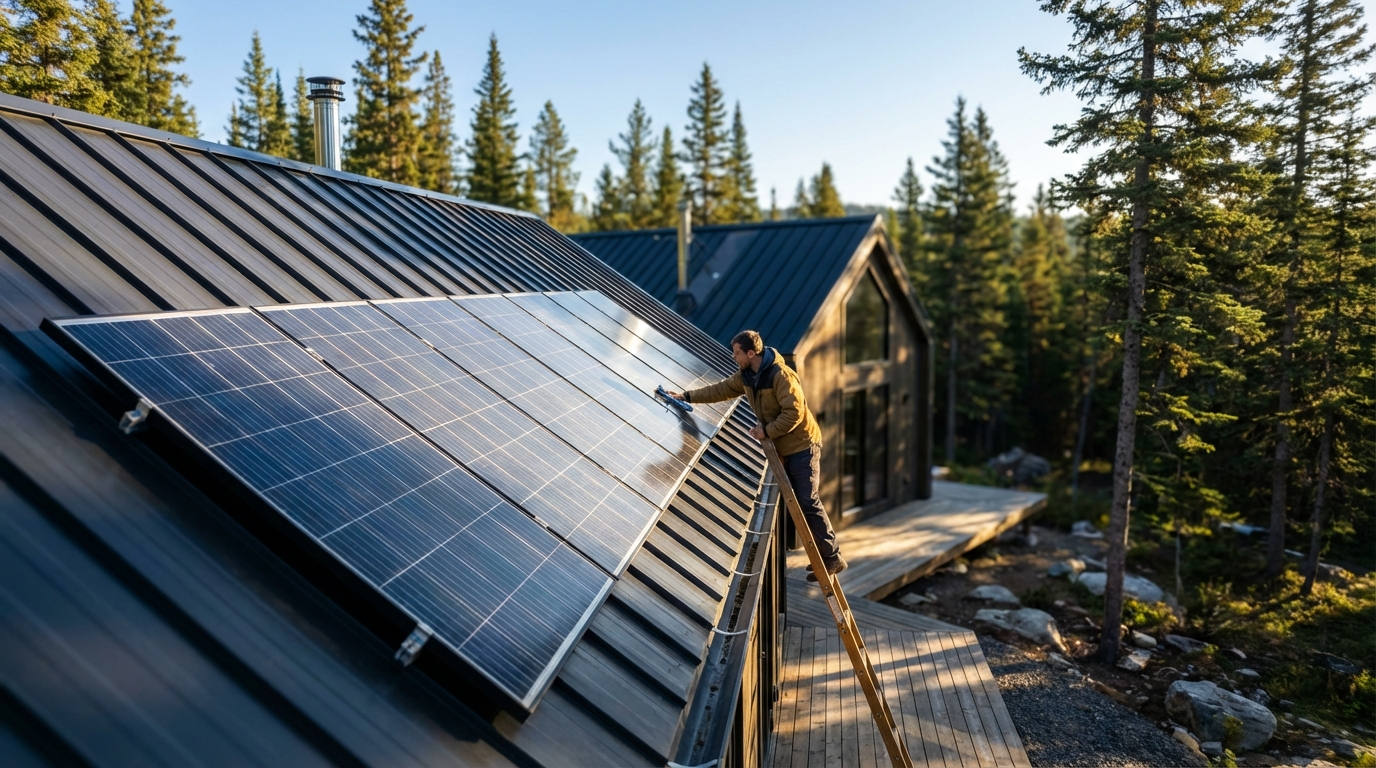
These panels are heavier and require proper racking and attachment, but that mass is part of what makes them robust against wind, snow, and decades of weather. High-efficiency monocrystalline modules are widely viewed as the best choice where maximum output per unit area matters, such as small roofs, tight urban spaces, or compact off-grid cabins. Once installed, a rigid array usually needs only occasional cleaning and inspection, aligning well with the low-maintenance nature of lithium storage.
For long-term off-grid homes, farms, or commercial buildings that already have solid roofs or ground space, pairing rigid panels with lithium storage is often the most straightforward path to energy independence. Off-grid specialists point out that lithium batteries in these systems commonly last 10–15 years, so investing in a robust rigid array that can match that time frame is usually the most cost-effective move.
Flexible vs. Rigid: Head-to-Head for Lithium Systems
When deciding how to keep your lithium batteries fed for the long haul, the question is not “Which panel is best?” but “Which panel is best for this roof, this lifestyle, and this battery bank?” The comparison below pulls together the practical differences that matter most for lithium-powered systems.
Aspect |
Flexible panels |
Rigid panels |
Impact on lithium batteries |
Weight and mounting |
Lightweight, bond directly to surfaces, and reduce structural load on older or delicate roofs; excellent on RVs, boats, and curved roofs. |
Heavier glass-and-frame modules requiring rails or racks and solid attachment points; best on strong roofs or ground mounts. |
Flexible panels make lithium practical where structure is the bottleneck; rigid panels deliver maximum harvest where structure is robust. |
Efficiency per square foot |
Typically slightly lower efficiency than conventional rigid panels, though high-end models are closing the gap. |
Higher efficiency and more watts per square foot, with many modules in the 22–27% range. |
Lower efficiency means you may need more surface area or accept slower charging; higher efficiency helps fully recharge lithium banks on space-limited roofs. |
Quality products using advanced polymers and coatings can last decades, but cheaper or early designs may wear faster and lose output sooner. |
Long track record as the standard for permanent rooftop and ground-mounted arrays with stable performance over many years when sourced from reputable brands. |
For a 10–15 year lithium battery life, rigid arrays are the safer default; flexible works if you choose higher-grade products and accept more frequent performance checks. |
|
Best use cases |
Mobile setups, curved or lightweight roofs, temporary structures, and stealthy or low-profile installs; strong fit for RVs, vans, boats, tents, and remote expeditions supported by portable flexible panels. |
Fixed homes, cabins, farms, and commercial buildings with sufficient structural strength and where maximizing production per square foot matters most. |
Flexible lets you build a lithium system where rigid would be impractical; rigid maximizes the return on your lithium investment where you can install it. |
Cost and ROI |
Panel cost per watt can be higher, but lower upfront installation and structural costs often offset that in projects with weight or shape constraints. |
Panel cost per watt is usually lower for mainstream modules; mounting hardware adds cost but is standardized and scalable. |
If structure and mounting are easy, rigid usually wins on lifetime cost; if structure is difficult or mobile, flexible can be the only way to realize the value of your lithium bank. |
Choosing Your Long-Term Partner: Scenarios That Work
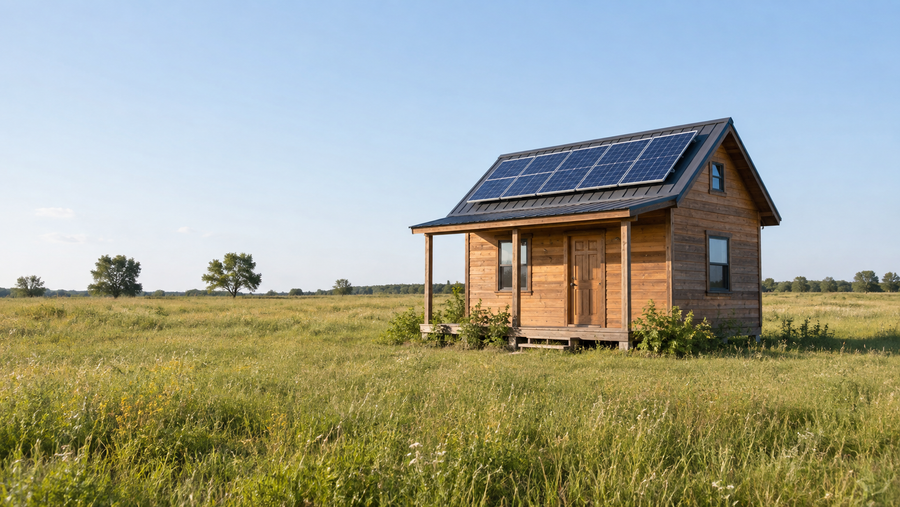
For a stationary off-grid home, cabin, or farm with a solid roof, rigid panels are usually the better long-term partner for lithium batteries. A typical LiFePO₄ bank that lasts 10–15 years with thousands of cycles rewards an array that can run at high output for the same span, and high-efficiency rigid modules make it easier to hit daily energy targets with less roof area. In these systems, the priority is to size the rigid array to meet winter loads and recharge the lithium batteries fully on most days, reducing generator or grid dependence.
For mobile or weight-limited setups, flexible panels often unlock lithium’s full potential. RV and van owners use lightweight, roof-mounted flexible panels to stay off-grid without constant hookups, and homeowners with older roofs or unconventional structures use flexible sheets where rigid racks would be too heavy or intrusive. When the structure is fragile or curved, the choice is not between flexible and rigid; it is between flexible solar plus lithium or no meaningful solar at all.
Hybrid approaches can also make sense. A small business might mount rigid panels on the main warehouse roof while adding flexible panels on curved awnings or lightweight extensions, all feeding a shared lithium storage system. Industrial sites already deploy flexible panels on irregular surfaces and machinery to power equipment and reduce diesel use, using them as a complement to rigid arrays rather than a replacement.
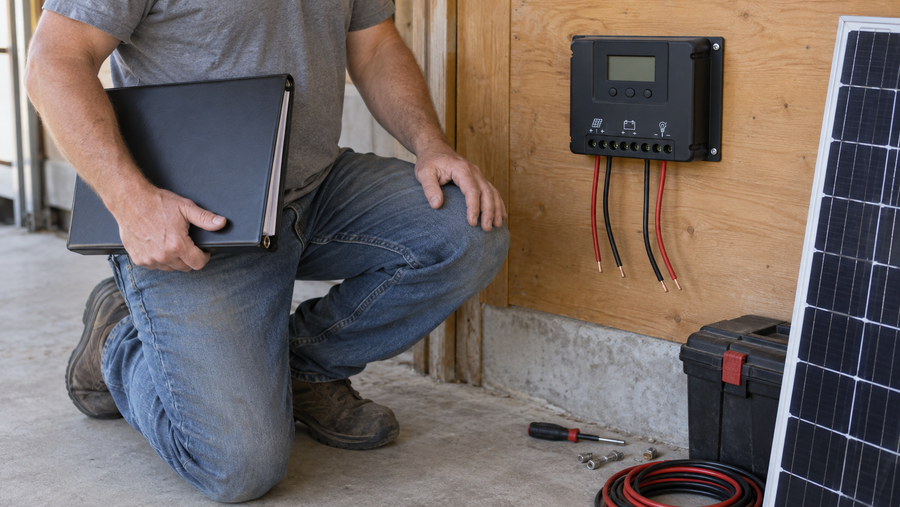
Whatever you choose, the system should be sized around how much energy you actually use, not just panel labels. Practical integration guides recommend starting from daily consumption in kilowatt-hours, sizing the lithium bank for two to three days of autonomy, and setting the solar array at roughly 30% above average daily use to cover losses and cloudy weather. Guidance on solar panel and battery integration emphasizes that panel wattage, battery capacity, and charge control must work together. On top of that, research into realistic limits on panel efficiency shows that today’s 22–25% panels are already close to physical ceilings; focusing on total array size, orientation, and battery sizing will improve performance far more than waiting for miraculous 90% panels.
Lithium batteries with high round-trip efficiency and deep usable capacity make every extra watt from your panels meaningful. That is why many modern storage products, rack-mount LiFePO₄ systems to all-in-one home batteries, lean on modular, scalable designs: you can add more panels or more lithium modules as your needs grow instead of ripping everything out.
FAQ
Can flexible solar panels really last as long as rigid ones?
Some flexible panels are built with aerospace-grade polymers, protective layers, and advanced coatings that target multi-decade lifespans, and those products can be reasonable long-term partners for lithium batteries. At the same time, other analyses still flag reduced longevity and durability in many flexible modules compared with standard glass-and-frame panels. The safest approach is to treat flexible panels as a premium component: choose higher-grade models from reputable brands, avoid permanent adhesion on very hot surfaces when possible, and plan for more frequent performance checks than you would with a rigid array.
Should you upgrade your panels when you upgrade to lithium batteries?
If your existing array is undersized or aging, pairing a new lithium bank with a stronger panel setup is usually the best way to unlock lithium’s benefits. Lithium batteries’ high efficiency and deep usable capacity let you turn extra solar production into real, usable runtime rather than heat and wasted potential. For many homeowners, integration resources on solar-plus-battery systems suggest that upgrading both panels and storage together delivers the biggest jump in resilience and energy independence.
Closing: Build the System Your Batteries Deserve
If the goal is a lithium-powered system that runs smoothly for a decade or more, rigid panels are usually your long-haul partner whenever roof strength and space allow, while flexible panels are the precision tool for roofs and rigs that rigid modules simply cannot touch. Match the panel type to your structure and lifestyle, size the array to keep your lithium bank comfortably charged, and you turn your power system from a fragile upgrade into a dependable asset.