Compare Group 31 lithium batteries in two stages. First apply the pass/fail requirements: physical fit, system voltage, charging compatibility, and adequate continuous and surge current. Only after a battery passes those checks should you compare capacity, monitoring, temperature features, weight, warranty, and price.
Match the battery to the installation space

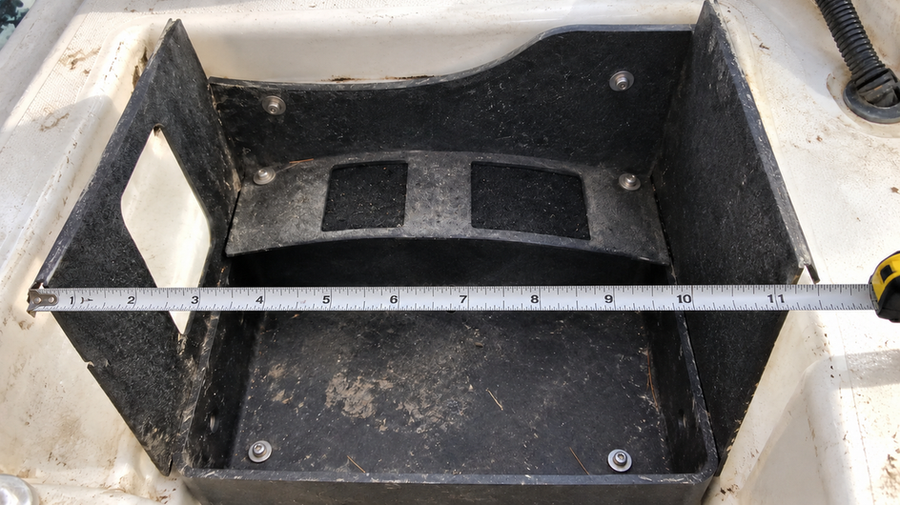
Group 31 identifies a physical battery format, but it does not guarantee identical dimensions or terminal placement. Compare the full installed envelope: case length, width, height, terminal position, cable reach, clearance, and hold-down hardware. Leave room for the cables and for the battery to remain secure during movement.
A battery can fit the tray and still fail the installation check. For example, a terminal on the opposite side may require a cable bend that is too tight, while a taller case may interfere with a cover. Measure the replacement space and compare it with the complete product dimensions rather than relying on the group number.
Record these measurements for every candidate:
| Physical check | What to record |
|---|---|
| Battery case | Length, width, height, and any protruding terminals |
| Tray or compartment | Clear internal dimensions and access opening |
| Terminals | Positive/negative position, fastener size, and top or side access |
| Cables | Reach, bend clearance, lug orientation, and strain |
| Restraint | Hold-down type and whether it secures the actual case |
Compare electrical requirements, not just amp-hours
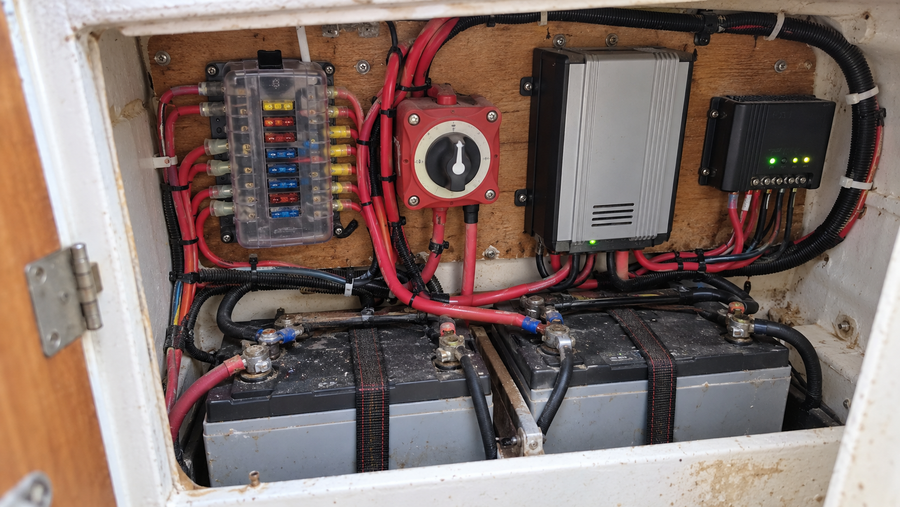
Confirm the system voltage before comparing capacity. A 12.8V LiFePO4 battery belongs in a system designed for that voltage and for the charging profile specified for that battery chemistry. Do not assume that an old lead-acid charger, converter, alternator, inverter, or monitor is automatically compatible.
Next, estimate the energy your loads need. A transparent starting calculation is:
energy needed in watt-hours = load in watts x operating hours
Use the loads that will run at the same time and the longest normal operating period. Then compare that result with the battery's rated energy, while allowing for conversion losses and the reserve your application requires. Rated energy is not the same as guaranteed runtime in every installation.
Current demand is a separate check. A battery with enough amp-hours may still be unsuitable if the inverter, motor, winch, or other load demands more current than the battery and its battery management system can provide. Check the manufacturer's continuous and peak current limits for the exact model.
Do not rank candidates by BMS amperage until you know exactly what the published figure means. Compare continuous discharge, permitted peak current and duration, low-voltage behavior, terminal limits, and any bank-level restrictions using the same definitions for every battery.
Check charging, temperature, and monitoring features
A lithium replacement is a system decision. Confirm that the charging equipment follows the battery manufacturer's required voltage and current settings. Use the battery's documentation to check the specified parameters and match them to the charger; lithium-ion charging guidance likewise emphasizes correct charger settings for the battery pack.
Cold conditions require a specific check. A battery may include low-temperature charge protection, but that feature does not prove that every charging source or installation condition is suitable. Confirm the product's charge-temperature limits and what the protection does when the limit is reached.
Use a pass/fail comparison before ranking features
Create one row per candidate and do not allow a high score in a nice-to-have category to offset a failed system requirement.
| Criterion | Pass only when… | Priority |
|---|---|---|
| Purpose | The battery is approved for the intended house, motor, backup, or other duty | Required |
| Fit | Case, terminals, cables, and restraint all fit without strain or interference | Required |
| Voltage | Nominal voltage and proposed bank configuration match the equipment | Required |
| Charging | Every charging source can follow the battery's requirements | Required |
| Output | Continuous and startup loads remain within published limits | Required |
| Temperature | Charging and discharging conditions stay within allowed ranges | Required |
| Energy | Rated and usable energy meet the runtime target with reserve | Required |
| Monitoring | Bluetooth, display, or external shunt provides the visibility you want | Preference |
| Expansion | The permitted series/parallel configuration supports the future plan | Preference |
| Ownership | Warranty terms, documentation, service, weight, and price meet your needs | Preference |
This order prevents a common comparison error: choosing the battery with the most amp-hours or app features before confirming that the charger and high-current loads are compatible.
Apply the worksheet to the Vipboss 12V 105Ah
The Vipboss 12V 105Ah Bluetooth LiFePO4 battery provides concrete values for the worksheet: a 12.8V, 105Ah, 1,344Wh battery in a Group 31-size case measuring 12.95 × 6.77 × 8.42 inches, weighing approximately 24.2 pounds, with M8 terminal bolts. It also includes a built-in 100A smart BMS, Bluetooth monitoring, low-temperature charge protection, an IP65-rated enclosure, and support for configurations up to 4S4P.
Those specifications do not make it the automatic winner. Measure the tray and cable arrangement, verify what the intended load demands continuously and at startup, and match every charger to the battery's published limits. If it passes the required rows, then Bluetooth status, low-temperature protection, weight, expansion options, warranty, and price can decide how it ranks against the other candidates.
The best Group 31 replacement is therefore not the battery with the longest feature list. It is the least expensive suitable candidate that passes every required check and offers the preferences you actually value.