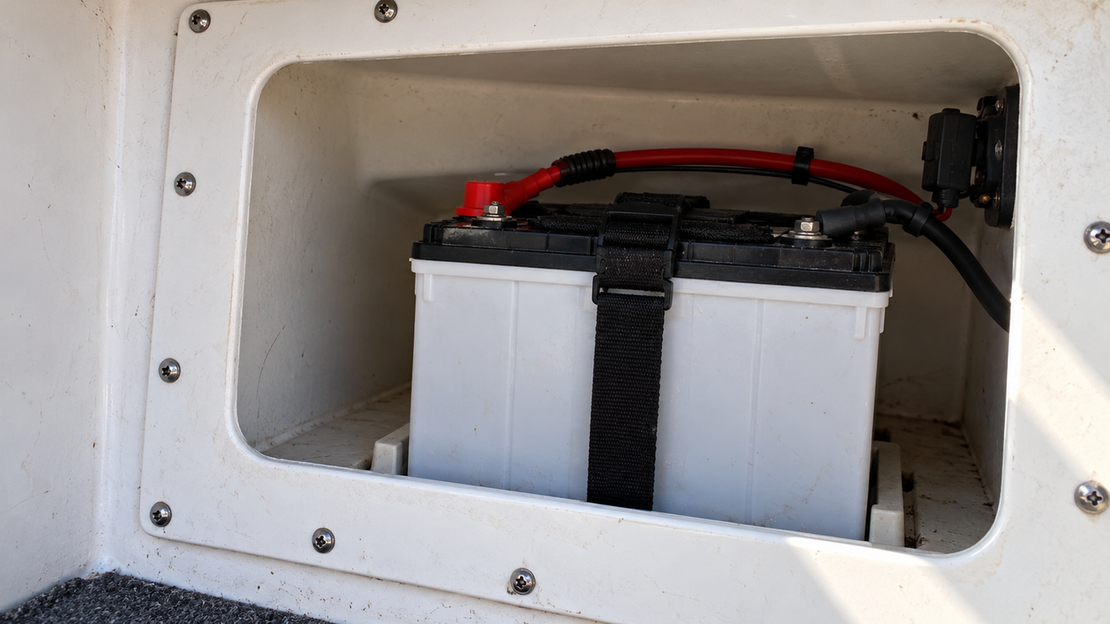

Choose a location where the battery can be firmly restrained, is less exposed to water and impact, and remains accessible for its connections. Start with the boat's existing battery area if it meets those conditions; if it does not, choose another protected space with a solid mounting surface rather than forcing the battery into a poor fit.
Start with the boat's protected battery area
Look first at the existing battery space. A protected compartment or locker can be a sensible candidate when the battery fits, the mounting surface is sound, and the space does not put it in the path of likely water, gear, or routine foot traffic. The name of a compartment does not make it suitable: judge the actual conditions where the battery will sit.
Avoid a location where the battery could be struck by stored equipment, routinely splashed or immersed, or left loose as the boat moves. If the usual battery space has one of those problems, compare other protected spaces instead. Do not choose a more exposed location simply because it is easier to reach.
Check the space and mounting surface

Measure the available space and compare it with the battery's full dimensions, including room for its terminals and cables. The Vipboss 12V 105Ah Bluetooth LiFePO4 battery measures 12.95 by 6.77 by 8.42 inches and weighs about 24.2 pounds. Its compact Group 31 footprint gives you a clear basis for planning the mounting base, hold-down, terminal access, and cable clearance in a protected location.
The battery should stay in place rather than slide, tip, or shift when the boat moves. Choose a mounting arrangement that restrains it on the actual surface and follows the battery maker's instructions. If the surface flexes, is damaged, or cannot hold a secure restraint, pick another location or have the mounting assessed by a qualified marine installer.
Keep the battery accessible enough to reach its terminals and inspect its installation without first removing unrelated equipment. A spot that looks protected but buries the battery behind stored gear makes routine access harder and can complicate work on its connections.
Its IP65 enclosure, Bluetooth monitoring, built-in 100A smart BMS, and low weight make the Vipboss 12V 105Ah a practical marine house-bank choice for a secure, protected mounting area. Once you have a location that fits the battery, offers a sound surface, and avoids the main sources of exposure or impact in that part of the boat, use the battery's installation instructions to determine the mounting details.
FAQs
Where is the best place to mount a lithium battery on a boat?
Use the boat’s existing battery area when it provides a sound mounting surface, protects the battery from likely water exposure and impacts, and leaves the connections accessible. If that area does not meet those conditions, choose another protected space rather than forcing the battery into a poor fit.
What should you check before mounting a marine lithium battery?
Measure the available space against the battery’s full dimensions, including clearance for its terminals and cables, and confirm that the surface can support a secure restraint. The battery should not slide, tip, or shift as the boat moves, and you should be able to inspect its installation without removing unrelated equipment.
How much space does the Vipboss 12V 105Ah battery need?
The Vipboss 12V 105Ah battery measures 12.95 by 6.77 by 8.42 inches, so the mounting area must accommodate those dimensions plus room for its terminals and cables. The available space must also provide a solid surface, secure restraint, protection from likely water exposure and impacts, and access for connections and inspection.