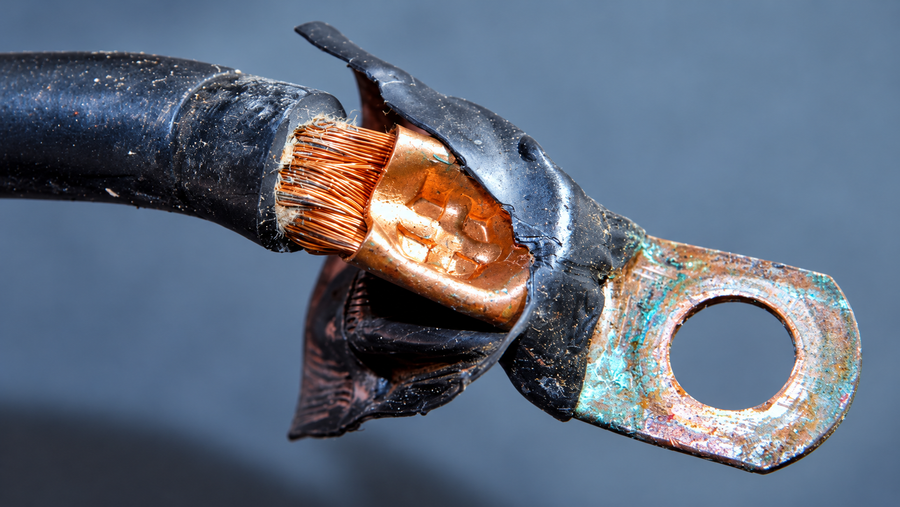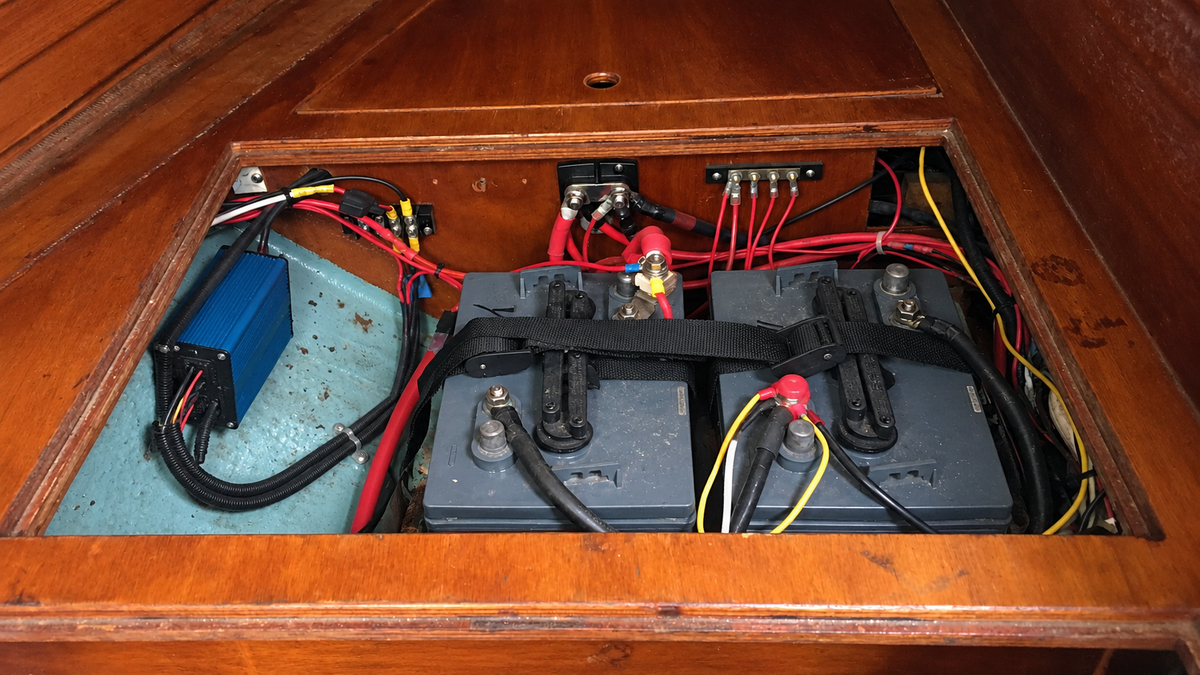

If your boat's house bank will not stay charged, first note whether it never reaches a full charge, loses charge while the boat sits, or runs down while equipment is on. Those patterns point to a charging-source problem, an off-state electrical draw, or a load-and-capacity mismatch; check the matching part of the system before replacing the battery. If you find heat, damaged wiring, or a connection you cannot safely isolate, stop and have a marine electrician inspect it.
When the house bank never seems to recharge
If charge stays low after shore power or an engine run, start with the charging path rather than assuming the battery is worn out. Confirm that the charger is powered, its selected bank matches the house bank, and its leads and battery connections are secure. With the engine charging, check whether the bank's indicated charge changes; if it does not, the alternator, regulator, wiring, isolation equipment, or a setting may need attention.
A short engine run does not by itself prove the bank has recovered. If the boat's charging source cannot replace the energy used by its equipment during that period, the bank can continue to fall behind. Compare what the charger or engine system is delivering with the battery maker's charging instructions. Have a marine electrician test the charging circuit if the source is on but the house bank still does not respond.
When the bank loses charge while the boat sits

If the bank charges but is low after the boat has been idle, look for equipment that remains powered: for example, a bilge-pump circuit, monitor, stereo memory, or accessory connected directly to the battery. Check which circuits are meant to remain on, then isolate them one at a time using the boat's normal switches. If the drain stops when a circuit is off, that circuit is where to investigate next; do not disable equipment needed to protect the boat.
If you cannot identify the circuit safely, a marine electrician can measure the draw and trace it. Do not disconnect or bypass a bilge pump or other safety-related circuit just to see whether the battery lasts longer.
When the bank runs down while equipment is on
If the house bank stays charged at rest but falls during use, the connected loads may be using energy faster than the charging source replaces it, or the bank may not have enough usable capacity for that pattern of use. Note which equipment is running and when the charge begins to fall. If the problem appears only with several high-use devices operating together, reduce or stagger nonessential loads and see whether the pattern changes. If it still falls quickly with ordinary use, have the battery and system capacity checked before buying a larger bank.
A battery that reads charged does not, by that fact alone, establish that it can support the boat's loads. Ask a qualified marine service provider to test the battery if the charging source and connections appear sound but runtime remains unexpectedly short.
When a replacement battery is actually relevant
Consider replacement only after the charging path, unintended draws, and demands from the boat's equipment have been considered. A new battery will not fix a charger that is not reaching the house bank or an accessory that keeps drawing power while the boat sits.
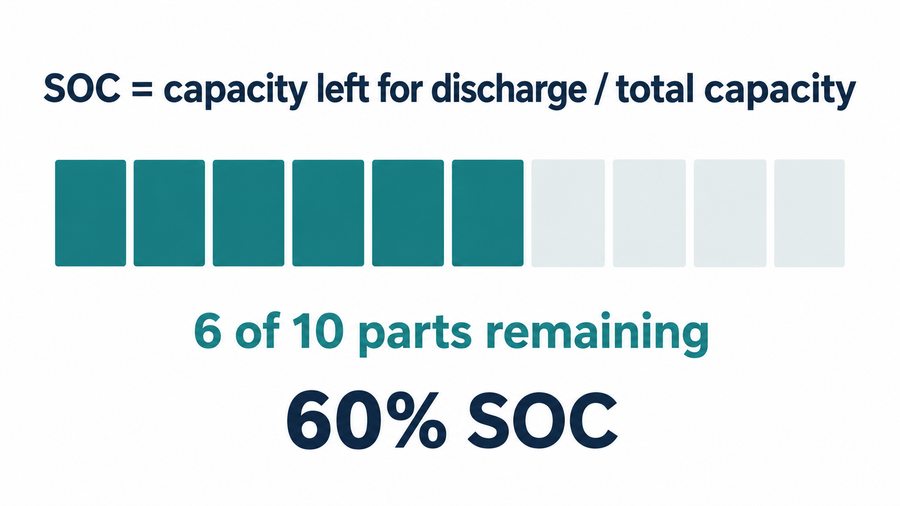
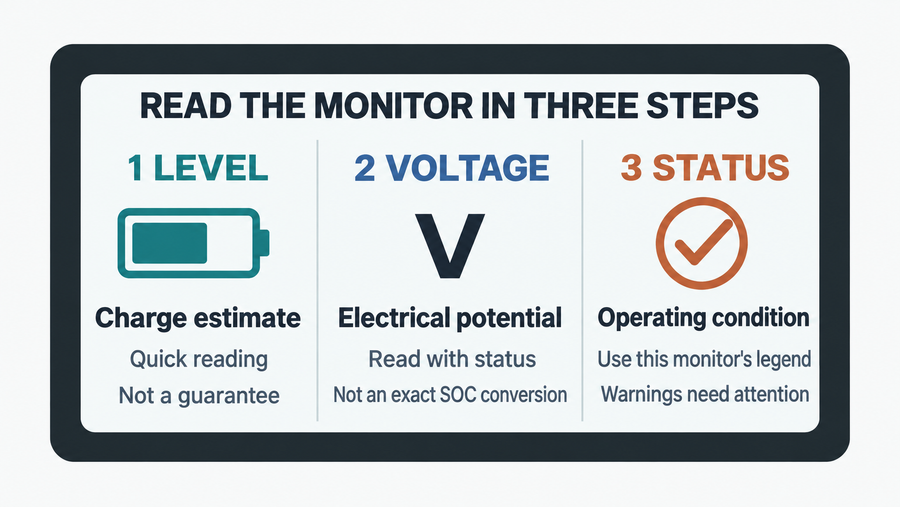
The Vipboss 12V 105Ah Bluetooth LiFePO4 battery gives a 12V house bank 1,344Wh of stored energy, a built-in 100A smart BMS, and Bluetooth monitoring. The app makes it easier to follow state of charge and recognize whether the bank is recovering after shore power or an engine run. Low-temperature protection automatically pauses charging below 32°F (0°C) and resumes it at 41°F (5°C), so cold-weather charging status is easier to understand at a glance.
If the house bank is still not staying charged after the matching cause is addressed, have the battery and charging circuit tested together. That can distinguish a battery problem from a fault that would also affect its replacement.
FAQs
Why does my boat house battery stay low after shore power or an engine run?
The charging path may not be reaching the house bank because the charger is unpowered, set to another bank, poorly connected, or affected by a fault in the alternator, regulator, wiring, or isolation equipment. Confirm the charger and bank selection, inspect accessible connections, and have a marine electrician test the charging circuit if the bank's indicated charge does not change.
Why does my boat house battery lose charge while the boat is sitting?
Equipment that remains powered can draw from the house bank while the boat is idle, including a bilge-pump circuit, monitor, stereo memory, or accessory connected directly to the battery. Check which circuits should remain on and isolate nonessential circuits one at a time, but do not disable safety-related equipment such as a bilge pump.
Why does my boat house battery run down while equipment is operating?
The connected loads may be using energy faster than the charging source replaces it, or the house bank may not have enough usable capacity for that pattern of use. Note which equipment is running, reduce or stagger nonessential loads, and have the battery and system capacity checked if the bank still falls quickly with ordinary use.