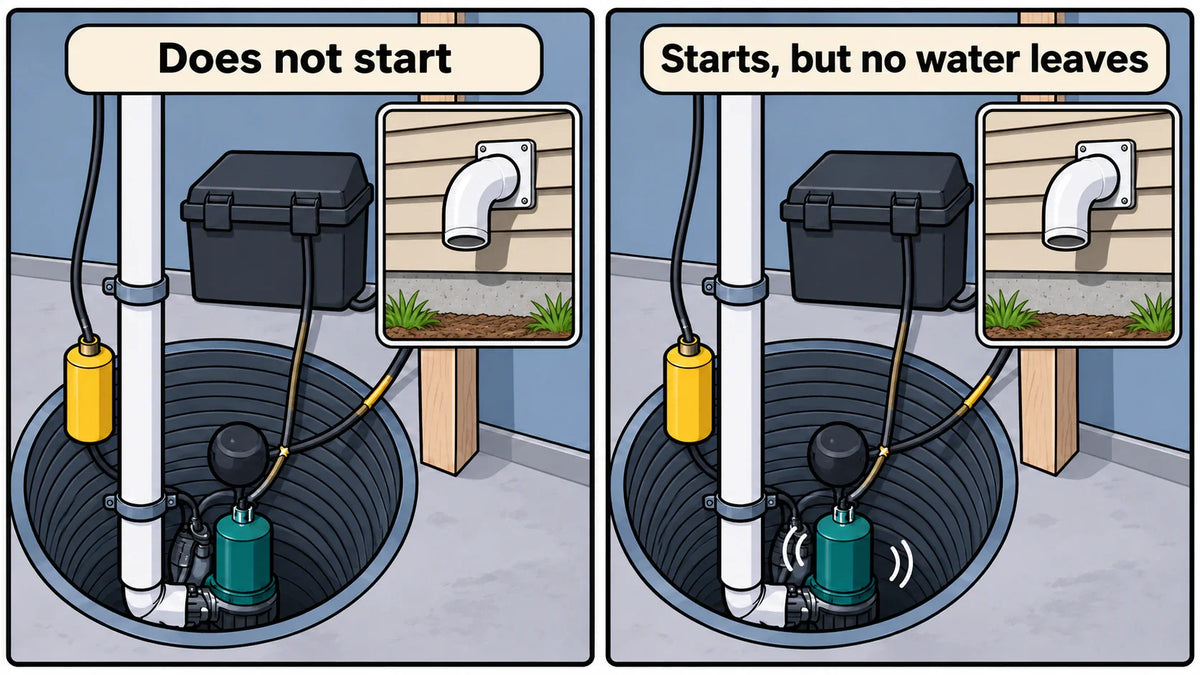

A battery backup sump pump that does not start points first to its power supply or activation controls; one that starts but does not move water points to the pump or discharge path. Begin by observing whether it activates, whether water exits the outlet, and whether the basin level changes. Those observations select a troubleshooting branch, but they do not identify a failed component by themselves. The specific next check depends on what your system's indicators and instructions permit.
If the pump does not start
Check the controller's status. Read its light, alarm, or message and compare it with the meanings in your system's instructions. A documented low-battery or power warning directs you to the system's permitted battery or charging check. A documented switch or control warning directs you to the permitted activation check. If the indication does not match a documented meaning, do not guess from its color or sound; use the next listed check or contact service.
If the system reports adequate power but the pump still does not activate, that reading narrows the problem away from an indicated low-power condition but does not prove the battery or power path is fault-free. Follow the system's permitted control check next. If that check is not described or its result is unclear, stop and arrange service rather than testing wiring or controls by trial and error.
For one documented system, possible no-start causes include loose or incorrect connections, dirty terminals, a low battery, and a blown 30-amp controller fuse. Its instructions associate these faults with specific checks and corrective actions; they are examples for that system, not universal components or permission to handle connections, terminals, or fuses on another pump. This illustrates why the check must match the installed equipment.
If the pump starts but water does not leave

Check for actual discharge. A sound or vibration alone does not show that water is moving. Observe the outlet during operation if you can do so safely without touching electrical parts or dismantling plumbing. If no water exits, the observation leaves both a pump problem and a blocked or otherwise impaired discharge path possible. Use the system's permitted checks for those parts; if the instructions do not identify an accessible check, contact service.
If water exits but the basin level does not fall, the pump is moving water, but the observation does not show whether the flow is sufficient or incoming water is replacing what leaves. Follow any system-specific checks for those conditions. If the level continues to rise or the instructions do not resolve the mismatch, seek service rather than assuming the backup is keeping up.
For one documented system, little or no delivery may involve incorrect or loose connections, a plugged weep hole, a blocked discharge pipe, or a malfunctioning check valve. The manual describes a check valve as allowing water out while preventing it from flowing back into the basin after the pump stops. These parts and causes are specific to that system; do not assume another design has them or dismantle the pump or plumbing to investigate.
When to get service

Contact the manufacturer or a qualified service provider when an indication has no documented meaning, the next check is not permitted or clear, or an allowed check does not explain the symptom. If the pump is not removing water and the basin level is rising, treat that unresolved condition as a reason to get help promptly rather than continuing with improvised tests.
If a permitted check identifies the battery as needing replacement, the sump-pump battery compatibility guide can help you compare the new battery with the installed charger and controller. The symptom alone does not establish that a battery swap will fix the pump.
FAQs
Does every battery backup sump pump use a 30-amp fuse or a weep hole?
No. Those are possible fault points for one documented system, not universal parts; use only checks that apply to your pump and are permitted by its instructions.