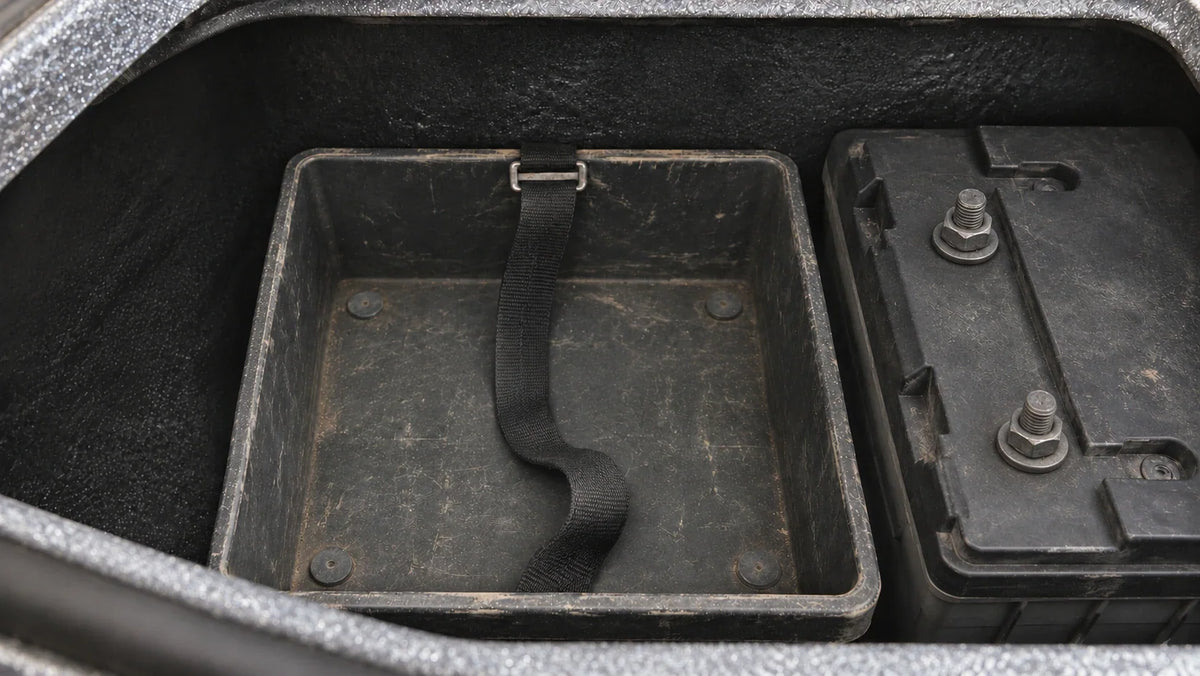

Before using a replacement that may be the wrong Group 24, 27, or 31 size, compare its actual dimensions, terminal arrangement and polarity, and hold-down features with the installation. A group label is a reference, not confirmation that a specific battery fits or meets the equipment’s requirements. Compare physical details with the applicable battery and equipment requirements, then check electrical and operating requirements separately. Proceed when the applicable documented requirements match; do not proceed when they conflict, and treat missing or unclear requirements as unresolved.
What the group size tells you
Group 24, 27, and 31 are standardized battery classifications with reference dimensions and terminal arrangements. Those references help compare batteries, but do not confirm that a particular lithium replacement fits an installation or meets its equipment’s requirements. BCI’s group-size information describes the classification, while its dimensional and terminal reference shows dimensions, terminal positions, polarity, and hold-down features used for comparison.
A different group number does not, by itself, establish whether the replacement is suitable. Compare the actual battery and installation details rather than relying on the number alone.
Check physical fit before use

-
Record the battery details. Note its actual length, width, and height; terminal locations and polarity; and hold-down features. Use details for the specific battery, not just its group-size reference.
-
Compare the battery with the installation. Measure the available space and compare it with the battery’s case dimensions, terminal arrangement, and hold-down features. For example, the Vipboss 12V 105Ah LiFePO4 battery is designated Group 31, measures 12.95 × 6.77 × 8.42 inches, and uses M8 terminal bolts; compare those dimensions and terminals with the available space and connections.
-
Apply the documented installation requirements. Compare the battery’s terminal arrangement and polarity, mounting and hold-down features, and connection requirements with the applicable battery and equipment documentation. Proceed with the physical installation only when those documented requirements match. Do not proceed if they conflict; if a requirement is missing or unclear, leave the installation unresolved until it is established.
Check electrical and system requirements separately
A physical fit does not establish electrical or system compatibility. Compare each applicable documented electrical and operating requirement for the battery with the corresponding equipment requirement. If they match, the requirements checked do not identify a conflict. If they conflict, do not use the installation. If a required value or condition is missing or unclear, compatibility remains unresolved; do not treat the group-size label or physical fit as proof that it matches.
FAQs
Does a Group 24, Group 27, or Group 31 label confirm that a lithium replacement will fit?
No. The group designation is a reference for dimensions and terminal arrangement, so compare the specific battery’s actual dimensions, terminal positions and polarity, and hold-down features with the installation.
What should you do if the battery’s documented requirements are missing or unclear?
Treat compatibility as unresolved and do not proceed until the missing or unclear requirement is established. A matching group-size label or physical fit does not resolve it.