
Confirm you have the right deep-cycle battery and verify it with simple voltage and load checks so your trolling motor can handle full-speed runs all day without surprises.
Your boat is in the driveway, rods are ready, and the nagging question is whether your trolling motor battery will still pull hard on that last full-speed run back to the ramp. Real-world testing and manufacturer data on trolling-motor systems show that the right deep-cycle battery, plus a quick pre-season check, can add hours of runtime and dramatically cut surprise shutdowns. This guide gives you a clear, practical way to size, test, and monitor your battery so you can run wide open on opener without worrying about limp-mode power or getting stranded.
Know What Kind of Battery You’re Really Running
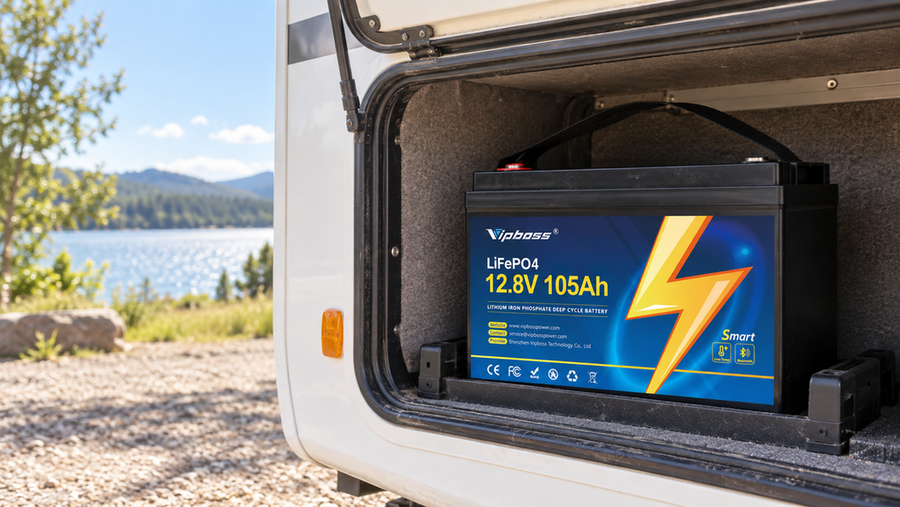
Before you worry about full-speed runs, confirm that your battery is actually designed for that job. Trolling motors need deep-cycle batteries that can deliver steady current for hours; starting batteries are built for brief, high-amp bursts to crank an outboard and then live near full charge. Guides from brands such as Dr Prepare and Power Queen are blunt about this: using a starting battery on a trolling motor is a recipe for short life and weak performance, especially at higher speeds.

Best practice is to dedicate one battery to starting the engine and a separate deep-cycle battery bank for the trolling motor and electronics. Deep-cycle designs have thicker plates and chemistry tuned for repeated discharge and recharge, which is exactly what you do when you jump spot to spot throughout opener. JD Power and multiple marine battery manufacturers emphasize that this separation alone prevents countless mid-day failures and premature battery deaths.
Sizing for Full-Speed Spot Hops
Next, check whether your battery bank is big enough for the way you fish. Dr Prepare outlines a useful rule of thumb that matches motor thrust to system voltage and capacity. Many 30–45 lb thrust motors run on 12 volts with a single 12-volt 100 amp-hour deep-cycle battery. Motors in the 55–62 lb range may need one or two 100Ah 12-volt batteries. Motors in the 70–86 lb range usually step up to 24 volts with two 12-volt batteries in series, and 100–112 lb motors often require 36 volts with three 12-volt batteries in series. That voltage jump is not a luxury; it is how you deliver enough clean power for repeated full-speed runs without brutal voltage sag.
JD Power adds another key data point: a typical 55 lb thrust trolling motor wants roughly a 120Ah deep-cycle battery for comfortable runtime. If you are trying to power that same motor with a single tired 80Ah wet-cell that also cranks the outboard, you are under-gunned from the start. In practice, that means your “problem” at opener may not be mysterious at all—the bank is simply too small for how hard you drive the motor.
Lead-Acid vs LiFePO4 When You Run Hard
Once sizing is in the right ballpark, chemistry becomes the difference between “it will probably make it” and “it will absolutely handle anything opener throws at it.” Traditional flooded and AGM deep-cycle batteries are inexpensive but heavy and sensitive to deep discharge. Multiple sources, including Power Queen and Abyss Battery, peg their realistic life at roughly 300–500 cycles and about 2–5 years if you avoid repeatedly draining them below about half charge.
LiFePO4 marine batteries flip that script. Dr Prepare and Power Queen report roughly 3,000–5,000 or more cycles and up to around 10 years of service, while Powerurus testing shows that a 100Ah LiFePO4 effectively delivers nearly double the usable energy of a 100Ah lead-acid battery because you can safely use 80–100 percent of its capacity instead of nursing it around 50 percent. LiFePO4 also weighs roughly 50–70 percent less than equivalent lead-acid, which makes the bow ride higher and respond faster when you punch the throttle.
A simple opener example makes this real. If you currently run a 55 lb, 12-volt motor on a single 100Ah lead-acid deep-cycle, you can comfortably access only about half that rating before you start damaging the battery. Swap that same pack for a 100Ah LiFePO4 of the same voltage, and you have essentially doubled your usable amp-hours; Powerurus reports that 24-volt and 36-volt LiFePO4 trolling setups can deliver 30 percent or more additional runtime compared with traditional banks, even when powering electronics. In practical terms, that means more full-speed runs into the wind and less babying the dial to “save the battery.”
Here is a quick comparison focused specifically on full-speed trolling motor use.
Feature |
Lead-acid deep-cycle |
LiFePO4 marine deep-cycle |
Usable capacity from 100Ah |
Around 50Ah recommended to protect lifespan |
Roughly 80–100Ah usable without significant damage |
Cycle life |
About 300–500 cycles, 2–5 years typical |
Roughly 3,000–5,000+ cycles, up to around 10 years |
Voltage under heavy load |
Drops steadily as battery discharges |
Much more stable voltage across most of the discharge curve |
Weight (12V 100Ah example) |
Roughly 60–70 lb |
Around 22 lb |
Maintenance |
Water checks, corrosion cleanup, storage care |
Largely maintenance-free, internal battery management system |
If your opener plan includes long high-speed runs, a healthy, correctly sized lead-acid bank can do the job, but a properly sized LiFePO4 pack makes that level of use routine instead of borderline.
Pre-Opener Health Check: Tests That Predict Full-Speed Performance
Even the best-sized battery bank will disappoint if it is already weak. Before opener, treat your trolling motor battery the way a good captain treats an engine: inspect, test at rest, then test under load.
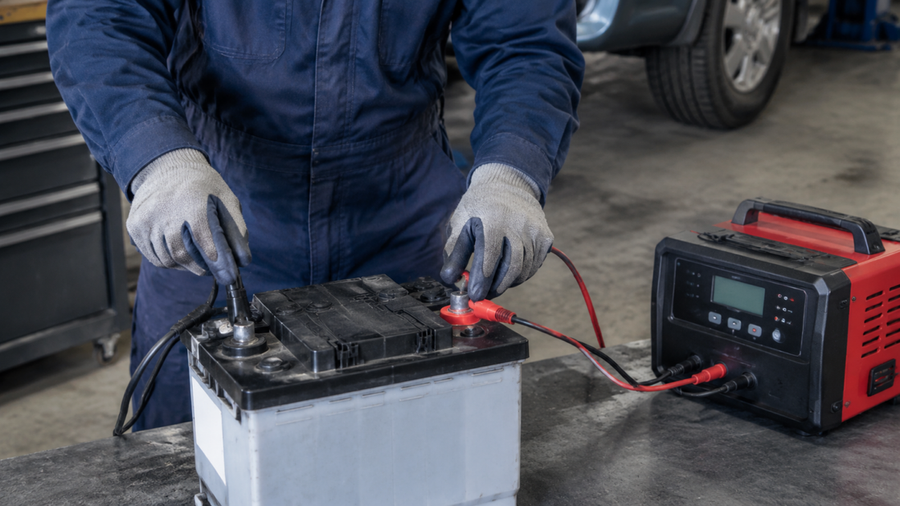
Start with a visual inspection and connection cleanup. Abyss Battery, Crown Battery, Newport Vessels, and Salt Strong all stress the same basics: look for bulging cases, cracks, or leaks on lead-acid batteries; clean off any white or green corrosion from posts and lugs; tighten connections; and coat terminals with a corrosion-resistant spray or dielectric grease. Many “weak battery” complaints vanish once voltage can actually reach the motor through clean, tight wiring.
Next, perform a proper open-circuit voltage test. Redodo, Vatrer, Abyss, and Crown all recommend a similar routine: fully charge the battery with a charger matched to its chemistry, disconnect all loads and chargers, let it rest a few hours so the surface charge bleeds off, then measure voltage with a multimeter. For a healthy 12-volt deep-cycle battery, multiple guides peg a full charge at roughly 12.6–12.8 volts at rest; readings around 12.3–12.4 volts suggest you are already down by roughly a quarter to a third, and anything down near 12.0 volts is substantially discharged. Redodo notes that 11.8 volts or less on a rested 12-volt battery is usually a sign that the battery is either deeply over-discharged or nearing failure.
If your rested voltage is low before you even leave the driveway, you already know that full-speed runs will be short. For flooded lead-acid batteries, Crown and Unbound Solar also recommend specific-gravity checks with a hydrometer if you suspect trouble; weak cells will show up as low readings in one or two compartments even when overall voltage looks acceptable.
Now move to load behavior, which is what really matters for full-speed runs. Auto parts stores usually apply a short, high-amp starting-load test that checks whether a battery can crank an engine for 10–15 seconds. WalleyeCentral users and JustAnswer experts point out that this does not tell you whether a deep-cycle trolling battery can deliver steady current for hours. To see that, you need a duration-style test.
One formal approach, shared on WalleyeCentral, is to apply a known load for several hours, then let the battery rest and compare the resulting voltage to a state-of-charge chart. For example, a 100Ah battery can be discharged at about 10 amps for eight hours (roughly 80Ah), then allowed to rest for 30–60 minutes; a resting voltage around 11.6 volts corresponds to about 80 percent depth of discharge. That kind of capacity test gives you a very clear picture of whether the battery can still deliver close to its rated amp-hours. Because repeatedly going beyond roughly 80 percent depth of discharge shortens life, this sort of deep test should be occasional, not weekly.

If you do not have a dedicated load bank, you can approximate real-world behavior by tying the boat securely at the dock, running the trolling motor at the highest setting you actually use for spot hops for a set period, and watching battery voltage with a good meter or monitor. Vatrer and Salt Strong both recommend watching how far voltage sags under load; a sharp, fast drop even from a “full” battery is a red flag for internal weakness or poor connections.
For flooded batteries that “test good” on a quick store analyzer yet die in an hour on the water, the combination of a real discharge test and rested voltage readings is often what finally reveals that the battery is finished, not the motor.
Plan Your Opener Around Realistic Runtime
Once you know your bank is healthy, the next question is simple: how long can you push full speed before you are gambling with your ride back? The answer is chemistry plus capacity.
As noted earlier, JD Power recommends roughly a 120Ah deep-cycle battery for a 55 lb thrust motor, and both JD Power and Power Queen caution against routinely draining lead-acid trolling batteries below about half charge if you want more than a few seasons from them. That means a “120Ah” lead-acid bank might really give you about 60Ah of usable energy for day-to-day fishing before you should recharge.
Contrast that with lithium iron phosphate. Powerurus reports that a 24-volt LiFePO4 pack on a 55 lb thrust trolling motor commonly delivers around 6–8 hours of runtime, while a 36-volt LiFePO4 setup can provide 10 or more hours, and field tests showed about 30 percent longer runtime per charge cycle than comparable traditional systems, even when powering accessories. Because LiFePO4 can safely use roughly 80–100 percent of its rated capacity, a 100Ah lithium pack at the same voltage effectively gives you close to twice the usable energy of a 100Ah lead-acid pack.
A practical opener scenario looks like this. Suppose last season you ran a 55 lb motor on a single 100Ah flooded deep-cycle. By mid-afternoon, after a series of long full-speed runs into the wind plus steady positioning on points, the motor felt noticeably weaker, and your voltmeter was already down near the low-12-volt range at rest. That is exactly what the lead-acid limits above predict: you are dipping well into the bottom half of the battery. Upgrading to a 100Ah LiFePO4 with a proper lithium charger not only cuts weight on the bow but also gives you roughly double the usable amp-hours and a flatter voltage curve, so those late-day runs feel like the first ones.
Whatever chemistry you choose, several sources—including JD Power, Abyss Battery, The Hull Truth forum consensus, and Unbound Solar—agree on a few runtime habits that directly support full-speed availability. Always fully recharge as soon as possible after each trip. Use a smart charger designed for your battery type, with charge rates around 10–25 percent of total amp-hours so the bank can reach full without cooking. Avoid habitually running lead-acid batteries below about 50 percent state of charge. Store batteries in a cool, dry place in the 50–80°F band when possible, and keep them either fully charged (lead-acid) or at moderate charge (around half full for many lithium packs) in the offseason.
If your opener day is planned as sun-up to sun-down with a lot of hard running, translate that into capacity. A modest lead-acid bank might be perfect for a four-hour casual morning. The same pattern plus wind, current, and long full-speed runs may justify either adding another deep-cycle in parallel or stepping up to a properly sized LiFePO4 system.
Real-Time Monitoring: Treat Your Battery Like a Fuel Tank
The best way to know whether you can afford one more full-speed jump to that last rock pile is to watch your “fuel gauge” for the battery in real time.
Tom Rowland’s Yellowfin 24 setup is a strong example. A 36-volt Lithium Pros trolling battery sends data over an NMEA 2000 network to a Lowrance display. By building a dedicated battery screen on the multifunction display and adding metrics like “Time Remaining” and “Battery Voltage,” the trolling bank behaves just like a fuel gauge. Rowland notes that on his system, a reading around 41.8 volts indicates a full 36-volt lithium bank, and because the battery’s electronics are doing the math, the “time remaining” field dynamically updates as current draw changes with wind, current, and speed. That is exactly what you want when deciding whether to run wide open to one more spot at sunset.

If you do not have a smart lithium battery feeding data to your display, a good shunt-based battery monitor is the next best thing. Experts on JustAnswer point to marine-grade monitors like Victron BMV-series or older Link models, which track every amp going in and out and present real-time state of charge and amp-hours consumed. For a trolling bank, that means you can glance down and see that you have, for example, used 40Ah out of a 100Ah pack and still have a comfortable buffer before you threaten the 50 percent mark on lead-acid or your personal reserve on lithium. Over a few trips, that history becomes your personal runtime chart for full-speed operation.
At a minimum, even without permanent monitors, it is worth copying Salt Strong’s simple routine: every few months, clean and tighten all trolling battery connections, then check voltage at each battery and again at the trolling motor plug. If you see a large drop between the battery and the plug under load, the problem is wiring resistance, not just the battery itself. Fixing those losses can be the difference between having enough thrust for one more big move or running out of punch halfway back to the ramp.
FAQ
If my battery “tests good” at an auto parts store, is that enough for opener?
Not by itself. Most auto parts stores use analyzers or short starting-load testers designed for cranking batteries. WalleyeCentral users and Crown Battery’s troubleshooting guide point out that these tests check whether a battery can handle a brief high-current burst, not whether it can deliver moderate current for several hours like a trolling motor needs. For opener confidence, combine that quick test with a full charge, a rested voltage check, and either a controlled duration discharge or at least an on-the-boat run-up test while watching how voltage behaves under load.
Can I run my trolling motor on a starting battery for opener and be okay?
It might work for a while, but it is a bad strategy for full-speed fishing. Dr Prepare, JD Power, and multiple troubleshooting articles stress that starting batteries are not built for repeated deep discharge. Using one on a trolling motor—especially at higher speeds—will shorten its life dramatically and makes voltage sag and sudden shutdowns much more likely. A dedicated deep-cycle battery, even an affordable wet-cell, is a far better choice, and an upgrade to LiFePO4 is a serious performance boost if you regularly fish hard.
Is a LiFePO4 upgrade really worth it if I only fish a few big weekends a year?
For occasional anglers, a well-maintained lead-acid deep-cycle can absolutely cover opener. However, if those few weekends are high stakes and you run the motor hard, the case for LiFePO4 is strong. Power Queen, Dr Prepare, Powerurus, and Vatrer all highlight that LiFePO4 offers dramatically longer cycle life, much lighter weight, nearly full usable capacity, and more stable voltage under load. That translates directly into more confident full-speed runs and fewer battery headaches on the days that matter most. Over the life of the pack, the cost per season often ends up lower than repeatedly replacing lead-acid batteries every few years.
Closing
Fishing opener should be about finding fish and making precise, aggressive moves, not nursing a tired trolling motor battery. If you confirm you have a true deep-cycle bank sized for your motor, prove its health with a real voltage and load check, and give yourself at least basic monitoring, you can run full speed whenever the bite demands it. Do that prep now, and your only limiter on opener will be how hard you want to fish, not whether your battery can keep up.
References
- https://www.bbcboards.net/showthread.php?t=613710
- https://www.averna.com/mastering-battery-testing-everything-you-need-to-know
- https://www.crownbattery.com/news/troubleshooting-deep-cycle-batteries
- https://www.justanswer.com/boat/n630r-best-battery-tester-boat-purchase.html
- https://www.thehulltruth.com/boating-forum/1298702-testing-trolling-motor-deep-cycle-batteries.html
- https://tomrowlandpodcast.com/blog/how-to-set-up-your-lowrance-to-monitor-trolling-motor-battery-life-like-a-fuel-gauge
- https://unboundsolar.com/blog/battery-maintenance-tips#:~:text=Add%20distilled%20water%20every%202,should%20only%20use%20distilled%20water.
- https://www.walleyecentral.com/forums/showthread.php?t=618450
- https://www.abyssbattery.com/blogs/news/10-trolling-motor-battery-troubleshooting-tips#:~:text=Proper%20maintenance%20is%20key%20to,your%20battery%20fully%20discharge%20repeatedly.
- https://drprepare.com/blogs/default-blog/trolling-motor-battery-guide-everything-you-need-to-know-this-season?srsltid=AfmBOoqN3Itf_FltYR7yHWk_nJbMSjrXuh5ZZZIg4iEZ-8KeumJ7IR5m