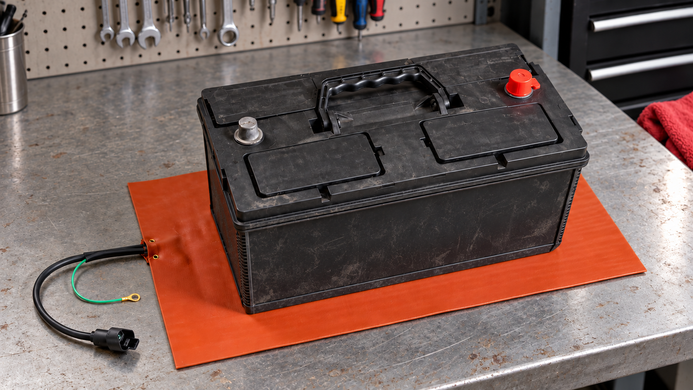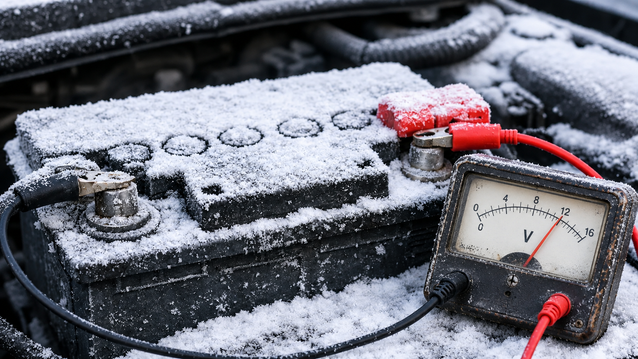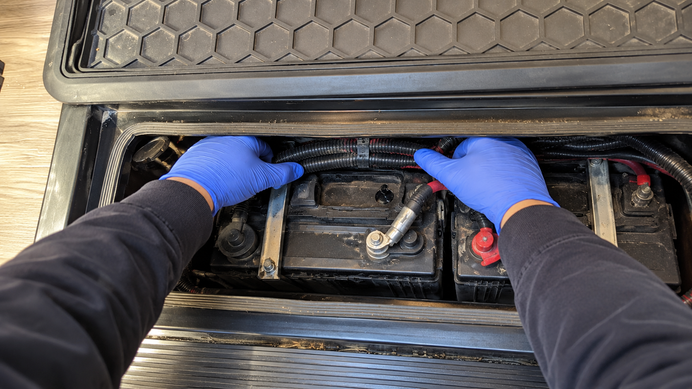

You do not always need to remove an RV LiFePO4 battery for winter storage. Leave it installed only when you can prevent or control charging in cold conditions, isolate parasitic loads, protect it from unsuitable temperatures, and monitor it. If you cannot reliably manage those conditions, removing the battery and storing it in a suitable dry, non-freezing location is the conservative choice.
When removal is the safer choice

Remove the battery before storage if any of these conditions apply:
- The RV may freeze: The battery’s storage location could remain below the applicable product conditions for an extended period.
- Charging cannot be controlled: Shore power, the converter or charger, solar controller, or alternator could continue trying to charge the battery when temperatures are too low.
- Parasitic loads cannot be isolated: Alarms, control boards, trackers, and other devices could slowly discharge the battery while the RV is unattended.
- You cannot monitor it: No practical way exists to check its condition periodically during storage.
These conditions matter because low-temperature charging and over-discharge create different risks. The NFPA Fire Protection Research Foundation’s lithium-ion battery report explains that charging lithium-ion batteries at low temperatures can cause lithium plating, while over-discharging can damage cells and compromise performance.
When leaving it installed can work
Leaving the battery in the RV can be reasonable when the storage setup lets you do all of the following:
- Control every charging source. Disconnect or properly control shore power, the RV converter or charger, solar charging, and any alternator-based charging. A battery’s protective electronics should not be treated as a substitute for controlling the equipment connected to it.
- Isolate RV loads. Turn off the battery disconnect if it actually removes the relevant circuits, and isolate any remaining parasitic draws. Do not assume that switching off the main interior lights removes every load.
- Manage temperature and moisture. Keep the battery dry and within the applicable product conditions. Avoid leaving it where freezing exposure cannot be prevented or assessed.
- Prevent prolonged over-discharge. A disconnected battery can still lose charge over time, and an unattended load can accelerate that loss. Arrange periodic checks rather than leaving the battery without a plan.
- Check it periodically. Bluetooth monitoring can help you observe the battery’s condition when the monitoring connection is available and appropriate for the stored RV.
The Vipboss 12V 105Ah Bluetooth LiFePO4 Lithium Battery includes Bluetooth monitoring and a built-in 100A smart BMS, so those features can support periodic checks while the battery remains installed. It also has low-temperature charge protection and a 0–55°C charging range: charging stops below 0°C and resumes above 5°C.
Cold-weather charging is not the same as cold-weather discharge
Treat charging and discharging as separate questions. A low-temperature charging restriction does not by itself define the battery’s cold-weather discharge conditions. The Vipboss battery has a 0–55°C charging range and low-temperature charge protection that stops charging below 0°C and resumes it above 5°C. Use those charging conditions when deciding whether a charger may remain connected.
Protection that stops charging below the stated threshold does not replace control of the RV’s converter, solar controller, alternator, or shore power. It is safer to prevent an unsuitable charging attempt than to rely only on the battery’s protection circuit.
Winter-storage checklist
Before leaving the battery installed:
- Control charging: Disconnect or configure shore power, the converter, solar controller, and alternator charging so they cannot charge outside the applicable temperature conditions.
- Remove unnecessary loads: Switch off and isolate RV systems that could draw power while the RV is stored.
- Check the storage location: Keep the battery dry and within its applicable product conditions.
- Plan periodic monitoring: Use the battery’s Bluetooth monitoring capability where appropriate, and check for unexpected discharge or charging activity.
- Charge only under permitted conditions: Do not attempt to charge the battery below the product’s stated charging range.
If you cannot complete these steps reliably, remove the battery and store it in a suitable dry, non-freezing location while preserving any applicable manufacturer-directed conditions. The key decision is not whether every RV battery must come out; it is whether the installed battery can remain protected from uncontrolled charging, damaging loads, unsuitable temperatures, and prolonged neglect.
Frequently Asked Questions
When should an RV LiFePO4 battery be removed for winter?
Remove it when the installed location cannot keep it within its storage conditions, charging cannot be reliably disabled in the cold, parasitic loads cannot be isolated, or periodic checks are not practical.
Can I leave the battery installed if the RV is plugged into shore power?
Only if the converter and every other charging source are controlled so they cannot charge outside the battery's permitted temperature range. Simply leaving the RV plugged in can allow an automatic charging attempt.
What should I check before using the battery again in spring?
Inspect the case and terminals, verify state of charge and temperature, reconnect the system correctly, and charge only within the manufacturer's permitted range. Investigate any swelling, leakage, damage, or abnormal readings before use.