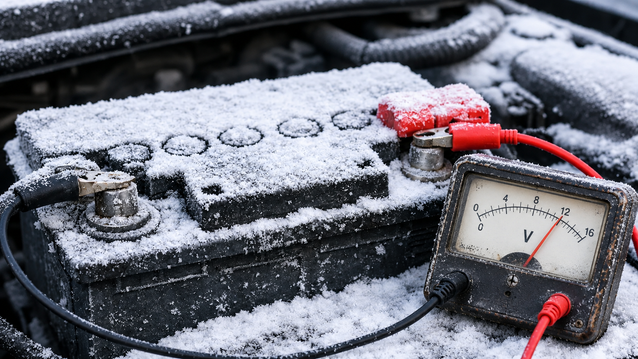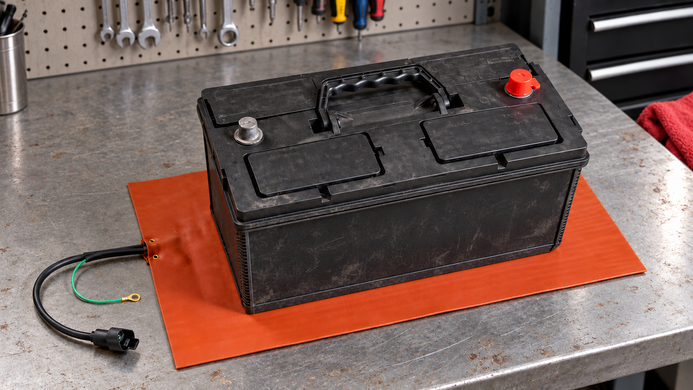

Yes. A thermostatic heating pad may be used as a controlled way to warm a cold LiFePO4 battery before charging, but it does not make charging a cold battery safe by itself or show that a particular pad is approved for that battery. Keep the battery disconnected from the charger while it warms, heat it gradually and evenly, and begin charging only after the battery itself is within its stated charging range and its temperature has stabilized.
Why warming matters before charging
Charging a lithium-ion battery at low temperature can promote lithium plating on the anode, which can reduce performance and damage the cell. Warming the battery before charging addresses that cold-charge concern by bringing the cell to a more suitable temperature first.
A PNAS study on fast charging at low temperatures used a specialized research cell with a rapid internal-heating step before charging. The researchers used that step to bring the cell above a temperature intended to prevent lithium plating. This finding explains the general value of warming before charging; it does not approve an ordinary external heating pad and does not establish charging guidance for a particular commercial battery.
The relevant limits for the Vipboss battery
The Vipboss 12V 105Ah Bluetooth LiFePO4 Lithium Battery is a 12.8V, 105Ah battery with a built-in 100A smart BMS and low-temperature charge protection. Its stated charging range is 0–55°C (32–131°F). The product information states that charging protection applies below 0°C (32°F) and that charging resumes above 5°C (41°F).
For this battery, waiting until the battery is above 5°C (41°F) is a conservative practical starting point. That is not the same as saying the battery's stated lower charging limit is 5°C: the stated charging range begins at 0°C. The battery temperature—not the pad's thermostat setting or the room temperature—is the temperature that matters.
How to warm it before charging

- Disconnect the battery from the charger. Do not begin charging while the battery is still below its stated charging range.
- Inspect the battery first. Stop if it is swollen, leaking, damaged, unusually hot, or otherwise abnormal. Do not try to correct a suspected battery fault by heating it.
- Apply controlled, even warmth. Use the thermostatic pad to warm the battery gradually and evenly. Avoid treating the pad's set temperature as proof of the battery's internal temperature.
- Wait for the battery to stabilize. Confirm that the battery itself is above 5°C (41°F) as a conservative practical start point and still within the stated 0–55°C (32–131°F) charging range. Allow its temperature to settle rather than starting the charger immediately after the outside surface warms.
- Connect the charger and monitor the start. Begin charging only after the preceding conditions are met. Stop if the battery becomes swollen, leaks, heats abnormally, or shows another fault.
Bottom line
A thermostatic heating pad can be an appropriate controlled preheating method for a cold LiFePO4 battery when the battery remains disconnected from the charger and warms gradually and evenly. For the Vipboss battery, use the stated 0–55°C charging range and treat above 5°C as a conservative practical point to start after stabilization. The pad does not replace checking the battery's actual temperature, and research on specialized internal-heating cells does not certify an external pad for this battery.