
A fuse that repeatedly opens is reporting excessive current or heat in the circuit it protects. The cause may be a short, reversed connection, overload, startup surge, incorrect fuse type or rating, overheated holder, or unequal current sharing between parallel battery branches. Do not install a larger fuse until the cable and equipment requirements prove that the existing fuse is wrong.
The fastest way to narrow the fault is to record when the fuse opens and whether the load is connected.
Use the timing to choose the first test

| When the fuse opens | Stronger initial suspects | First action with power isolated |
|---|---|---|
| Immediately when the branch is connected | Reversed polarity, shorted conductor, incorrect connection, or failed equipment | Verify polarity and inspect the cable path before inserting another fuse |
| As soon as an inverter, motor, or compressor starts | Startup current, undersized/incorrect fuse, weak connection, or overloaded branch | Compare equipment surge requirements with the complete branch design |
| After several minutes of operation | Sustained overload, hot fuse holder, loose terminal, cable heating, or poor ventilation | Inspect for heat damage and compare continuous current with component ratings |
| Only one parallel-battery branch opens | Unequal branch current, different cable resistance, connection defect, or battery/BMS behavior | Compare all branch paths and battery status under the same load |
| Fuse opens even with the downstream load disconnected | Fault between the battery and isolation point, holder problem, or battery-side wiring error | Stop using the branch until that short path is located |
Timing is evidence, not a diagnosis. A loose connection can mimic an overload by heating the fuse holder, and an excessive load can expose a connection that appeared normal at low current.
Inspect before replacing the fuse
Follow the system's shutdown procedure and isolate charging sources and loads. Do not work on an energized battery bank unless you are qualified and equipped to do so.
Inspect the failed branch from battery to busbar or load:
- Confirm the installed fuse class and rating against the design and equipment instructions.
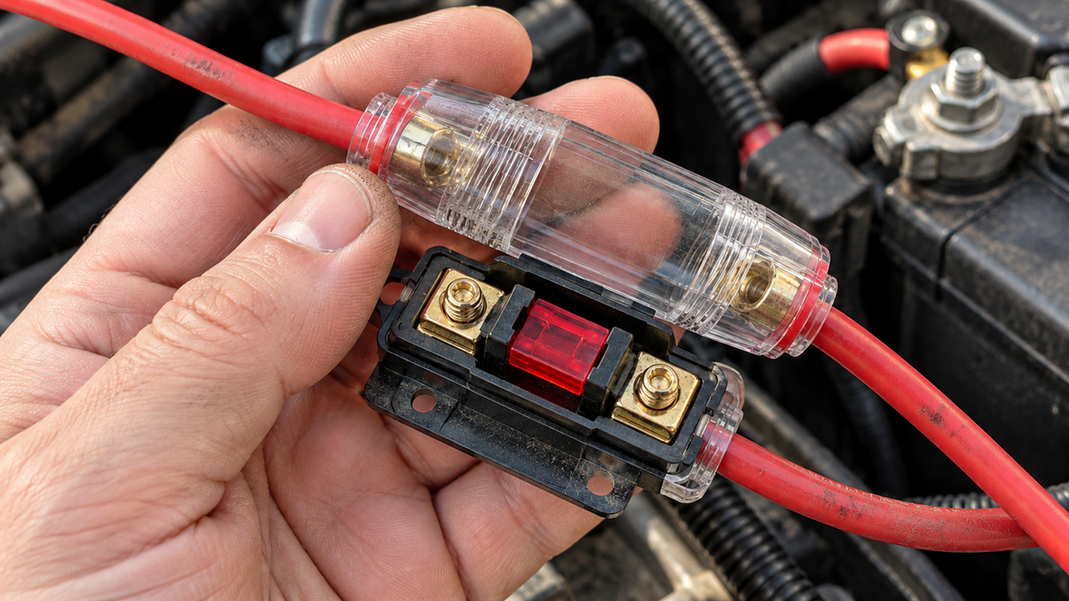
- Check the holder for melting, discoloration, weak spring pressure, contamination, or a loose fastener.
- Inspect the cable insulation, crimps, lugs, terminals, and any pass-through point.
- Verify polarity and ensure no conductor can contact the opposite pole or chassis unintentionally.
- Compare cable size, length, routing, and terminal stack with the other parallel branches.
Replace damaged components rather than treating a new fuse as the repair. If the cable size, holder rating, fuse class, or load current is unknown, obtain those values before energizing the branch.
Separate overload from startup surge
Use the connected equipment's continuous-current and startup or surge specifications. A simple steady-load estimate is:
DC current ≈ load watts / DC system voltage
For example, a 600W load on a nominal 12V system is approximately 600 / 12 = 50A before conversion losses and voltage variation. This is not a fuse recommendation. An inverter may draw more from the battery than the AC wattage calculation suggests, and motors or compressors may demand a brief startup surge.
The fuse must protect the conductor and remain compatible with the equipment's requirements. Its voltage rating, interrupting capability, time-current behavior, holder, cable, and installation all matter. Amp-hour capacity does not determine fuse size.
Why one parallel branch can carry too much current
Parallel batteries share a common bank voltage, but current does not necessarily divide equally. Differences in cable resistance, connection quality, fuse or holder resistance, battery state, temperature, and BMS behavior can shift more current into one branch.
If the same physical branch repeatedly opens, inspect that cable, fuse holder, lug stack, and busbar position. If the behavior follows a battery moved under an approved isolation-and-test procedure, the battery state or BMS becomes a stronger suspect. Do not swap live branches or parallel batteries at different states without following the manufacturer's procedure.
A balanced wiring arrangement and matched branch conductors help current sharing, but they do not make every battery or fuse interchangeable. Use only batteries approved for the same bank and follow the specified branch-protection design.
Use monitoring as evidence, not as the answer
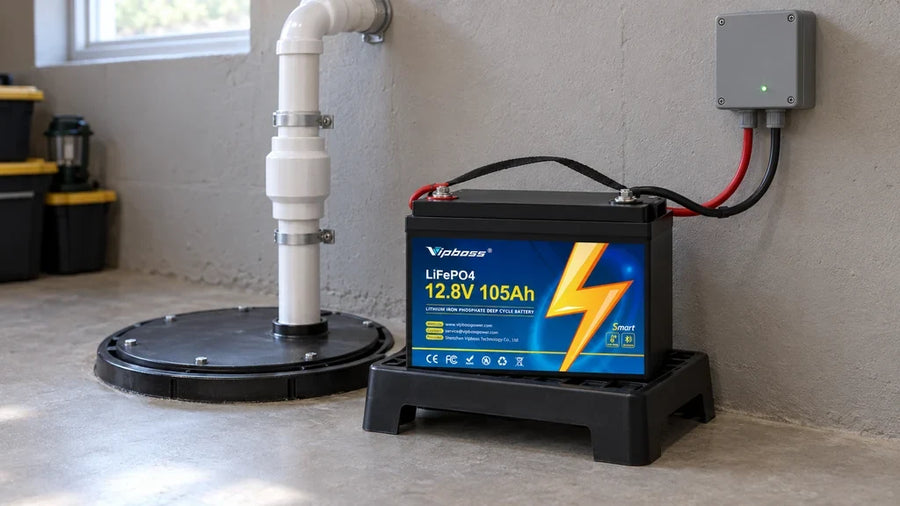
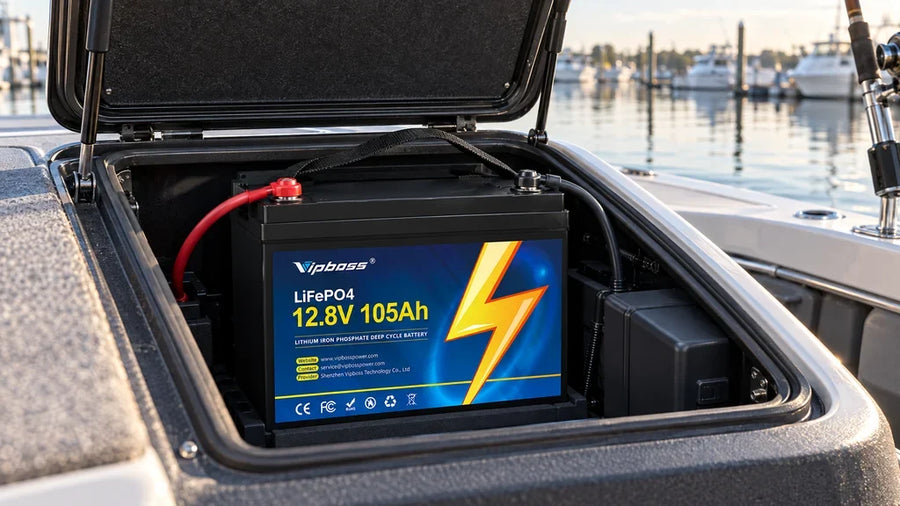
If the bank uses a Vipboss 12V 105Ah Bluetooth LiFePO4 battery, check each battery's reported status before applying the load and again when the fuse opens. A difference between batteries can identify the branch that deserves closer inspection, but it cannot by itself distinguish a bad holder from a cable fault, overload, or battery event.
The battery's 105Ah capacity, built-in 100A smart BMS, and support for configurations up to 4S4P do not prescribe the branch-fuse rating. Base protection on the expected branch current, load surge, protected conductor, terminals, holder, and approved wiring arrangement.
Stop using the bank if a fuse opens with the load isolated, a holder or cable becomes hot, insulation is damaged, terminals are discolored, or the fault returns after the visible problem is corrected. Never bypass the fuse or bridge it with wire. A repeated opening means the underlying circuit still needs diagnosis.