
For a 36V LiFePO4 battery, choose the charger voltage printed in the battery manual or on its charging label: use 43.8V when 43.8V is the stated full-charge setting, and use 43.2V when the battery specifies 43.2V. Do not choose from the nominal “36V” label alone; also match the LiFePO4 charging profile and ensure the charger's current does not exceed the battery's permitted charging current.
When 43.8V is the right choice

Choose 43.8V when the battery maker specifies a 43.8V maximum or full-charge voltage for that 36V LiFePO4 pack. A 36V pack commonly contains 12 cells in series, so 43.8V corresponds to 3.65V per cell as a simple calculation: 12 × 3.65V = 43.8V. That calculation explains the number, but it does not replace the battery maker's specification because pack designs and charge limits can differ.
One 43.8V option is the Vipboss 36V 25A Lithium Battery Charger, specified for 36V LiFePO4 batteries with a 43.8V, 25A output. It is a match when the battery's charging specification calls for 43.8V and permits a 25A charging current.
When 43.2V is the right choice
Choose 43.2V when the battery documentation specifies 43.2V as the full-charge voltage or maximum charging voltage. For a 12-cell pack, 43.2V equals 3.6V per cell: 12 × 3.6V = 43.2V. This is a transparent calculation, not a universal rule for every LiFePO4 pack.
Compared with a battery specified for 43.8V, a 43.2V charger may stop at a lower voltage and leave that battery short of its intended full-charge endpoint. That is not automatically a defect; it may be the correct setting for a battery designed around 43.2V. The battery's own charging specification decides which interpretation applies.
Check these details before connecting the charger
Read the battery label or manual and match all of the following:
- Chemistry: It must specify LiFePO4 or lithium iron phosphate.
- Full-charge voltage: It must match the charger output, such as 43.2V or 43.8V.
- Charging current: The charger's output must not exceed the battery's permitted charging current. A higher current is not automatically better.
- Charging profile: Use a LiFePO4 charger with a constant-current/constant-voltage profile and automatic shutoff when the battery documentation requires those features.
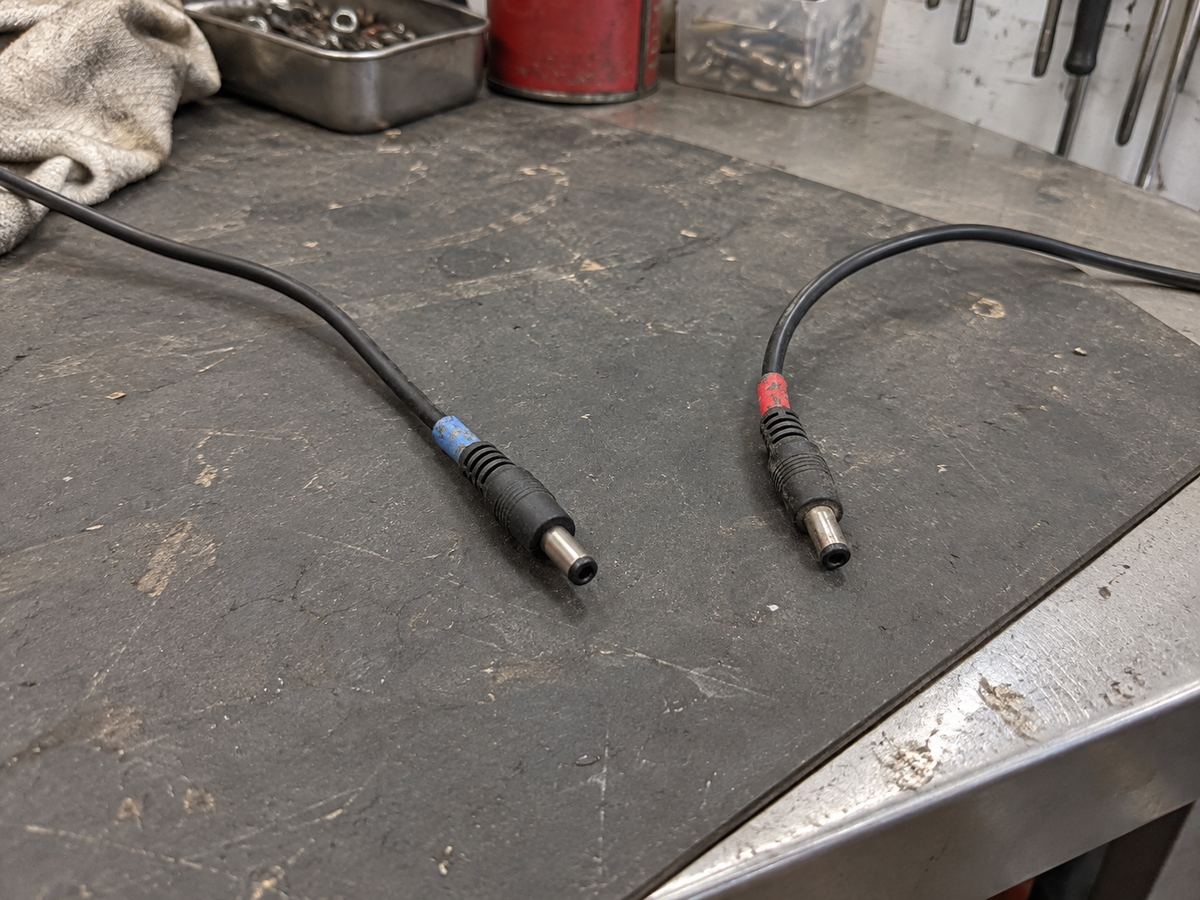
- Connections: Confirm the connector polarity and fit before applying power. Never connect the charger directly to an AC outlet.
Stop if the battery label is missing, the voltage specification conflicts with the charger, the connector or polarity is uncertain, or the battery becomes hot, swollen, damaged, or emits an unusual odor. Resolve the mismatch with the battery maker or a qualified technician before charging.
If your battery specifically permits 43.8V and 25A, you can review the Vipboss 36V 25A Lithium Battery Charger as a matching product option. Its supplied specifications list a 43.8V output, 25A current, 90-260Vac input, IP65 rating, and protections for reverse connection, short circuit, over-temperature, and overload. Treat those details as applying to that named charger, and verify the battery-side limits before purchase or connection.
The short answer is conditional: 43.8V is right for a 36V LiFePO4 battery specified for 43.8V, while 43.2V is right for one specified for 43.2V. If the battery documentation does not clearly state the full-charge voltage and maximum charging current, do not guess from the nominal 36V label.