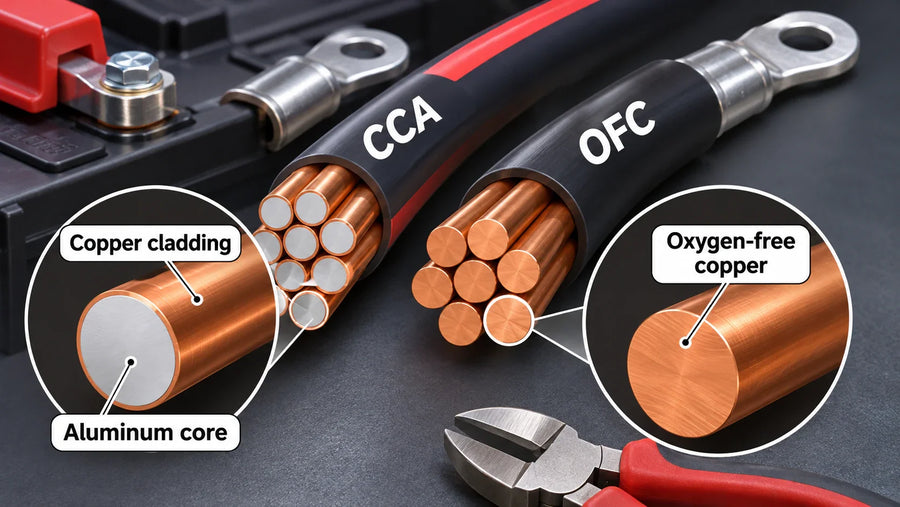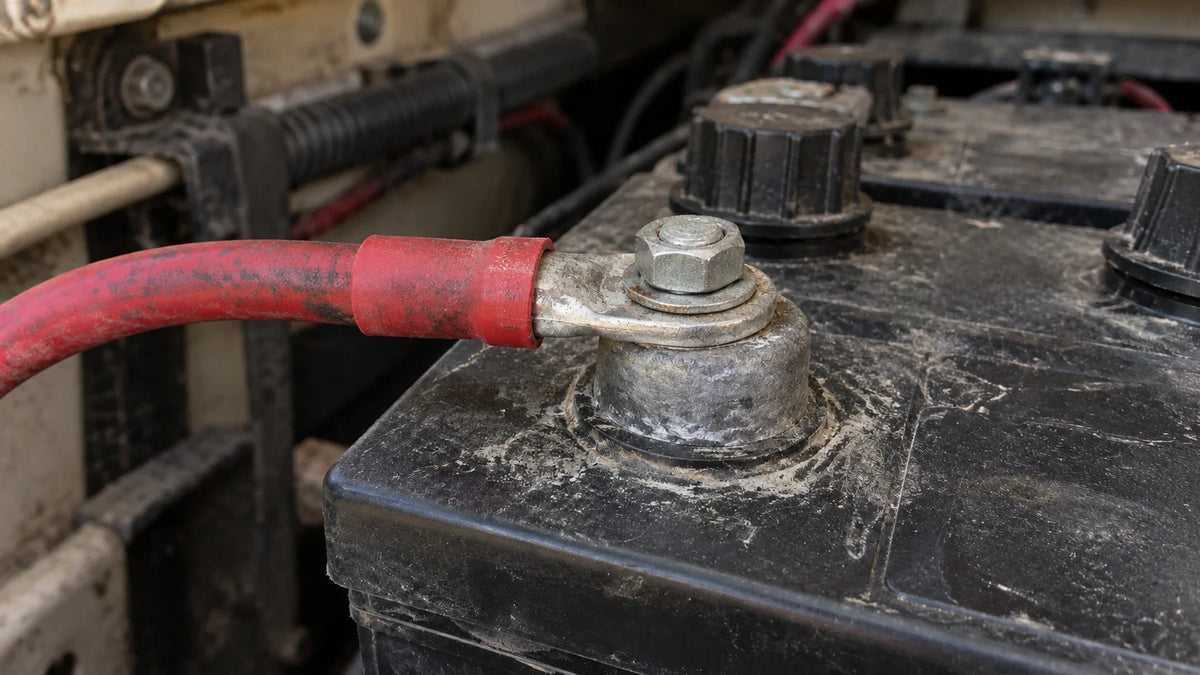

If a golf cart battery cable or terminal gets hot under load, the usual reason is excessive electrical resistance at that point. A loose, dirty, or corroded terminal, a poor crimp, damaged cable strands, or an undersized cable can turn part of the cart's high current into heat. Excessive current from an electrical fault can also overheat an otherwise sound cable. Stop using the cart and isolate the battery system before inspection, following the vehicle, battery, and charger instructions.
What a hot battery connection usually means

A hot cable or connection usually points to resistance or excessive current, but its location can help narrow the cause. Heat concentrated at one terminal or connector commonly suggests a loose, corroded, or poorly crimped connection. Heat along the cable can indicate internal cable damage, an undersized cable, or excessive current. These are starting points for inspection, not proof of a specific fault. The available battery safety guidance also warns that a conductive object shorting lead-acid battery terminals can create sparks and enough heat to cause severe burns and melted metal. Keep metal jewelry and conductive tools away from the battery.
For lead-acid batteries, corrosive electrolyte and stored electrical energy create additional hazards. Keep ignition sources, jewelry, and conductive tools away from the battery; see the lead-acid battery safety guidance for these precautions.
How to inspect the cables and connections safely

- Isolate the system first. Follow the vehicle, battery, and charger instructions to disconnect and secure the battery system so it cannot be accidentally switched back on before work is complete. If you cannot confirm the correct isolation method, stop and follow the applicable instructions before continuing.
- Inspect only after isolation. Check for loose hardware, corrosion, discoloration, melted insulation, damaged cable strands, and a poor or loose crimp. Do not treat appearance alone as proof of the cause, and do not place a probe, wrench, jewelry, or another conductive object across battery terminals.
- Use the manufacturer’s instructions for further inspection or service. The available safety guidance recommends consulting the vehicle, battery, and charger manuals and using insulated tools and test equipment where applicable.
- Stop when the instructions do not support the next step. If the inspection identifies a condition that the vehicle, battery, or charger instructions do not address, follow those instructions before operating or servicing the cart.
For lead-acid batteries, a conductive object across the terminals can generate enough heat to cause severe burns and melt metal, as explained in the battery short-circuit safety guidance.
If inspection leads you to consider a lithium conversion, the Vipboss 48V 150Ah lithium golf cart battery conversion kit includes a lithium-compatible charger, connection hardware, insulating sleeves, and a status monitor. It does not make a loose or damaged connection safe, and compatibility with the cart must be confirmed before installation.